
Your no-fluff guide to the skills that actually get you hired — and paid well — in 2026

Introduction
Let me be honest with you — the AI job market in 2026 is not the same beast it was just two years ago. When I first started paying close attention to how fast things were moving, I genuinely felt a little overwhelmed. Every week there was a new model, a new framework, a new tool promising to change everything. But here’s what I’ve realized after digging deep into industry reports, expert interviews, and hiring trends: the noise is loud, but the signal is actually pretty clear.
The demand for professionals with solid AI skills 2026 employers are looking for has absolutely exploded. According to data from the World Economic Forum and multiple tech hiring platforms, AI-related roles are growing at a pace that far outstrips the available talent pool. We’re talking about a skills gap that companies are desperate to close — and that means massive opportunity for anyone willing to put in the work.
But here’s the thing: not all AI skills are created equal. Some are flashy and trendy. Others are quietly foundational and will still be relevant five years from now. In this post, I want to walk you through the top 7 AI skills 2026 professionals need to focus on — the ones that experts consistently flag as critical for landing high-paying roles. We’re talking about programming fundamentals, machine learning, MLOps, generative AI, data engineering, AI ethics, and cloud computing.
Whether you’re just starting out or you’re a seasoned developer looking to level up, this guide is for you. Let’s get into it.

1. Programming Fundamentals for AI
I know what you’re thinking — “Do I really need to learn programming from scratch?” And the answer is: it depends on where you are right now. But if you’re serious about building a career in AI, strong programming skills are non-negotiable. Full stop.
Why Programming Is the Backbone of AI
Think of programming as the language you use to talk to machines. Every AI model, every data pipeline, every deployment script — all of it runs on code. Without solid programming fundamentals, you’ll hit a wall the moment you try to go beyond using pre-built tools.
Python is the undisputed king here. It’s readable, beginner-friendly, and has an absolutely massive ecosystem of AI and data science libraries. I’m talking about NumPy, pandas, scikit-learn, TensorFlow, PyTorch — the list goes on. If you only learn one language for AI, make it Python.
But don’t sleep on R, especially if you’re coming from a statistics or research background. R has excellent data visualization capabilities and is widely used in academia and certain industry sectors. And if you want to get into systems-level AI work or contribute to core model infrastructure, brushing up on C++ or Rust can give you a serious edge.
Core Concepts You Need to Know
Beyond knowing the syntax of a language, you need to get comfortable with the underlying concepts that power AI systems:
- Data structures and algorithms — the backbone of efficient computation
- Object-oriented programming — essential for building scalable AI applications
- APIs and REST interfaces — critical for integrating AI models into real products
- Version control with Git — because collaboration is a non-negotiable skill in any modern tech role
The good news is that programming is one of those skills that compounds over time. The stronger your foundation, the faster you’ll pick up every other skill on this list. I’ve seen people go from Python beginner to building deployed ML models in under a year with consistent daily practice.

2. Machine Learning & Deep Learning Expertise
If programming is the language of AI, then machine learning is the grammar. It’s the set of rules and patterns that allow systems to learn from data rather than being explicitly programmed for every scenario.
ML vs. Deep Learning: What’s the Difference?
I get this question a lot. Machine learning is a broad category of algorithms that learn patterns from data — things like linear regression, decision trees, random forests, and support vector machines. These are powerful, interpretable, and often the right tool for the job.
Deep learning is a subset of ML that uses neural networks with many layers to model complex patterns. It’s behind most of the breakthroughs you’ve heard about — image recognition, natural language processing, voice assistants, and more. Deep learning shines when you have large amounts of data and need to handle unstructured inputs like images, text, or audio.
Frameworks You Should Know
- TensorFlow — Google’s open-source framework, widely used in production environments
- PyTorch — The research community’s favorite, known for its flexibility and dynamic computation graphs
- scikit-learn — Perfect for traditional ML algorithms and rapid prototyping
- Keras — A high-level API that sits on top of TensorFlow, great for beginners
Key Concepts to Master
Understanding supervised, unsupervised, and reinforcement learning isn’t just academic knowledge — it directly influences how you approach real-world problems. Supervised learning is what most people start with (you have labeled data and you’re training a model to predict outcomes). Unsupervised learning is about finding hidden patterns in unlabeled data. Reinforcement learning is what powers game-playing AIs and robotics.
Real-world applications span every industry — fraud detection in banking, predictive maintenance in manufacturing, recommendation systems in e-commerce, diagnostic support in healthcare. The demand for ML expertise cuts across all sectors, which is exactly why it consistently shows up as one of the most sought-after AI skills 2026 recruiters are prioritizing.

3. MLOps (Machine Learning Operations)
Okay, let’s talk about what I think is the most underrated skill on this entire list: MLOps. I’ve had so many conversations with hiring managers who tell me the same thing — they can find data scientists who build great models, but finding people who can actually get those models into production and keep them running? That’s a different story entirely.
What Is MLOps and Why Does It Matter in 2026?
MLOps stands for Machine Learning Operations, and it’s basically the practice of applying DevOps principles to the machine learning lifecycle. It bridges the gap between the experimental, exploratory world of data science and the rigorous, reliability-focused world of software engineering and IT operations.
In 2026, MLOps is no longer a nice-to-have — it’s a core competency. As more organizations move from AI experiments to AI-powered products, the need for professionals who understand how to operationalize ML models has skyrocketed. An AI model that never makes it to production is just an expensive science project.
Key Components of MLOps
- CI/CD for ML — Continuous integration and continuous deployment pipelines adapted for machine learning workflows
- Model monitoring — Tracking model performance in production and detecting data drift or model degradation
- Model versioning — Keeping track of different model versions, their training data, and their configurations
- Feature stores — Centralized repositories for storing and serving ML features
- Experiment tracking — Logging experiments systematically so you can reproduce results
Tools to Learn
The MLOps tooling ecosystem has matured rapidly. Here are the platforms and tools worth investing time in:
- MLflow — Open-source platform for managing the ML lifecycle, including experimentation, reproducibility, and deployment
- Kubeflow — Kubernetes-native ML toolkit for deploying scalable ML workflows
- Azure ML — Microsoft’s cloud-based MLOps platform with strong enterprise integrations
- AWS SageMaker — Amazon’s fully managed ML service with built-in MLOps capabilities
- DVC (Data Version Control) — Git-like versioning for data and models
If I had to pick one skill from this list that offers the best return on investment right now, it might honestly be MLOps. The demand is high, the supply of qualified professionals is low, and the salaries reflect that imbalance in a very good way.

4. Generative AI and Large Language Models (LLMs)
I don’t think I need to spend a lot of time convincing you that generative AI is important. You’ve seen it. You’ve probably used it. But understanding generative AI at a surface level and actually having the skills to build with it are two very different things.
What Is Generative AI and Why It’s Dominating 2026?
Generative AI refers to AI systems that can create new content — text, images, code, audio, video — rather than just classifying or predicting based on existing data. Large Language Models like GPT-4 and its successors are the most prominent examples, but diffusion models (which power image generation tools) are equally significant.
In 2026, generative AI has moved well beyond the hype phase. It’s embedded in enterprise workflows, developer tools, customer service platforms, and content pipelines. The organizations that figure out how to effectively leverage these systems are gaining substantial competitive advantages. And that means the people who know how to work with them are in high demand.
Use Cases Driving Demand
- Content generation — automated drafting, summarization, translation
- Code generation and review — AI-assisted development that dramatically accelerates engineering velocity
- Chatbots and conversational AI — customer service, internal knowledge bases, sales tools
- Multimodal applications — systems that work with text, images, and audio together
- Workflow automation — using LLMs as orchestrators to automate complex multi-step processes
Skills You Need to Build
This is where it gets interesting. Working with generative AI isn’t just about prompting ChatGPT — it requires a real skill set:
- Prompt engineering — crafting inputs that reliably produce high-quality, consistent outputs
- Fine-tuning models — adapting pre-trained models to specific domains or tasks using your own data
- RAG (Retrieval-Augmented Generation) — combining LLMs with your own knowledge bases for grounded, accurate responses
- Evaluation and safety — assessing model outputs for quality, accuracy, and potential harms
Generative AI is one of the AI skills 2026 employers are explicitly calling out in job descriptions. If you can demonstrate hands-on experience building real applications — not just theory — you’ll stand out significantly.

5. Data Engineering & Data Management
Here’s something I’ve noticed that a lot of people overlook: the best AI model in the world is completely useless if it’s fed bad data. Data engineering is the unglamorous but absolutely essential discipline of building and maintaining the pipelines that deliver clean, reliable, timely data to AI systems.
Why Data Engineering Is a Core AI Skill
Think about it this way — machine learning models learn from data. If that data is incomplete, inconsistent, or stale, your models will be too. The garbage-in, garbage-out principle applies here with brutal precision. That’s why data engineering has become one of the most in-demand disciplines in the AI ecosystem.
Key Skills and Concepts
- ETL (Extract, Transform, Load) — the process of pulling data from sources, transforming it into a usable format, and loading it into target systems
- Data warehousing — organizing large volumes of structured data for analytical queries
- Data lakes — flexible storage solutions that can handle structured, semi-structured, and unstructured data at scale
- Data quality and validation — ensuring data is accurate, complete, and consistent before it reaches your models
- Real-time data processing — handling streaming data for applications that need up-to-the-moment information
Tools Worth Learning
The data engineering toolstack is broad, but here are the ones that show up most consistently in job postings:
- Apache Spark — distributed data processing framework, essential for big data workloads
- SQL — still the lingua franca of data, and you need to know it well
- dbt (data build tool) — modern data transformation tool that’s become hugely popular
- Airflow — workflow orchestration for building and monitoring data pipelines
- Cloud data platforms — BigQuery (GCP), Redshift (AWS), Synapse (Azure)
Data engineering roles are well-compensated and consistently in demand. And as AI systems become more complex and data-hungry, the importance of solid data foundations will only grow.

6. AI Ethics, Governance, and Responsible AI
I’ll be honest — when I first started researching AI skills for this post, I wondered if AI ethics would make the cut as a practical, career-relevant skill. After digging into it, I’m now convinced it might be one of the most important skills on this list — and not just for idealistic reasons.
Why Ethical AI Is a Must-Have Skill in 2026
We’re living through a period of rapid AI regulation. The EU AI Act, emerging frameworks in the US, UK, and Asia — governments around the world are scrambling to establish guardrails for AI systems. And companies that deploy AI without considering ethical and governance implications are facing real legal, financial, and reputational risks.
This means that professionals who understand AI ethics aren’t just “doing the right thing” — they’re protecting their organizations from costly mistakes. Risk management, compliance, and governance functions are actively hiring people with this expertise.
Core Topics to Understand
- Bias and fairness — understanding how bias enters AI systems and how to detect and mitigate it
- Transparency and explainability — being able to explain how a model makes decisions, especially in high-stakes domains
- Privacy — understanding data protection principles and how they apply to AI training and deployment
- Accountability — establishing clear lines of responsibility for AI system behavior
- Regulatory compliance — staying current with evolving AI regulations across different jurisdictions
Building trustworthy AI systems isn’t just a technical challenge — it requires a combination of technical knowledge, policy understanding, and ethical reasoning. This interdisciplinary nature makes AI ethics a skill that’s hard to automate and genuinely valuable in the job market.

7. Cloud Computing for AI
We’ve saved a big one for last. Cloud computing has become the infrastructure layer that makes everything else on this list possible at scale. Whether you’re training a large language model, serving predictions to millions of users, or running automated ML pipelines, you almost certainly need cloud infrastructure to do it.
Why Cloud Skills Are Inseparable from AI Skills in 2026
The compute requirements for modern AI — especially generative AI — are enormous. Training even medium-sized models can require hundreds of GPUs running for days or weeks. That kind of infrastructure is simply not accessible on-premises for most organizations, which is why cloud platforms have become the default environment for AI development and deployment.
Key Platforms to Know
- AWS (Amazon Web Services) — market leader with the broadest service catalog; SageMaker for ML, Bedrock for generative AI
- Microsoft Azure — strong enterprise adoption; Azure ML and Azure OpenAI Service are widely used
- Google Cloud Platform — home to Vertex AI and TPUs, with strong integration with Google’s research ecosystem
You don’t necessarily need to master all three — but you should have solid hands-on experience with at least one, and a working familiarity with the others.
Specific Skills to Develop
- Containerization with Docker and Kubernetes — packaging and orchestrating AI applications
- Serverless AI — deploying model inference without managing servers
- Distributed computing — training models across multiple machines efficiently
- Cost optimization — AI workloads can be expensive; knowing how to optimize spend is a skill in itself
Cloud certification programs from AWS, Azure, and Google Cloud are widely recognized by employers and can give your resume a credibility boost while you build practical skills through hands-on projects.
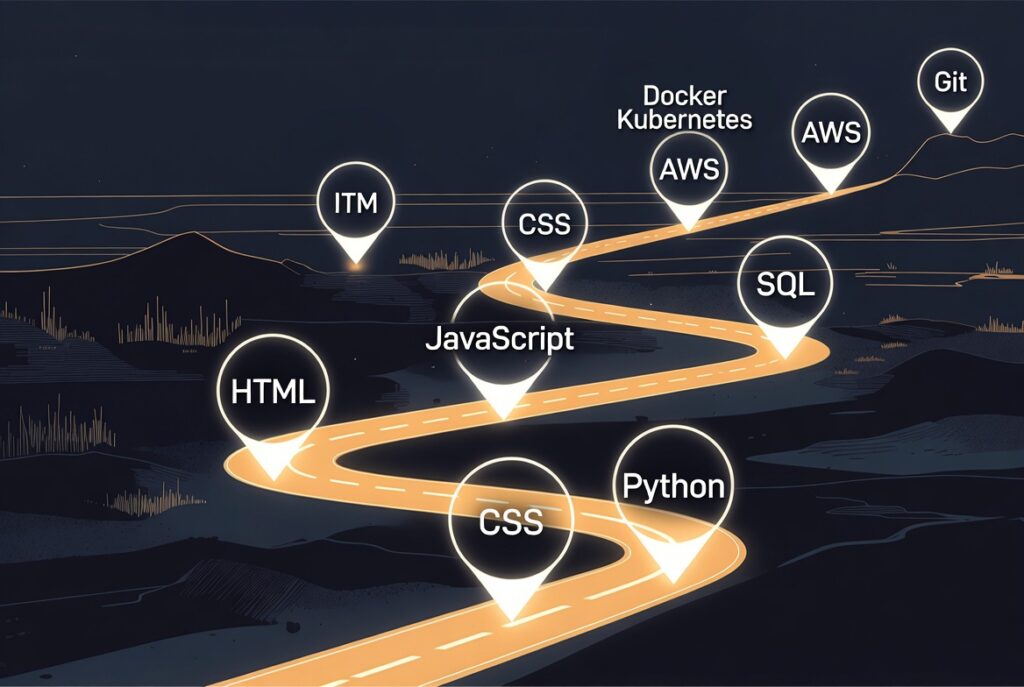
How to Start Learning AI Skills in 2026
Alright, so you’re convinced these skills matter. Now the question is: where do you actually start? I’ve put together a practical roadmap based on what I’ve seen work for people at different stages of their careers.
For Complete Beginners
Start with Python — no question. Spend two to three months getting comfortable with the fundamentals. Then move into data manipulation with pandas and NumPy. From there, dive into your first machine learning course (fast.ai is outstanding and completely free). Build something small but real — a simple classification model, a recommendation system, anything that you can actually show someone.
For Professionals Looking to Upskill
If you already have a technical background, you can move faster. Focus on filling the specific gaps in your skill set based on the roles you’re targeting. MLOps and cloud AI skills are particularly high-leverage for experienced developers. Consider pursuing a cloud certification alongside practical project work.
Best Learning Platforms
- Coursera — Deep Learning Specialization by Andrew Ng is a classic starting point
- fast.ai — Practical, project-first approach that I personally love
- DeepLearning.AI — Short courses on generative AI and LLMs that are always current
- Kaggle — Real datasets, competitions, and a great community for practical ML experience
- AWS, Azure, and GCP training portals — free and paid resources directly from the cloud providers
The Portfolio Imperative
I can’t stress this enough: projects matter more than certificates. Hiring managers want to see that you can actually build things. GitHub repositories, Kaggle competition results, a deployed side project — these are the things that actually get you interviews. Build in public if you can.

Career Opportunities with AI Skills in 2026
Let’s talk numbers, because this is probably what you really want to know.
High-Paying Roles
The roles that command the highest salaries in 2026 consistently map to the skills we’ve covered in this post:
- AI Engineer — Building and deploying AI systems end-to-end. Median salaries range from $150,000 to $250,000+ in the US market
- MLOps Engineer — Specializing in the infrastructure and tooling that keeps ML systems running in production. One of the fastest-growing roles in the industry
- Data Scientist — Analyzing data and building models to drive business decisions. Still in high demand, especially when combined with engineering skills
- AI Research Scientist — Working on foundational model research, typically requiring advanced degrees and deep technical expertise
- Generative AI Developer — Building applications on top of LLMs and other generative models. A relatively new role that’s exploding in demand
Industry Demand Trends
The demand for professionals with solid AI skills 2026 employers want is genuinely cross-industry. Finance, healthcare, logistics, retail, manufacturing — every sector is investing in AI and struggling to find people who can execute. This breadth of demand is actually a really good thing for job seekers, because it means you have options and negotiating leverage.
Future-Proofing Your Career
Here’s my honest take: the specific tools and frameworks will keep changing. What won’t change is the underlying ability to think systematically about data, models, and systems — combined with the curiosity and adaptability to keep learning. Invest in your fundamentals, stay curious, and make continuous learning a habit rather than an occasional event.
Conclusion
Let’s bring it all home. The top AI skills 2026 demands aren’t a mystery — they’re well-documented, actively validated by employers, and completely learnable by anyone willing to put in the work.
We covered programming fundamentals (your foundation), machine learning and deep learning (the core discipline), MLOps (the bridge to production), generative AI (the hottest frontier), data engineering (the unglamorous essential), AI ethics (the increasingly regulated imperative), and cloud computing (the infrastructure layer that ties it all together).
None of these skills exists in isolation. The most valuable professionals in 2026 are the ones who can combine several of them — the data scientist who also understands MLOps, the engineer who can build with generative AI and also thinks critically about ethics and governance. That’s the combination that commands the highest salaries and the most interesting opportunities.
The best time to start building these skills was yesterday. The second best time is today. Pick one area, commit to it, build something real, and keep going. The AI skills 2026 employers are desperate for are exactly the skills that are completely within your reach to develop.
You’ve got this. Now go build something.
Frequently Asked Questions (FAQ)
Q1: What is the most important AI skill to learn in 2026?
If I had to pick just one, I’d say Python programming — because it unlocks everything else. But if you already have a programming foundation, the highest-leverage skill right now is probably MLOps, given how badly the market needs people who can take models from experiment to production.
Q2: Do I need a degree to get an AI job in 2026?
Not necessarily. While advanced research roles often require graduate degrees, many AI engineering, MLOps, and data science positions are accessible with strong portfolios, relevant certifications, and demonstrated project experience. The industry is increasingly skills-based rather than credentials-based for practical roles.
Q3: How long does it take to learn AI skills for a career change?
It varies significantly based on your starting point and the role you’re targeting. A complete beginner who commits to consistent learning (say, 10-15 hours per week) can be job-ready for entry-level data science or ML engineering roles in 12-18 months. Upskilling from an adjacent technical field can take 6-12 months.
Q4: Is generative AI a real skill or just a trend?
Generative AI is absolutely a real and durable skill — though the specific tools will evolve. Understanding how LLMs work, how to build applications on top of them, and how to evaluate and fine-tune them for specific use cases is valuable knowledge that will remain relevant as the technology matures.
Q5: What is MLOps and why should I care about it?
MLOps (Machine Learning Operations) is the practice of deploying, monitoring, and maintaining ML models in production environments. It’s important because the vast majority of ML projects fail to make it into production — MLOps practitioners are the people who solve that problem. It’s one of the most in-demand and best-compensated specializations in the AI field right now.
Q6: Which cloud platform should I learn for AI — AWS, Azure, or Google Cloud?
All three are viable choices and the skills transfer more than you’d think. AWS has the largest market share overall; Azure is dominant in enterprise environments and has strong OpenAI integration; Google Cloud is the choice for teams working closely with Google’s AI research ecosystem. I’d suggest picking one based on where you want to work and getting certified in it first.
Q7: Are AI ethics skills actually in demand, or is that just idealistic?
They’re genuinely in demand, and increasingly so. Regulatory pressure (especially the EU AI Act) is forcing organizations to take AI governance seriously. Roles focused on responsible AI, AI risk management, and compliance are growing rapidly. The people who combine technical AI knowledge with ethics and governance expertise are particularly valuable.
Q8: Can I learn these AI skills for free?
Absolutely — there are outstanding free resources available. fast.ai offers world-class practical ML education at no cost. Kaggle provides free courses, datasets, and competitions. Google, AWS, and Microsoft all offer free tiers and training materials. YouTube channels like Andrej Karpathy’s and Sentdex offer deep, high-quality content. Paid platforms like Coursera and DeepLearning.AI offer additional structure and certificates, but free resources can absolutely get you where you need to go.