
I’ll be honest — when I first started hearing about AI in education, I thought it was just another tech buzzword that would fade away like so many others. But the more I dug into AI in education, the more I realized this is genuinely different. Artificial intelligence isn’t just knocking on the classroom door anymore — it’s already sitting in the front row, and it’s changing everything.You can also explore our guide on Top 7 AI Skills for 2026 to better understand how AI is shaping industries like education
From the way students learn to the way teachers teach, AI in education is reshaping an industry that honestly hadn’t seen major disruption in decades. And I think that’s a good thing — with some important caveats we’ll get into later.
In this post, I’m going to walk you through everything — what AI in education actually means, how it plays out in the real world, the benefits, the challenges, and where it’s all heading. Whether you’re a teacher, a student, a parent, or just someone curious about educational technology and EdTech innovations, this is worth your time.
What Is AI in Education?
Understanding Artificial Intelligence in Education
Let me start with the basics. Artificial intelligence in education refers to the use of AI technologies — like machine learning, natural language processing, and data analytics — to improve teaching, learning, and administrative processes in educational settings.
Think of it this way: traditional education uses a one-size-fits-all model. A teacher walks into a room of 30 students, delivers a lesson, and hopes it lands. But students learn differently. Some need more time on certain topics. Some grasp concepts through visuals, others through text. AI in learning bridges that gap by tailoring content and pacing to each individual learner.
Machine learning in teaching is especially exciting. These systems analyze how a student interacts with content — what they get right, where they struggle, how long they spend on each question — and adjust the experience accordingly. It’s like having a personal tutor who never gets tired, never loses patience, and is always focused 100% on you.
Evolution of AI and Education
The relationship between AI and education didn’t start yesterday. Educational technology goes back to the 1960s with programmed instruction and early computer-based learning. But the real acceleration happened in the last decade with the explosion of big data, affordable computing, and the maturation of machine learning algorithms.
Early tools were mostly passive — digital textbooks, online quizzes, video lectures. Then came learning management systems (LMS) that tracked student progress. Now, with genuine AI integration, we’re entering an era where the software doesn’t just record what a student does — it actively responds to it.
In AI in higher education, universities are using predictive analytics to identify at-risk students before they fail. In K-12, adaptive platforms are replacing one-size-fits-all worksheets with dynamically generated exercises. The evolution has been fast, and honestly, it’s not slowing down.
Key Benefits of AI in Education
Personalized Learning Experiences
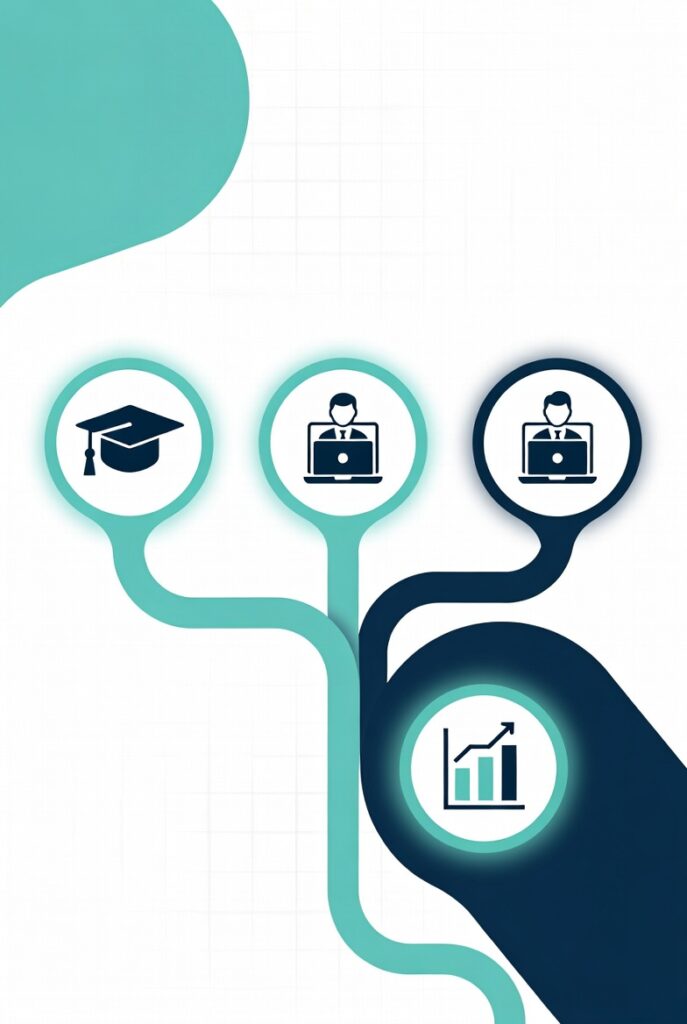
This is probably the biggest deal for students, and it’s one I personally find the most impressive. Personalized learning powered by AI means the educational experience is shaped around each student’s unique pace, strengths, and weaknesses — not around a curriculum that was designed for the average learner.
Adaptive learning systems are the engine behind this. These platforms collect real-time data on how a student engages with content and continuously adjust what’s shown next. If I’m breezing through algebra but struggling with geometry, the system routes me to more geometry practice without making me sit through algebra review I don’t need.
Some real-world adaptive learning examples include platforms like Khan Academy, which uses AI to recommend exercises based on mastery levels, and DreamBox Learning, which adapts math instruction in real time for K-8 students. These aren’t gimmicks — studies show students using adaptive platforms learn faster and retain more. Personalized learning through AI is arguably the most student-centric shift in education in generations.
Improved Efficiency for Educators
Let me be real — teachers are overworked. Grading, lesson planning, progress reports, parent communications — the administrative side of teaching can consume as much time as the actual teaching. AI for educators is starting to change that equation.
AI-powered grading tools can evaluate multiple-choice questions instantly and increasingly handle short essays and written responses. Content creation tools like AI writing assistants help teachers generate lesson plans, quiz questions, and differentiated materials in a fraction of the time. Feedback systems can flag students who need additional support without the teacher manually reviewing every assignment.
The result? Teachers get to spend more time on what they do best — building relationships with students, facilitating meaningful discussions, and delivering creative instruction that no algorithm can replicate. Automation in AI in teaching isn’t about replacing educators. It’s about freeing them up for the human work that actually matters.
Enhanced Student Engagement
Here’s something I’ve noticed in a lot of research: students are more engaged when learning feels interactive, responsive, and relevant to them. AI classroom tools make that possible in ways that were unimaginable just a decade ago.
Gamification powered by AI adapts game mechanics — points, challenges, streaks, rewards — to keep students motivated. Virtual AI tutors provide instant feedback and hints when a student gets stuck, reducing frustration and keeping the learning momentum alive. Chatbots embedded in learning platforms answer student questions at 2am when no teacher is available.
Students using AI in their learning journey benefit from this real-time support loop. Instead of waiting for the next class, they get immediate guidance that keeps them on track and moving forward. For students who might feel embarrassed asking questions in class, AI offers a judgment-free space to explore and make mistakes.
AI in Schools and Higher Education
AI in Schools
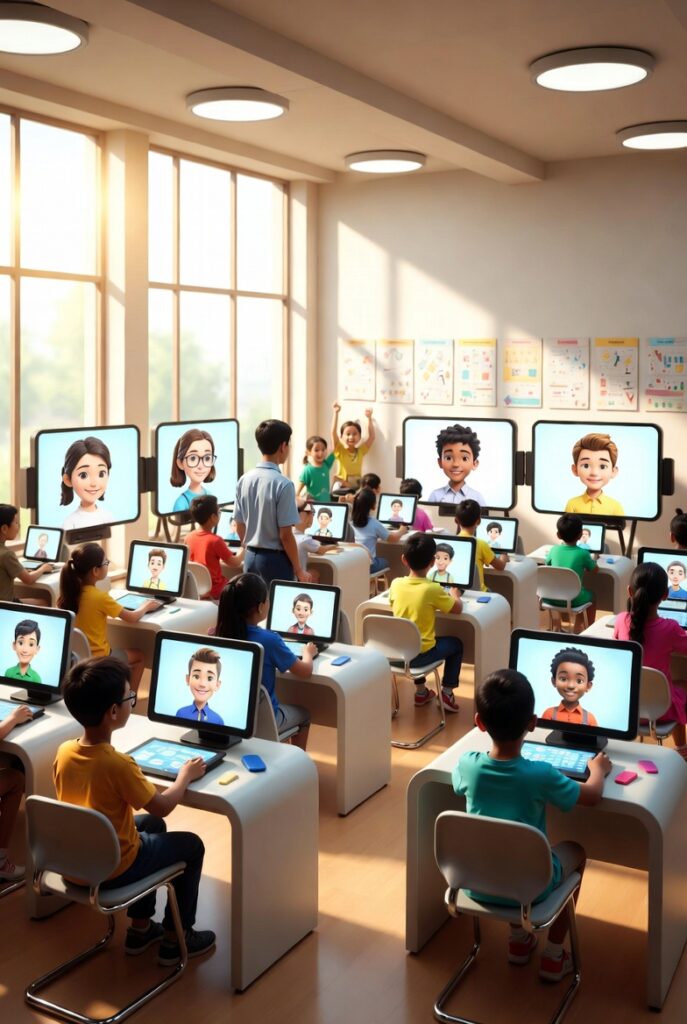
When it comes to AI in schools at the K-12 level, the implementations are becoming increasingly sophisticated. Smart classrooms use AI-powered projectors and sensors to track student engagement — a camera can detect whether students are focused or distracted, giving teachers actionable data during the lesson.
AI tutors like Carnegie Learning’s MATHia provide one-on-one instruction tailored to each student. Schools in districts with resource constraints particularly benefit because an AI tutor doesn’t require salary, benefits, or sick days. It’s available 24/7 and scales infinitely.
That said, AI in schools isn’t without its challenges. Younger students need human connection for social-emotional development, which AI simply cannot provide. There’s also the infrastructure gap — underfunded schools may struggle to adopt EdTech innovations that require reliable internet and up-to-date devices. The benefits are real, but so are the equity concerns.
AI in Higher Education
The story is different — and in many ways bigger — when we look at AI in higher education. Universities are deploying AI across the entire student lifecycle: from recruitment and admissions to academic support, career readiness, and alumni relations.
On the research side, AI is accelerating literature reviews, data analysis, and even hypothesis generation. Administrative automation handles enrollment, scheduling, and student services queries. Student analytics platforms identify early warning signs of dropout risk, enabling advisors to intervene before it’s too late.
Perhaps most valuably for students, AI and higher education is forging stronger links between academic learning and career outcomes. AI tools can map curriculum to industry skills, recommend internships and courses aligned with career goals, and even simulate job interviews. For students making significant financial investments in their education, that’s genuinely valuable.
Real-World AI in Education Examples
Popular AI Classroom Tools
I’ve been digging into AI in education examples, and honestly, the variety is impressive. Here are some categories of AI classroom tools worth knowing about:
- Intelligent Tutoring Systems (ITS): Platforms like Carnegie Learning and Knewton provide adaptive, one-on-one instruction that adjusts in real time to student performance.
- AI Grading Assistants: Tools like Gradescope use machine learning to assist in grading assignments and exams, dramatically reducing turnaround time.
- Chatbots and Virtual Assistants: Institutions like Georgia Tech have deployed AI-powered teaching assistants (famously “Jill Watson”) that answer student questions via course discussion boards.
- Language Learning AI: Apps like Duolingo use AI to personalize language lessons, adapting to each learner’s pace and weak points.
- Content Generation Tools: Platforms like Khanmigo (Khan Academy‘s AI tutor) and Quizlet’s AI tools help both students and teachers create study materials, quizzes, and explanations.
These aren’t futuristic — they’re being used by millions of students right now. AI in learning has moved well past the pilot stage.
Virtual Labs and Simulation-Based Learning
One of the most exciting AI in education examples I’ve come across is the rise of virtual labs AI. For students in science, engineering, and medicine, hands-on lab work is essential — but it’s also expensive, logistically complex, and sometimes dangerous.
Virtual labs powered by AI simulate real-world experiments in detail. A chemistry student can safely experiment with reactive compounds. A medical student can practice a procedure repeatedly without risk to a real patient. An engineering student can stress-test a bridge design without building a single physical model.
These virtual labs AI environments are also incredibly powerful for remote and hybrid learning — a student in a rural area with no physical lab access can engage with the same high-quality simulation as someone at a well-funded urban school. That equity angle matters a lot to me. EdTech innovations like this have the potential to genuinely level the playing field.
Applications of Machine Learning in Education
Adaptive Learning Systems
I want to go deeper on adaptive learning because I think it’s the heart of what makes AI in learning so transformative. Traditional learning is linear — everyone follows the same sequence. Adaptive learning is dynamic — the system builds a unique path for each learner based on continuous assessment.
Here’s how it works: the system builds a model of the learner — tracking what they know, how they learn, and where they struggle. Based on this model, it selects the most appropriate next content, whether that’s a video explanation, a practice problem, or a hint. As the learner interacts, the model updates and refines itself.
Adaptive learning examples in action include Duolingo’s adaptive path system, which adjusts lesson difficulty based on streaks and error patterns, and Smart Sparrow, used in higher education to create branching courseware that responds to student choices. Data-driven learning paths like these aren’t just efficient — they’re demonstrably more effective than one-size-fits-all instruction. The research on this is pretty compelling.
Predictive Analytics in Education
Another powerful application I find fascinating is predictive analytics. Using historical data and machine learning, these systems can predict which students are likely to struggle, fail a course, or drop out — often weeks before a human advisor would notice.
Think about what that means in practice. A university platform flags that a student has logged in less frequently, submitted assignments late, and scored below average on the last two quizzes. The system automatically triggers an alert to their advisor, who can reach out before the situation becomes a crisis.
The impact of artificial intelligence and education outcomes through early intervention is significant. Research suggests that data-driven early alert systems can improve retention rates substantially, particularly for first-generation and at-risk students. Using AI in learning this way isn’t intrusive — it’s caring, at scale.
Challenges and Ethical Concerns of AI in Education
I’d be doing you a disservice if I only talked about the upsides. There are real, legitimate concerns about AI in education that we need to address head-on.
Data Privacy and Security
Educational AI systems collect an enormous amount of data on students — their performance, behavior patterns, engagement levels, and sometimes even facial expressions and biometrics. With younger students especially, this raises serious ethical questions about consent, data ownership, and security.
Who owns a child’s learning data? How long is it retained? Could it be sold to third parties or used in ways families never consented to? Artificial intelligence on education platforms must be held to strict data protection standards — regulations like FERPA in the US and GDPR in Europe provide some guardrails, but enforcement is inconsistent and the technology moves faster than the regulation.
Bias and Accessibility Issues
AI systems are only as good as the data they’re trained on. If that training data reflects existing inequalities — and it often does — the AI will perpetuate and potentially amplify those inequalities. In AI and education, algorithmic bias can show up as a system that recommends lower-track courses to certain demographic groups, or a facial recognition tool that performs poorly on darker skin tones.
Accessibility is another major gap. The promise of educational technology reaching every student anywhere is beautiful in theory, but in practice, students in low-income areas may lack the devices, internet connections, or support systems to benefit from AI-powered tools. Without intentional design for equity, EdTech innovations could widen the gap rather than close it.
Teacher and Student Adaptation
Let’s be honest: not everyone is excited about AI in teaching. Some educators feel threatened by it. Others lack the training to use it effectively. Many are skeptical about whether an algorithm can ever understand the nuanced, human dynamics of a classroom — and honestly, that skepticism has merit.
The solution isn’t to force adoption or dismiss concerns. It’s to invest in genuine training, involve teachers in the design of AI tools, and build systems that support educators rather than sideline them. The best AI in education implementations I’ve seen treat teachers as partners, not as obstacles.
Future of AI in Education
Emerging EdTech Innovations
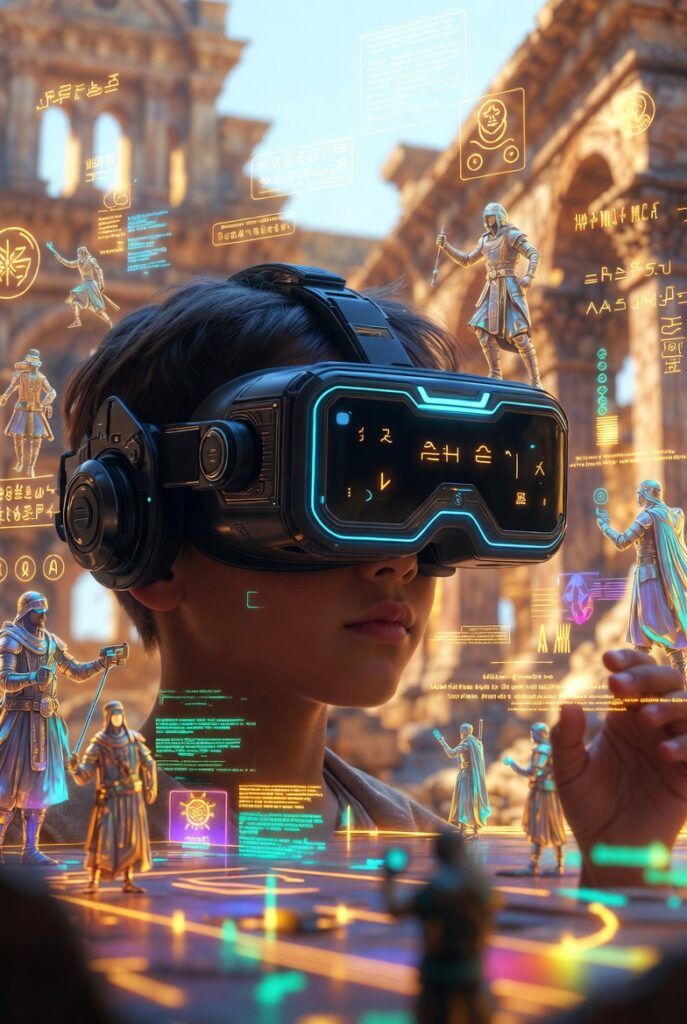
The next wave of EdTech innovations is going to make what we have today look primitive. AI is converging with augmented reality (AR) and virtual reality (VR) to create immersive, simulation-based learning environments that are genuinely breathtaking.
Imagine a history class where students can virtually walk through ancient Rome, guided by an AI that answers questions and adapts the experience to each learner’s curiosity and pace. Or a medical training program where AI and VR combine to simulate complex surgeries with haptic feedback. These aren’t science fiction anymore — they’re in development and early deployment right now.
AI is also powering multimodal learning — systems that can teach through text, audio, video, interactive simulation, or any combination, choosing the optimal format for each learner in each moment. That level of responsiveness and adaptability is unprecedented in the history of education.
Role of AI in Lifelong Learning
Education is no longer a phase of life that ends with graduation. In a world where job roles are being disrupted by automation, the ability to continuously learn and reskill is more important than ever. AI in learning platforms are making lifelong education more accessible, personalized, and effective.
Platforms like Coursera, LinkedIn Learning, and Udemy are already using AI to recommend courses, track skill development, and link learning directly to job outcomes. As AI in education matures, I see a future where your learning profile follows you throughout your career — constantly updated, always guiding you toward what you need to know next.
Will AI Replace Teachers?
This is probably the most common question I hear, and I want to give it an honest answer: no, I don’t think AI will replace teachers — but it will absolutely transform what teaching looks like.
AI can deliver content, assess knowledge, and adapt to learning styles. But it cannot build the genuine human relationships that motivate students to show up, persevere through difficulty, and develop into whole people. A teacher who cares, who notices when a student is struggling emotionally, who inspires curiosity and models intellectual humility — that is irreplaceable.
The future of education is human-AI collaboration. AI handles the analytical, repetitive, and scalable parts of teaching. Human educators handle everything that requires empathy, creativity, mentorship, and judgment. Together, they’re more powerful than either could be alone. That’s the vision I find genuinely exciting about AI in education.
How Educators and Institutions Can Adopt AI
Steps to Implement AI in Schools
If you’re a school leader or educator looking to bring AI in schools to life, here’s how I’d approach it:
- Start with clear goals. What problem are you trying to solve? Improving student outcomes? Reducing teacher workload? Don’t adopt AI for its own sake — adopt it to address a specific need.
- Audit your infrastructure. Do students have reliable device and internet access? Is your data management policy robust? Address these foundations before deploying AI tools.
- Pilot before scaling. Start with a small group of willing teachers and a specific tool. Collect feedback, measure impact, and iterate before rolling out school-wide.
- Choose tools with strong data privacy protections. Vet vendors carefully. Ask hard questions about data ownership, retention, and third-party sharing.
- Involve teachers in selection. The educators who will use these tools every day should have a meaningful voice in choosing them. Their buy-in is essential.
Best Practices for AI Adoption
Beyond the initial implementation steps, here are some best practices I’d suggest for sustainable, ethical AI adoption in educational settings:
- Invest in ongoing professional development. AI tools change fast. Teachers need regular training, not a one-time orientation session. Think of it as a continuous learning journey for educators, too.
- Keep the student at the center. Every AI adoption decision should be filtered through one question: does this actually improve the learning experience for students?
- Build feedback loops. Collect data on how AI tools are affecting student outcomes and teacher experience. Be willing to abandon tools that aren’t working, even if you’ve invested in them.
- Champion equity. Actively work to ensure that AI adoption doesn’t create or widen gaps between students with more and less access to resources.
- Stay ethically grounded. Artificial intelligence on education platforms should be transparent, auditable, and subject to human oversight. AI in teaching should empower educators, not surveil them.
Conclusion
I started this post with skepticism and I’m ending it with genuine optimism — but the cautious kind. AI in education isn’t a magic bullet, but it is one of the most powerful tools we’ve ever had for making learning more personal, more effective, and more equitable.
The potential is real. Personalized learning powered by AI can reach every student where they are. Adaptive learning systems can close gaps that have persisted for generations. AI classroom tools can give teachers back the time and energy they need to do their most important work. AI in higher education can help more students not just enroll, but succeed and graduate with skills that actually matter.
But the promise only gets realized if we’re thoughtful about how we deploy these technologies. Data privacy, algorithmic bias, accessibility, and teacher empowerment can’t be afterthoughts. They need to be core design principles from day one.
The future of education is one where human teachers and AI systems work together — each doing what they do best, in service of students who deserve the best possible learning experience. That’s a future worth working toward. And honestly? I think we’re closer to it than most people realize.
Artificial intelligence and education are on a path together. Let’s make sure it’s a path that works for everyone.
Frequently Asked Questions (FAQ)
These FAQs are designed to answer common questions and capture long-tail search traffic related to AI in education.
What is AI in education?
AI in education refers to the application of artificial intelligence technologies — including machine learning, natural language processing, and data analytics — to enhance teaching, learning, and school administration. It includes tools like adaptive learning platforms, intelligent tutoring systems, automated grading assistants, and predictive analytics systems that help identify at-risk students. The goal is to make education more personalized, efficient, and accessible for both students and educators.
How is AI used in schools?
AI in schools is being used in many ways: smart classrooms use AI to monitor engagement and adjust teaching in real time; adaptive learning platforms personalize content for each student; AI tutors provide one-on-one support outside class hours; grading tools automate assessment of assignments and quizzes; and administrative systems use AI to streamline enrollment, scheduling, and student support services. Schools are also using AI-powered analytics to track student progress and flag those who may need additional help before small problems become major ones.
What are examples of AI in education?
There are many compelling AI in education examples in use today. Khan Academy’s Khanmigo uses AI to tutor students with conversational guidance. Duolingo uses adaptive algorithms to personalize language learning. Carnegie Learning’s MATHia delivers AI-driven math instruction for K-12. Georgia Tech deployed “Jill Watson,” an AI teaching assistant that answers student questions in online courses. Gradescope uses machine learning to assist instructors in grading. Virtual labs AI platforms let students run simulated science experiments in fully digital environments — a particularly powerful tool for remote and under-resourced learners.
Is AI good for students?
Overall, yes — AI is beneficial for students when it’s implemented thoughtfully and ethically. The core advantages include personalized learning paths that adapt to each student’s unique needs, real-time feedback that keeps learning momentum going, and 24/7 availability of tutoring and support tools. Students using AI-powered platforms tend to learn faster and retain more compared to traditional approaches. However, it’s important that AI supplements rather than replaces human connection, that student data is protected, and that AI tools are designed with equity in mind so all students — not just those in well-resourced schools — can benefit.
How does adaptive learning work?
Adaptive learning uses AI algorithms to build a real-time model of each learner — tracking what they know, where they struggle, how they engage, and how quickly they progress. Based on this model, the system dynamically selects the most appropriate next piece of content, whether that’s a video, an exercise, an explanation, or a challenge. As the student interacts, the model continuously updates, creating a learning path that is unique to that individual. Unlike static curricula, adaptive learning systems respond moment-to-moment, ensuring students are always working at the edge of their current understanding — challenged but not overwhelmed.