I’m a digital entrepreneur and online education researcher who has personally tested and reviewed dozens of entrepreneurship courses across Coursera, edX, Udemy, and Harvard Online. I’ve built and sold digital products, consulted with early-stage startups, and run this blog to help founders make smarter learning decisions. Everything I recommend here is based on real, hands-on experience — not just reviews I’ve read elsewhere.
1.Introduction
I’ve spent years exploring online learning platforms, testing dozens of programs, and talking to founders at every stage of their journey. One thing I keep hearing is this: most founders wish they had taken the right entrepreneurship courses before launching their first business. The truth is, starting a business without the right knowledge is like building a house without a blueprint — you might get somewhere, but the cracks will show up fast.
Entrepreneurship courses give you the tools, frameworks, and real-world skills that most schools never teach. Whether you’re an aspiring founder, a freelancer building a brand, or a small business owner trying to scale, the right course can save you months of trial and error. Moreover, with so many options available today — from free programs to premium masterclasses — there’s truly something for everyone.
In this guide, I’ll walk you through the best entrepreneur courses available in 2026, including Harvard free online courses, top platforms, beginner picks, and advanced programs for founders who’re ready to scale. Let’s get started.
What Is Entrepreneurship and Why Does It Matter?
What Is Entrepreneurship?

Entrepreneurship is the process of creating, launching, and growing a new business while taking on the financial risks that come with it. In simple terms, it’s about identifying a problem and building a solution that people are willing to pay for. The definition of entrepreneurship goes beyond just starting a company, though. It also includes social ventures, creative businesses, and tech startups.
I think of entrepreneurship as a mindset as much as it is a business model. You don’t need a huge office or a team of fifty to be an entrepreneur. Sometimes, all it takes is a laptop, a solid idea, and the willingness to learn fast and fail faster. That’s why education plays such a big role in this journey.
Furthermore, entrepreneurship drives economic growth. It creates jobs, introduces new products, and pushes existing industries to improve. According to global research, small businesses and startups make up over 90% of businesses worldwide. So, understanding what entrepreneurship means and how it works has never been more relevant than it is today.
Entrepreneur Definition and Key Traits of Successful Founders
An entrepreneur is someone who spots an opportunity, takes calculated risks, and builds a business or product around it. However, the entrepreneur definition goes deeper than just owning a company. The best founders I’ve met share a specific set of traits that set them apart from the crowd.
Here are the key traits I’ve seen in successful entrepreneurs:
- Risk-taking: They are comfortable with uncertainty and willing to act without a guarantee of success.
- Creativity: They find new solutions to old problems instead of copying what already exists
- Leadership: They inspire and guide teams even when the path forward isn’t clear.
- Problem-solving: They stay focused on solutions rather than getting stuck on obstacles.
- Adaptability: They pivot quickly when the market or the plan changes unexpectedly.
- Financial awareness: They understand cash flow, budgeting, and the basics of business finance.
Importantly, these traits aren’t always natural — many of them can be learned. That’s exactly where entrepreneurial courses come in. They help you develop these skills in a structured way, with real examples and guidance built right into the curriculum.
Why Entrepreneurship Courses Are Valuable for Founders
Skills You Can Learn from Entrepreneurship Courses
When I first started my learning journey, I thought I just needed a great idea. What I quickly realized, however, is that execution is everything — and execution requires skills. Entrepreneurship courses teach you those skills in a way that’s practical, structured, and directly applicable to real business challenges.
Here’s a breakdown of the key skills you can gain from a quality entrepreneur course:
- Business planning: How to build a solid business model and financial projections.
- Product-market fit: Understanding whether your idea actually solves a real problem for real people.
- Marketing and branding: How to attract and keep your target audience engaged.
- Financial management: Budgeting, forecasting, and managing cash flow effectively.
- Fundraising: Pitching to investors, understanding equity, and exploring alternative funding sources.
- Sales and customer acquisition: Converting leads into paying customers consistently.
- Negotiation: Getting the best deals with suppliers, partners, and clients.
- Leadership: Managing teams, setting culture, and making hard decisions under pressure.
Beyond technical knowledge, entrepreneurship courses also build the right mindset. For instance, many programs teach you how to handle failure productively — and I believe that’s one of the most underrated startup skills out there.
If you’re also interested in how digital tools like AI can support your business, I highly recommend checking out this guide on free AI tools for students and professionals in 2026. It pairs really well with the business skills you’ll learn in entrepreneurship programs.
Who Should Take an Entrepreneurship Course?
This is a question I get asked a lot, and my honest answer is: almost anyone who wants to build something of their own. However, some groups benefit more than others. Let me break it down for you:
- New founders: If you’re launching your first business, an entrepreneur course gives you a roadmap and helps you avoid costly early mistakes.
- Small business owners: Even if you’ve been running a business for years, there’s always more to learn about scaling, marketing, or managing finances.
- Freelancers: Building a personal brand and a reliable client base requires many of the same skills as running a startup.
- Students: Starting early gives you a huge advantage. Entrepreneurial courses teach real-world skills that most college programs skip entirely.
- Side hustlers: If you’re building something alongside your 9-to-5, structured learning helps you move much faster.
- Content creators: Growing an audience and monetizing a brand is a form of entrepreneurship, and the skills overlap significantly.
In short, if you have a goal to build, grow, or sell something — there’s an entrepreneurship course out there that’s perfectly suited for you.
Best Entrepreneurship Courses for Founders
Best Beginner Entrepreneurship Courses
Starting out can feel overwhelming. Therefore, I always recommend beginner-friendly programs that ease you in with clear structure, practical assignments, and real startup examples. Here are the courses I’d point every new founder toward first:
1. Wharton Entrepreneurship Specialization (Coursera)
This is one of the most respected beginner programs available online. Offered by the University of Pennsylvania’s Wharton School, it covers opportunity identification, launch strategy, growth planning, and financing. It’s self-paced, so you can fit it around your schedule. Moreover, it includes a certificate that carries real professional credibility.
2. Entrepreneurship 101: Who Is Your Customer? (edX / MIT)
MIT offers this as part of a broader entrepreneurship series on edX. It focuses on the most critical question every founder must answer: who exactly is your customer? I found this course especially useful because it pushes you to do real customer discovery work rather than just reading theory.
3. Start Your Own Business (Udemy)
Udemy has dozens of beginner entrepreneurship courses, and this one consistently earns high ratings from students. It covers everything from generating business ideas to setting up your legal structure and landing your first customer. Additionally, Udemy courses go on sale regularly, so you can often grab one for under $20.
Best Advanced Entrepreneurship Courses for Scaling a Business
Once you’ve got your business off the ground, the next challenge is scaling it sustainably. Advanced entrepreneurship courses focus on growth strategy, team building, fundraising, and creating systems that run without your constant involvement. Here are my top picks for founders at this stage:
1. Entrepreneurship: Growing Your Business (Coursera / Wharton)
This is the advanced follow-up to the beginner Wharton series. It dives into growth strategies, financing decisions, and exit planning. If you’re already generating revenue and want to scale more intentionally, this is an excellent next step.
2. Scaling Up: Mastering the Rockefeller Habits
Based on Verne Harnish’s proven business framework, programs built on this methodology teach you how to build a high-performance team, create a strong company culture, and put the right operational systems in place. Personally, I found the focus on daily habits and business rhythm to be a genuine game changer for managing a growing team.
3. Venture Finance and Fundraising (edX)
If you’re planning to raise capital, this course is a must. It walks you through term sheets, equity structures, investor pitches, and what venture capitalists actually look for in a startup. Furthermore, it includes detailed case studies from real companies, which makes the content much easier to understand and apply.
Best Entrepreneurship Courses for Specific Skills
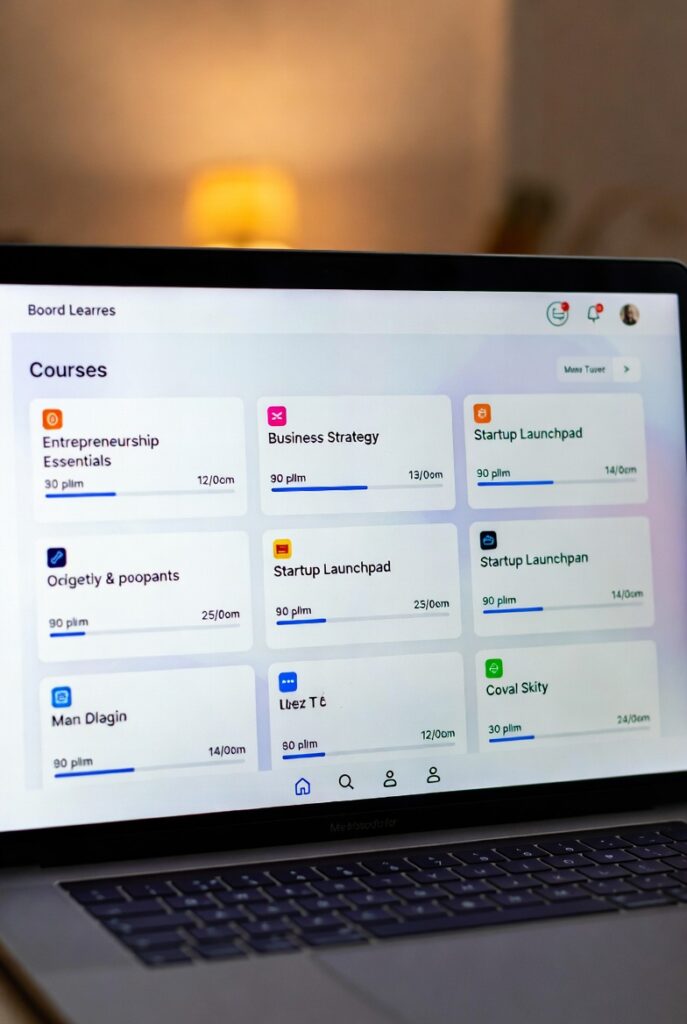
Sometimes, you don’t need a full program — you just need to sharpen one specific skill. Here are my top picks organized by category:
- Startup Finance: Financial Accounting by Wharton on Coursera.
- Marketing: A detailed breakdown of the best options is covered in this guide on digital marketing courses for business owners.
- Sales: Sales Training by HubSpot Academy — completely free and highly practical.
- Product Development: Product Management Fundamentals on LinkedIn Learning.
- E-commerce: Shopify’s Build a Business programs, which are free with a Shopify account.
- SaaS Founders: Y Combinator’s Startup Library — free content from one of the world’s top accelerators.
- Personal Branding: LinkedIn Learning’s Personal Branding courses for founders and creators.
For founders building a digital brand, social media knowledge is just as critical. I recommend checking out these top social media marketing courses to complement your entrepreneurship training.
Harvard Free Online Courses for Entrepreneurs
Best Harvard Free Online Courses for Startup Founders
Harvard’s online learning programs are some of the most respected in the world. The good news is that many of them are completely free to audit through edX and Harvard Online. Founders can access world-class content without paying thousands in tuition. However, if you want an official certificate, there is a fee involved.
Here are the Harvard free online courses I’d recommend most for startup founders:
1. Entrepreneurship in Emerging Economies (HarvardX via edX)
This course explores how entrepreneurs find opportunities and create value in developing markets. It’s especially relevant if you’re building a business in a region with fast-growing digital access. The case studies from Africa, Latin America, and South Asia are genuinely eye-opening and practical.
2. Negotiation Mastery (Harvard Business School Online)
Negotiation is a core founder skill, and Harvard’s program teaches it in a deeply practical way. You’ll learn how to read a room, make strong opening offers, and reach agreements that work for both sides. Moreover, the course uses simulations that put you in real negotiation scenarios — not just lectures.
3. Design Thinking and Innovation (HBS Online)
Innovation is at the heart of entrepreneurship, and this Harvard course teaches you how to apply design thinking to build better products and services. It’s also one of the most engaging Harvard programs I’ve seen — interactive, visual, and packed with real startup examples throughout.
4. Leadership Principles (HBS Online)
Leadership can make or break a startup. Harvard’s leadership course covers how to motivate teams, lead effectively under pressure, and build a culture of accountability. As your team grows, these lessons become absolutely essential for long-term success.
Are Harvard Online Courses Worth It for Entrepreneurs?
In my experience — yes, absolutely. Harvard courses carry significant brand value, and that matters when you’re pitching investors or building credibility in your industry. Furthermore, the content quality is consistently high, with instructors who have real-world business experience rather than just academic backgrounds.
Here’s a quick overview of what to expect across different Harvard course tiers:
| Feature | Free Audit | Paid Certificate | Full Program |
| Cost | Free | $250 – $2,500 | $5,000 – $15,000+ |
| Certificate | No | Yes | Yes (HBS credential) |
| Networking | Limited | Limited | Strong cohort access |
| Mentorship | No | No | Yes |
| Assignments | View only | Full access | Full access |
For most founders, auditing the free content is a smart starting point. Then, if you find the material genuinely useful for your business goals, investing in a certificate makes a lot of sense.

Best Platforms for Entrepreneurship Courses
Top Learning Platforms for Founders
Choosing the right platform is just as important as choosing the right course. Each platform has its own strengths, pricing model, and target learner. Here’s my honest breakdown based on personal experience:
| Platform | Best For | Price Range | Certificate |
| Coursera | University-backed programs | Free – $79/month | Yes |
| edX | Harvard, MIT, Ivy League courses | Free – $300+ | Yes |
| Udemy | Affordable, practical courses | $10 – $200 | Yes (basic) |
| LinkedIn Learning | Professional skill-building | $40/month | Yes |
| MasterClass | Insights from top founders | $120/year | No |
| Skillshare | Creative entrepreneurship | $32/month | No |
| HubSpot Academy | Marketing and sales training | Free | Yes |
| Harvard Online | Premium brand-name learning | Free – $15,000+ | Yes |
Which Platform Is Best for Different Types of Entrepreneurs?
Not every platform suits every type of founder. Therefore, here’s how I’d match them up based on your specific stage and goals:
- Beginners: Start with Udemy for affordability, then move to Coursera for more structured university-level programs.
- Startup founders: edX and Coursera offer deep content on strategy, finance, and growth.
- Freelancers: LinkedIn Learning and Skillshare are great for building creative and professional skills.
- Small business owners: HubSpot Academy offers excellent free training on marketing and sales.
- E-commerce founders: Udemy has targeted courses on Shopify, Amazon FBA, and dropshipping.
- Students: Harvard and MIT’s free programs on edX provide top-tier knowledge at no cost.
Additionally, if you’re building an AI-powered business, pairing your entrepreneurship training with tech knowledge is a strong move. Check out this overview of top AI skills for 2026 to understand what skills modern founders need to stay ahead.

How to Choose the Right Entrepreneurship Course
Factors to Consider Before Enrolling
With so many entrepreneurship courses on the market, choosing the right one can feel almost as hard as starting your business. However, a few key factors can help you narrow things down quickly and confidently. Here’s what I always look at before enrolling in any program:
- Budget: Set a clear spending limit before you start browsing. Free courses can be just as valuable as paid ones if the content is strong and well-structured.
- Time commitment: Be realistic about your schedule. A 40-hour course won’t help if you can only spare two hours a week.
- Course level: Make sure the program matches where you are right now, not just where you want to be someday.
- Certificate value: Check whether the certificate is recognized by employers or investors in your specific field.
- Real-world assignments: Courses with project-based learning give you something tangible to show for your time invested.
- Instructor expertise: Look for instructors with real founder or business experience — not just academic credentials.
- Reviews and ratings: Read what other students say, especially those who were at a similar stage as you.
- Community access: Some courses include forums, cohorts, or Slack groups. That peer access alone can be worth the price.
Free vs Paid Entrepreneurship Courses
This is one of the most common questions I get from aspiring founders. My honest take: both can be excellent, but they serve different needs. Here’s a side-by-side look to help you decide which option fits your situation:
| Factor | Free Courses | Paid Courses | Verdict |
| Cost | No cost | $10 to $15,000+ | Free wins for beginners |
| Depth | Good foundation | Deep and structured | Paid wins for advanced |
| Certificate | Rarely included | Usually included | Paid wins for credibility |
| Networking | Minimal access | Often included | Paid wins for community |
| Mentorship | Not available | Sometimes included | Paid wins overall |
| Accountability | Self-directed only | Structured deadlines | Paid wins for completion rates |
My recommendation: start with free courses to test your interest in the topic. Then, once you know exactly what you need most, invest in a paid program that gives you structure, community, and a certificate worth adding to your profile.
Mistakes Founders Make When Choosing Entrepreneurship Courses
Common Red Flags to Avoid
I’ve made my share of mistakes when picking courses, so let me save you some time and money. Watch out for these common red flags before you commit to any program:
- Outdated content: Business and technology move fast. A course from 2018 may teach strategies that simply don’t work in 2026.
- No real business examples: Theory without practical examples is almost useless for founders. You need to see how concepts apply in the real world.
- Generic advice with no depth: “Work hard and believe in yourself” is not a business strategy. Avoid courses that are heavy on motivation but light on actionable frameworks.
- High price without community or mentorship: If you’re paying over $500, the course should come with some level of peer access or mentorship.
- Unrealistic promises: Any course guaranteeing you’ll make $10,000 in 30 days is selling a fantasy, not a real education.
How to Get the Most Value from an Entrepreneurship Course
Enrolling is just the beginning. Getting real value from a course requires intentional action throughout the entire process. Here’s exactly how I approach every program I take:
- Take consistent notes: Don’t just watch — write down key ideas in your own words. This forces you to truly process the material.
- Build a real project while learning: Apply each lesson directly to your business idea. Theory sticks far better when it’s connected to something real and personal.
- Join communities and founder groups: Most platforms have active forums or cohort groups. Participating in these regularly multiplies what you learn.
- Apply lessons immediately: Don’t wait until you finish the full course before taking action. Try one thing from each module right away.
- Track measurable outcomes: Set a specific goal before you start. For instance, “After this course, I’ll have a written business plan” gives you a clear way to measure your progress.
Speaking of applying what you learn, understanding how AI is reshaping business is a real advantage for modern founders. Take a look at this guide on AI in education and machine learning to see how these tools are changing how we learn and build businesses today.
Final Thoughts on Entrepreneurship Courses for Founders
After going through this journey myself — taking courses, testing platforms, and applying lessons to real projects — I can say with confidence that the right entrepreneurship courses genuinely accelerate your growth as a founder. They help you avoid mistakes that can cost months of time and thousands of dollars. More importantly, they give you a framework for thinking about business in a smarter, more structured way.
My advice is simple: don’t wait until you feel 100% ready. Start with a beginner-friendly course today, apply one lesson to your business idea this week, and build from there. The best founders I know are always learning — not because they have to, but because they genuinely love the process of getting better every single day.
Whether you choose a Harvard free online course or a hands-on program on Udemy, the most important thing is that you start. Knowledge only becomes valuable when you put it into action. So pick a course, commit fully to it, and go build something you’re proud of.
Frequently Asked Questions
What are the best entrepreneurship courses for beginners?
The Wharton Entrepreneurship Specialization on Coursera and MIT’s Entrepreneurship 101 on edX are both excellent starting points. They are structured, practical, and backed by top universities with proven track records.
Are entrepreneurship courses worth it?
Yes — especially if you pick the right one for your current stage. A good course can save you from costly early mistakes, teach you proven business frameworks, and connect you with a community of like-minded founders who are on a similar journey.
Can I learn entrepreneurship online for free?
Absolutely. Harvard, MIT, and Wharton all offer free content through edX and Coursera. HubSpot Academy also provides excellent free training on marketing and sales. You can build a solid business foundation without spending a single dollar.
What is entrepreneurship in simple words?
Entrepreneurship is the process of spotting a problem, creating a solution, and building a business around it — while taking on the risks and rewards that come with it.
Which Harvard free online courses are best for entrepreneurs?
Entrepreneurship in Emerging Economies, Negotiation Mastery, and Design Thinking and Innovation are all strong picks from Harvard’s free content library. They cover the core skills that every modern founder needs.
What skills should every entrepreneur learn?
Every founder should develop skills in business planning, sales, marketing, financial management, negotiation, leadership, and product development. Additionally, understanding digital tools and AI is increasingly important for founders building in 2026 and beyond.
How long does it take to complete an entrepreneurship course?
It depends on the program. Short beginner courses can take 5 to 10 hours in total. Comprehensive specializations might take 3 to 6 months at a few hours per week. Advanced MBA-style programs can run anywhere from 6 to 12 months.