Table of Contents
• Why Social Media Marketing Courses Matter in 2026
– Social Media Marketing Is One of the Most In-Demand Skills
– How Social Media Marketing Courses Help Build Real Skills
• What to Look for in the Best Social Media Marketing Courses
– Course Content and Modules
– Certification and Credibility
– Beginner vs Advanced Learning Paths
• Best Social Media Marketing Courses for 2026
– Best Free Social Media Marketing Courses
– Best Paid Social Media Marketing Courses
– Best Courses for Beginners
– Best Advanced Social Media and Marketing Courses
• Best Platforms to Learn Social Media Marketing Online
– University-Style Learning Platforms
– Practical Skills Platforms
– Industry Certification Platforms
• How to Choose the Right Social Media Marketing Course
– Choose Based on Your Goals
– Consider Budget, Time, and Certification
– Check Reviews, Student Feedback, and Course Updates
• Social Media Marketing Skills You Will Learn
• Career Opportunities After Taking These Courses
– Popular Social Media Marketing Jobs
– Freelancing and Agency Opportunities
– Expected Salary and Income Potential
• Common Mistakes to Avoid When Choosing a Course
• Frequently Asked Questions (FAQ)
Introduction
If you’ve been thinking about leveling up your online skills, social media marketing courses are honestly one of the best investments you can make right now. In 2026, platforms like TikTok, Instagram, LinkedIn, YouTube, and Facebook are not just places to scroll — they’re powerful business engines driving billions in revenue every single day. The demand for people who truly understand these platforms has never been stronger, and that’s exactly why this guide exists.
I’ve spent years working in the digital marketing space, and I can tell you firsthand: skilled social media marketers are in serious demand. Brands, startups, and solo entrepreneurs are actively looking for people who can grow an audience, run paid ads, and build engagement that actually converts into real results.
Furthermore, whether you’re a complete beginner, a small business owner, or a seasoned marketer who wants to stay ahead, this guide breaks down the best free and paid courses, beginner and advanced options, and the top platforms available. Additionally, I’ve included free, paid, certified, and self-paced options so you can find exactly what fits your goals and budget. Let’s get into it.

Why Social Media Marketing Courses Matter in 2026
Social Media Marketing Is One of the Most In-Demand Skills
Let me be real with you — social media is no longer optional for businesses of any size. According to LinkedIn’s 2025 Jobs on the Rise report, social media marketing roles have grown by over 63% in the last three years. Moreover, global social media advertising spend is projected to exceed $270 billion by the end of 2026, according to Statista. That’s an enormous industry, and it needs trained professionals.
So what does this mean for you? It means real opportunities exist right now — for freelancers, agency professionals, small business owners, and job seekers alike. Brands need people who can create compelling content, run paid ad campaigns, manage influencer partnerships, analyze performance data, and develop long-term growth strategies.
In addition, the rise of AI-powered marketing tools has made it even more important to stay updated. If you already have some experience, combining your existing knowledge with fresh courses in social media marketing can genuinely set you apart from the competition.
How Social Media Marketing Courses Help Build Real Skills
One thing I truly appreciate about structured learning is the clear roadmap it provides. Instead of piecing together random YouTube tutorials and hoping they connect, a proper marketing social media course walks you through everything in a logical, progressive sequence. Here’s what you typically build skills in:
- Campaign planning and execution from scratch
- Audience targeting, segmentation, and persona development
- Paid advertising on Facebook, Instagram, TikTok, and LinkedIn
- Content strategy, copywriting, and editorial calendars
- Analytics, performance reporting, and KPI tracking
- Social media management tools like Hootsuite, Buffer, and Sprout Social
Therefore, by the time you complete a solid course, you’re not just carrying theoretical knowledge — you can apply these skills directly to real campaigns. That’s the difference between reading about swimming and actually jumping into the pool.
What to Look for in the Best Social Media Marketing Courses
Course Content and Modules
Not all courses are built equally, and I’ve personally worked through enough of them to recognize the warning signs fast. A strong social media and marketing course should cover a broad but focused curriculum. Here’s specifically what to look for in any program you’re considering:
- Clear social media strategy framework and platform-specific tactics
- Organic growth methods including social SEO and community building
- Paid social advertising — Facebook Ads Manager, Instagram Ads, TikTok Ads
- Video marketing for Reels, YouTube Shorts, and TikTok content
- Influencer campaign planning and partnership management
- Analytics, KPIs, and data-driven decision making
- Content calendars, scheduling tools, and workflow systems
Moreover, always prioritize courses that include hands-on projects or real case studies. Theory is essential, but applying what you learn is where actual growth happens. A course that makes you build something real is worth far more than one that just lectures at you.
Certification and Credibility
Certificates matter more than most people initially realize. When I added my HubSpot Social Media Certification to my LinkedIn profile early in my career, the increase in recruiter outreach genuinely surprised me. A certificate from a trusted platform tells employers and clients that you’ve completed structured, verified training — not just watched a few YouTube videos.
However, not every certificate carries equal weight in the industry. Certifications from platforms like Google, Meta, HubSpot, and Coursera are broadly recognized and respected. On the other hand, certificates from lesser-known or unverified platforms may not add much value to your resume or profile.
In addition, certificates are especially powerful if you’re building a freelancing profile on platforms like Upwork or Fiverr. Clients feel significantly more confident hiring someone who can show verified proof of professional learning.
Beginner vs Advanced Learning Paths
Your current skill level should always drive your course selection. If you’re brand new to marketing, you’ll want a beginner-friendly social media marketing class that explains foundational concepts clearly — things like how algorithms work, how ad auctions operate, and how to create a consistent content calendar.
On the other hand, if you already have practical experience, advanced marketing social media classes explore topics like A/B testing, conversion funnel optimization, marketing automation, and AI-driven campaign strategy. These advanced programs assume foundational knowledge, so jumping in without the right base can lead to frustration rather than growth.
My personal advice? Even if you think you know the basics, revisit a beginner course. You’ll almost always pick up something new, and the structured approach will solidify your existing knowledge in ways you didn’t expect.
Best Social Media Marketing Courses for 2026
Best Free Social Media Marketing Courses
Free courses have genuinely improved over the past few years. In fact, some of the most valuable social media marketing training available today costs absolutely nothing. Here are my top picks for 2026:
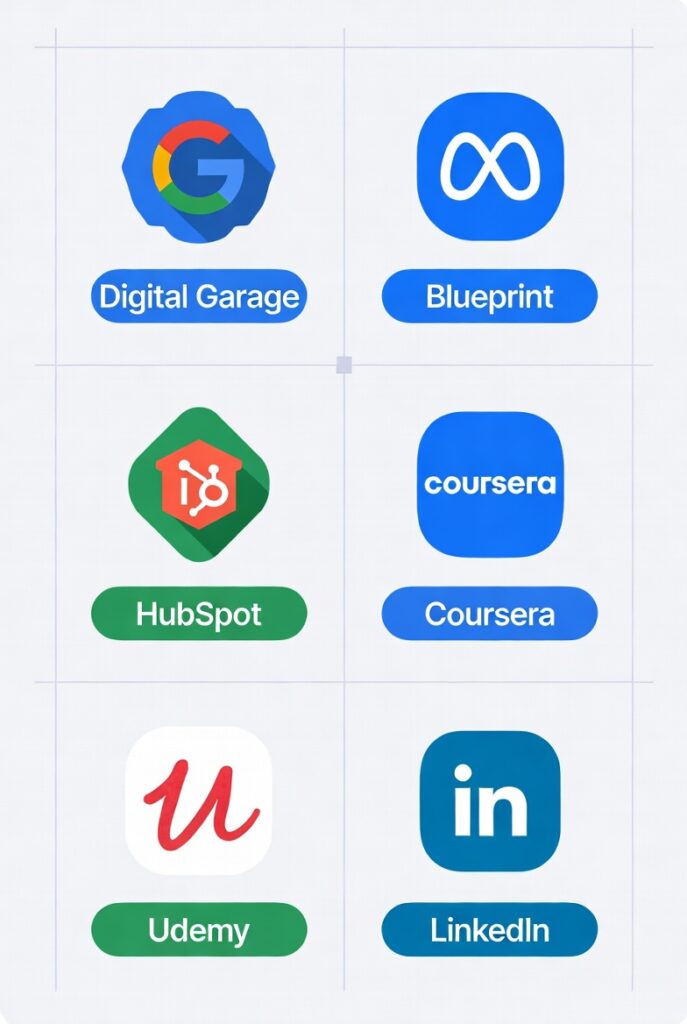
- Google Digital Garage – Fundamentals of Digital Marketing: This free course covers core digital marketing principles, including social media strategy, analytics, and content creation. It’s accredited by the Interactive Advertising Bureau Europe and The Open University, which adds real-world credibility to the certification.
- Meta Blueprint – Social Media Advertising Courses: Meta offers free self-paced learning modules directly focused on Facebook and Instagram advertising. Furthermore, their paid certification paths — like the Meta Certified Digital Marketing Associate — are highly respected by agencies and brands.
- HubSpot Academy – Social Media Certification: HubSpot’s free social media certification is one I personally completed in my early career. It covers content strategy, social listening, community management, and measuring ROI — all incredibly practical and immediately applicable skills.
- Coursera – Beginner-Friendly Programs: Coursera offers free audit options for many excellent social media and marketing courses from universities like Northwestern and the University of California, Davis. These are structured like real university courses with proper assessments.
Additionally, if you want to explore AI tools that complement your social media workflow, check out this resource on free AI tools for students and professionals — they can seriously boost your content creation speed and quality.
Best Paid Social Media Marketing Courses
When you’re ready to invest in more comprehensive training, paid courses offer structured learning paths, expert instructors, downloadable resources, and community support. Here are the platforms I recommend most for 2026:
- Udemy: Offers hundreds of courses covering every aspect of social media marketing. Always look for courses with 4.5+ star ratings, over 1,000 reviews, and recent content updates. Prices are very affordable, especially during their regular sale events.
- LinkedIn Learning: Perfect for professionals who want verified completions added directly to their LinkedIn profile. Their social media marketing courses are consistently updated and immediately practical for real-world application.
- Simplilearn: Offers professional-grade certification programs ideal for those aiming for senior marketing roles. Their Advanced Social Media Marketing course is particularly well-regarded in the industry.
- Skillshare: An excellent choice for creative professionals focused on content creation, visual storytelling, and building a distinctive brand aesthetic for social media.
Moreover, many of these platforms offer free trial periods, so you can explore the teaching style and content quality before committing financially. That’s something I always recommend — test before you invest.
Best Social Media Marketing Courses for Beginners
If you’re just starting out, the most important thing is choosing a course that won’t overwhelm you on day one. Beginner-focused internet marketing classes are designed to be approachable, structured, and practical from the very beginning.
For complete beginners, I suggest starting with HubSpot’s free Social Media Certification or Google Digital Garage’s digital marketing fundamentals. Both are self-paced, require zero prior experience, and give you a genuinely solid foundation. After that, a beginner-level course on Coursera or Udemy helps you go deeper into platform-specific strategies like Instagram Reels growth, TikTok content strategy, or LinkedIn lead generation.
Also, if you’re interested in expanding your digital skill set beyond social media, I highly recommend exploring AI courses for beginners — understanding AI tools will make you a far more effective and future-ready marketer in 2026.
Best Advanced Social Media and Marketing Courses
Once you’ve got the basics covered, it’s time to go significantly deeper. Advanced social media and marketing courses explore topics that most beginners never even encounter — and that’s exactly where you build a real competitive edge in the market.
Here’s what advanced programs typically cover in 2026:
- Advanced ad targeting, custom audiences, and lookalike audience strategies
- Full-funnel conversion strategies from awareness all the way to purchase
- Marketing automation using platforms like HubSpot, ActiveCampaign, and Zapier
- Social commerce and in-app shopping features on Instagram and TikTok
- AI-driven content scheduling, performance prediction, and creative optimization
- Influencer marketing strategy, ROI measurement, and long-term partnership management
Furthermore, understanding how AI intersects with social media marketing is becoming genuinely critical for advanced professionals. If you want to dive deeper into this area, check out this guide on AI in education and machine learning to understand exactly where these technologies are heading.
Best Platforms to Learn Social Media Marketing Online
University-Style Learning Platforms
If you prefer structured, academically rigorous learning, these platforms consistently deliver the highest-quality educational experiences:
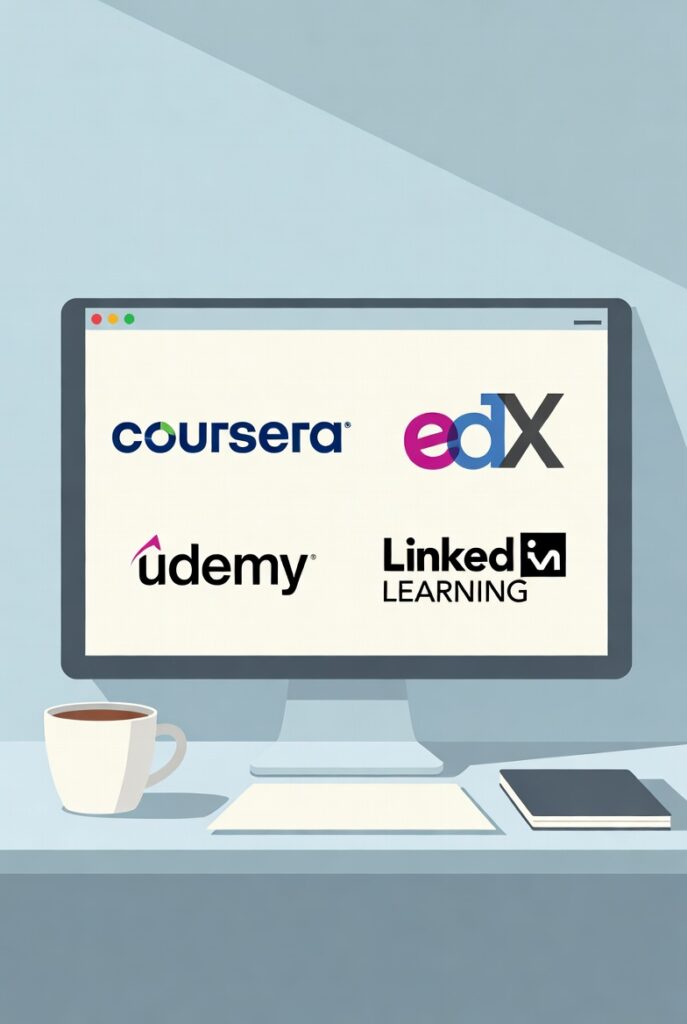
- Coursera: Partners with top universities worldwide, including Stanford, Duke, and Google itself. You can audit courses for free or pay for a verified certificate. Their Google Digital Marketing and E-commerce Professional Certificate is one of the most popular and respected programs available in 2026.
- edX: Similar in structure to Coursera, edX offers courses from MIT, Harvard, and other globally recognized institutions. Their Professional Certificate programs are excellent for serious learners who want university-backed credentials that carry real weight.
- Udacity: Focuses on job-ready nanodegree programs built in collaboration with industry partners. Their Digital Marketing Nanodegree is comprehensive, hands-on, and includes real-world projects reviewed by industry experts.
Additionally, these platforms often offer financial aid or scholarship options, which is absolutely worth exploring if budget is a real constraint for you.
Practical Skills Platforms
On the other hand, if you prefer hands-on, project-based learning that gets you working immediately, these platforms are better suited to your style:
- Udemy: Massive library of affordable courses covering every imaginable social media topic. Best for quickly learning specific skills like Facebook Ads Manager, TikTok content strategy, or Instagram growth techniques.
- Skillshare: A community-focused platform with shorter, creative classes. Particularly great for content creators who want to improve visual storytelling, graphic design for social media, and building a distinctive online aesthetic.
- LinkedIn Learning: Ideal for professionals who want to stay current with evolving industry trends. Courses are short, highly practical, and integrate seamlessly with your LinkedIn profile to showcase completed learning.
Industry Certification Platforms
For the most credible and industry-recognized certifications, these platforms are the gold standard in digital marketing:
- Meta Blueprint: The official training and certification platform for Facebook and Instagram advertising. A Meta Certified Digital Marketing Associate badge genuinely carries real weight with clients and agency employers.
- Google Digital Garage: Free, accessible, and globally recognized. Their digital marketing certifications are accredited by trusted organizations and are ideal for anyone building a career in digital or internet marketing.
- HubSpot Academy: Completely free, with certifications spanning social media, content marketing, email marketing, SEO, and more. HubSpot certifications are among the most widely recognized credentials in the inbound marketing world.
In my experience, combining a university-style course with an industry certification gives you the best of both worlds — academic depth combined with practical, market-tested credibility.
How to Choose the Right Social Media Marketing Course
Choose Based on Your Goals
Your goal should always be the primary driver of your course selection. Here’s a practical breakdown based on what you’re actually trying to achieve:
- Freelancers: Focus on platform-specific skills, client management, and proposal writing. Meta Blueprint and Udemy courses focused on Facebook and Instagram Ads are strong starting points.
- Business owners: Look for courses covering strategy, content planning, analytics, and budget management. HubSpot Academy and Google Digital Garage are particularly well-suited.
- Agency professionals: Advanced certifications from Simplilearn or LinkedIn Learning help you pitch clients more confidently and manage larger campaign budgets effectively.
- Job seekers: University-backed programs from Coursera or edX carry the most resume weight and signal serious commitment to professional growth.
- Content creators: Skillshare and YouTube-focused Udemy courses help you grow your audience, build a monetization strategy, and develop a consistent content brand.
Also, if you’re a business owner looking to combine social media marketing with a broader digital strategy, this guide on digital marketing courses for business owners is a fantastic companion resource to explore alongside your social media learning.
Consider Budget, Time, and Certification
Budget is a real and valid consideration, and there’s absolutely no shame in working within your financial limits. The good news is that some of the best social media marketing education available today is either completely free or very affordable.
Here’s a simple and practical way to think about your options:
- Free and limited on time: HubSpot Academy, Google Digital Garage, Meta Blueprint
- Low budget with consistent time available: Udemy courses during sale events — often available for under $15
- Medium budget with scheduling flexibility: LinkedIn Learning or Skillshare monthly subscriptions
- Willing to make a serious investment: Simplilearn or Coursera Professional Certificate programs
Furthermore, consider honestly how you learn best. Self-paced courses are excellent if you have a busy or unpredictable schedule, while cohort-based programs with live sessions give you accountability, direct instructor access, and meaningful networking opportunities.
Check Reviews, Student Feedback, and Course Updates
One of the most common mistakes I see people make is enrolling in a course without checking when it was last updated. Social media changes remarkably fast — a course from 2022 may still be teaching strategies based on algorithm rules that no longer apply in 2026.
Therefore, always verify the course’s last update date before enrolling. Read through student reviews carefully, specifically looking for comments about practical value, instructor responsiveness, and whether the content translated into real-world results. A course with 10,000 enrolled students and a 4.7-star rating is almost always a safer bet than one with 200 students and no recent reviews or engagement.
Social Media Marketing Skills You Will Learn
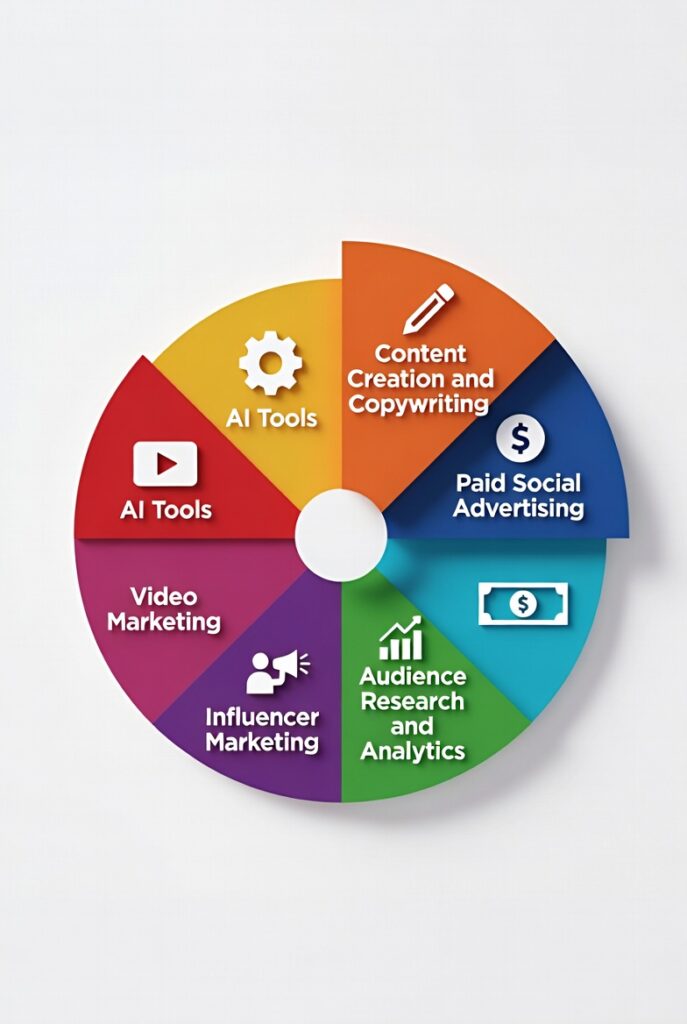
Content Creation and Copywriting
Content is the absolute foundation of everything in social media marketing. Through structured courses, you’ll learn how to write engaging captions, create scroll-stopping visuals, and develop a brand voice that genuinely connects with your target audience. Moreover, you’ll understand how to adapt and tailor content for different platforms — because what resonates strongly on LinkedIn is very different from what performs on TikTok or Instagram Stories.
Social Media Advertising
Paid advertising is where many marketers unlock exponential growth. You’ll learn how to set up and manage ad campaigns on Facebook, Instagram, TikTok, and LinkedIn. That includes writing compelling ad copy, designing effective creative assets, choosing the right objectives, and managing campaign budgets efficiently. Additionally, understanding retargeting strategies and lookalike audience building can dramatically improve your return on ad spend over time.
Audience Research and Analytics
Understanding your audience deeply is the secret weapon of every truly great social media marketer. You’ll learn how to use native platform analytics tools, interpret engagement data, identify your best-performing content types, and make consistently data-driven decisions. Furthermore, tools like Google Analytics, Meta Business Suite, and Sprout Social become natural parts of your daily workflow once you’ve built the analytical foundation.
Influencer Marketing and Brand Partnerships
Influencer marketing has grown into a multi-billion dollar industry, and knowing how to run effective campaigns is a highly valuable and well-compensated skill. You’ll learn how to identify the right influencers for specific brand goals, structure fair and effective partnerships, negotiate terms professionally, and measure campaign results with precision. In addition, micro-influencer strategies have become especially effective for brands working with smaller budgets but wanting high engagement rates.
Video Marketing for TikTok, Instagram, and YouTube
Video content completely dominates social media in 2026 — and that trend is only accelerating. Through quality courses, you’ll learn how to script, film, and edit short-form videos for TikTok and Instagram Reels, as well as longer-form content for YouTube. Understanding hooks, pacing, caption strategy, trending audio, and thumbnail design are all core parts of the curriculum in leading digital marketing courses today.
AI Tools for Social Media Marketing
AI is fundamentally reshaping how smart marketers work every day. You’ll learn how to use AI tools for content generation, scheduling optimization, sentiment analysis, competitive research, and performance prediction. These tools don’t replace your creativity — instead, they multiply your output and allow you to work smarter across multiple platforms simultaneously.
If you’re curious about how ChatGPT can specifically fit into your marketing workflow, this ChatGPT prompt engineering guide is an excellent starting point for understanding practical AI applications in content creation and campaign planning.
Career Opportunities After Taking Social Media Marketing Courses
Popular Social Media Marketing Jobs
Completing a recognized social media marketing course opens doors to a wide range of genuinely rewarding career paths. Here are the most in-demand roles going into 2026:
- Social Media Manager: Oversees all platform activity, content scheduling, community engagement, and brand voice consistency for a business or brand.
- Content Strategist: Develops and executes comprehensive content plans aligned with specific business goals, audience insights, and platform algorithms.
- Paid Ads Specialist: Manages paid social campaigns across Meta, TikTok, LinkedIn, and YouTube — responsible for budget, targeting, creative testing, and ROAS optimization.
- Digital Marketing Specialist: Combines social media expertise with SEO, email marketing, and broader digital growth strategy for a fully integrated approach.
- Influencer Marketing Manager: Builds and manages long-term brand partnerships with creators and influencers across platforms.
- Community Manager: Engages directly with followers, manages comments and DMs, runs online communities, and builds authentic brand loyalty online.
Furthermore, the vast majority of these roles can be performed fully remotely, which adds a significant layer of lifestyle flexibility and global opportunity.
Freelancing and Agency Opportunities
One of the things I genuinely love about social media marketing is that you don’t need to work for a large company to build a great career and income. Freelancing is a very real and highly accessible path once you’ve completed your courses and built even a modest portfolio.
You can start by offering your services to local small businesses at a reduced rate to gain portfolio-worthy experience. Then, you gradually expand your client base through referrals and platforms like Upwork, Fiverr, or LinkedIn outreach. Many successful freelancers eventually scale into running their own agencies, managing teams of content creators, ad specialists, and social media strategists.
Also, if you want to round out your professional profile with broader technology skills, exploring top AI skills for 2026 can make you a significantly more versatile and competitive professional in today’s market.
Expected Salary and Income Potential
Wondering what you can realistically earn after completing social media marketing courses? Here’s a clear and honest breakdown based on current market data for 2026:
- Entry-level social media roles: $38,000–$52,000 per year (US average)
- Mid-level marketing positions: $55,000–$80,000 per year
- Senior or specialist roles: $85,000–$120,000+ per year
- Freelance social media managers: $30–$150+ per hour, depending on specialization and demonstrated results
Additionally, income potential grows significantly when you combine social media expertise with paid advertising skills, advanced analytics, or AI tool proficiency. The more versatile and results-driven you become, the higher you can reasonably charge for your services.
Common Mistakes to Avoid When Choosing a Social Media Marketing Course
Choosing Outdated Courses
This is probably the single most common mistake I encounter, and it can genuinely hold your growth back. Social media platforms update their algorithms, ad systems, creative formats, and features on a constant basis. A course built around Instagram growth strategies from 2021 may now actively recommend tactics that hurt your organic reach rather than helping it. Therefore, always verify the course’s last update date and ensure the curriculum clearly reflects 2025 or 2026 platform realities before enrolling.
Ignoring Practical Assignments
A course structured entirely around video lectures with no hands-on practice won’t fully prepare you for the real world of marketing. Look specifically for courses that include projects, real-brand case studies, or practical simulations. For example, building an actual content calendar for a fictional brand, running a small test ad campaign with a limited daily budget, or analyzing a real company’s social media performance — these practical components make all the difference between theoretical knowledge and marketable skills.
Focusing Only on Certificates
Certificates are genuinely useful tools, but they are not the whole picture. I’ve personally seen people collect five or six certifications and still struggle to land their first client or marketing role because they never actually practiced their skills in a real context. Moreover, employers and clients will almost always ask you to show what you’ve built, managed, or improved — not just which certificates appear on your profile. Therefore, always balance certificate collecting with consistent, real portfolio building.
Avoiding Courses With Real Case Studies
Case studies are genuinely some of the most valuable learning content available in marketing education. They show you exactly how successful campaigns were built from the ground up, what went wrong in real failed campaigns, and how experienced professionals make fast decisions under pressure and uncertainty. In addition, courses that include recognizable real-brand case studies tend to be far more engaging, memorable, and practically useful than purely theoretical programs. Always prioritize real-world examples when evaluating your course options.
Final Thoughts on the Best Social Media Marketing Courses for 2026
After everything I’ve covered in this guide, one thing is absolutely clear: investing in social media marketing courses is one of the smartest professional moves you can make in 2026. The skills you develop are immediately applicable, globally in demand, and relevant across virtually every industry — from e-commerce and SaaS to healthcare, education, and beyond.
Moreover, the best part is that you genuinely don’t need to spend a fortune to get started. Free courses from Google, Meta, and HubSpot can give you a powerful and credible foundation. From there, you can build strategically with paid certifications, advanced programs, and hands-on portfolio projects that showcase your real-world capabilities to clients and employers.
My personal advice is simple: don’t overthink the starting point. Pick one course that honestly matches your current skill level and start today. Combine your social media learning with broader digital marketing courses to maximize your career and income potential. Also, stay curious about emerging tools — AI is actively changing how marketing campaigns are built and measured every single month.
Finally, if you’re serious about building a long-term career in the digital space, also consider expanding into adjacent professional skills. For example, this guide on cybersecurity skills for digital professionals explains why data protection and online security awareness matter even for marketers managing client accounts and paid ad budgets. Now go find your course — and let’s get to work.
Frequently Asked Questions (FAQ)
Note: FAQ word count is not included in the main article total.
Which social media marketing course is best for beginners?
For complete beginners, I recommend starting with HubSpot Academy‘s free Social Media Certification or Google Digital Garage‘s Fundamentals of Digital Marketing. Both are free, fully self-paced, and require zero prior experience. They give you a solid, credible foundation before you progress to more advanced programs or platform-specific training.
Are free social media marketing courses worth it?
Yes, absolutely — especially when they come from trusted platforms like Google, Meta, and HubSpot. These free courses are well-structured, regularly updated to reflect current platform realities, and offer recognized certifications upon completion. They’re an excellent starting point, and you can always supplement them with targeted paid courses as your goals become more specific.
How long does it take to learn social media marketing?
It depends on your starting point and how consistently you dedicate study time. Most people can complete a solid foundational course in 2 to 4 weeks with regular effort. To become truly proficient and job-ready, plan for 3 to 6 months of structured learning combined with hands-on real-world practice. Full professional mastery — the kind that commands premium rates — typically develops over a year or more of active campaign management and continuous learning.
Can I get a job after completing a social media marketing course?
Yes, and many people do. The key is combining your certification with a practical portfolio that demonstrates real work you’ve created or managed. Even starting by managing social media for a friend’s small business, a local nonprofit, or a personal project gives you legitimate portfolio material. Employers and clients want to see what you’ve actually built — certification plus portfolio is a genuinely powerful combination.
What is the difference between digital marketing courses and social media marketing courses?
Digital marketing courses cover a much broader range of channels and tactics — including SEO, email marketing, pay-per-click advertising, content marketing, conversion optimization, and analytics — alongside social media. Social media marketing courses focus specifically on platforms like Instagram, TikTok, LinkedIn, Facebook, and YouTube. Many professionals strategically take both types to build a well-rounded, versatile skill set that makes them valuable across multiple marketing channels.
Which platform offers the best marketing social media course?
It honestly depends on your specific goal. For free certifications with strong credibility, HubSpot Academy and Google Digital Garage are the top choices. For paid programs with serious industry recognition, Coursera and LinkedIn Learning are excellent investments. For hands-on, affordable, practical learning at your own pace, Udemy is genuinely hard to beat. And if Facebook or Instagram advertising is your primary focus, Meta Blueprint is the most relevant and directly applicable platform available.