1. Introduction to Small Business Management Courses

Small business management courses have become one of the most in-demand learning resources in 2026 — and for good reason. If you’ve ever felt overwhelmed trying to juggle operations, marketing, and finances all at once, you’re not alone. I’ve been there myself, and I can tell you firsthand that structured learning genuinely changes how you run a business. The right course gives you clarity, tools, and confidence that are hard to build through trial and error alone.
Moreover, the demand for online business education has exploded in recent years. More entrepreneurs, freelancers, and small business owners are turning to online learning platforms to close the gap between where they are and where they want to be. Fortunately, you no longer need to attend an expensive business school to get world-class knowledge.
In this guide, I’m going to walk you through everything you need to know — from the types of courses available to how to pick the right one for your goals. Whether you’re a startup founder, a freelancer scaling up, or an SMB owner looking to sharpen your skills, this guide is written for you.
Furthermore, you’ll discover which platforms offer the best value, what topics to focus on first, and how to build a learning path that fits your schedule and budget. Let’s dive in.
2. Why Small Business Management Courses Are Essential Today
Running a small business today is very different from what it was even five years ago. The competitive landscape has shifted dramatically. Digital tools, changing customer behavior, and global economic pressures mean that business owners need to constantly adapt and grow. As a result, ongoing education has moved from being a luxury to an absolute necessity.
However, many business owners skip formal training because they believe they don’t have the time. In reality, the opposite is true. Investing even a few hours a week in learning can save you months of costly trial and error. Online small business management courses solve this problem perfectly — they’re flexible, affordable, and built for real-world application.
Key Benefits of Taking Business Courses Online
- Flexibility: Study at your own pace, on your own schedule — morning, evening, or weekend.
- Affordability: Many courses cost far less than traditional business programs or consultants.
- Global Expertise: Learn directly from industry leaders and experienced entrepreneurs worldwide.
- Practical Skills: Courses focus on real scenarios you’ll actually face while running your business.
- Immediate Application: You can start using what you learn in your business right away.
Additionally, business courses online help you make smarter decisions every day. For example, understanding basic financial management can prevent cash flow crises. Similarly, learning digital marketing strategies can significantly reduce your cost per customer acquisition. Therefore, the return on investment for education is often far higher than most business owners expect.
According to LinkedIn Learning’s 2025 Workplace Learning Report, professionals who dedicate time to structured learning are 47% more likely to achieve their business and career goals. That statistic alone is a compelling reason to start.
3. Types of Small Business Management Courses You Can Take
Not all courses are created equal. In fact, the learning landscape is incredibly diverse. So let me break down the main types for you so you can figure out which one fits your situation best.
Free Online Business Courses
Free business courses online are a great starting point, especially if you’re exploring a new skill area. Platforms like Google, HubSpot, and Coursera offer genuinely high-quality free content that covers everything from basic business planning to digital marketing fundamentals.
However, free courses do come with some limitations. They often lack structured mentorship, peer community support, and formal certifications. Nevertheless, for building foundational knowledge, they’re absolutely worth your time. I’d recommend starting with a few free courses before committing to a paid program.
For instance, if you’re curious about AI tools that can also support your business operations, check out this guide on free AI tools for students and professionals in 2026 — it’s a great companion resource for any business owner.
Paid and Professional Certification Courses
Paid courses, on the other hand, offer a much more structured learning experience. They typically include video lectures, practical assignments, peer interaction, and a certificate upon completion. That certificate can genuinely add credibility when you’re pitching to investors, hiring staff, or building partnerships.
Furthermore, platforms like Coursera and edX offer paid specializations developed in collaboration with top universities. These are not just courses — they’re comprehensive learning journeys that can take three to six months to complete.
Specialized Small Business Courses
Beyond general management courses, there are also highly specialized options that focus on specific business functions. These are incredibly useful when you want to go deep on one topic rather than broad across many areas.
• Marketing and Sales Courses
• Financial Management and Accounting
• Operations and Supply Chain Management
• Leadership and Team Building
• E-commerce and Online Business Strategy
Each of these specialized tracks can be taken independently or combined into a well-rounded curriculum. In addition, many of these niche courses are taught by practitioners — people who’ve actually built and run businesses — which makes the content immediately practical and relevant.
4. Best Online Platforms for Small Business Courses
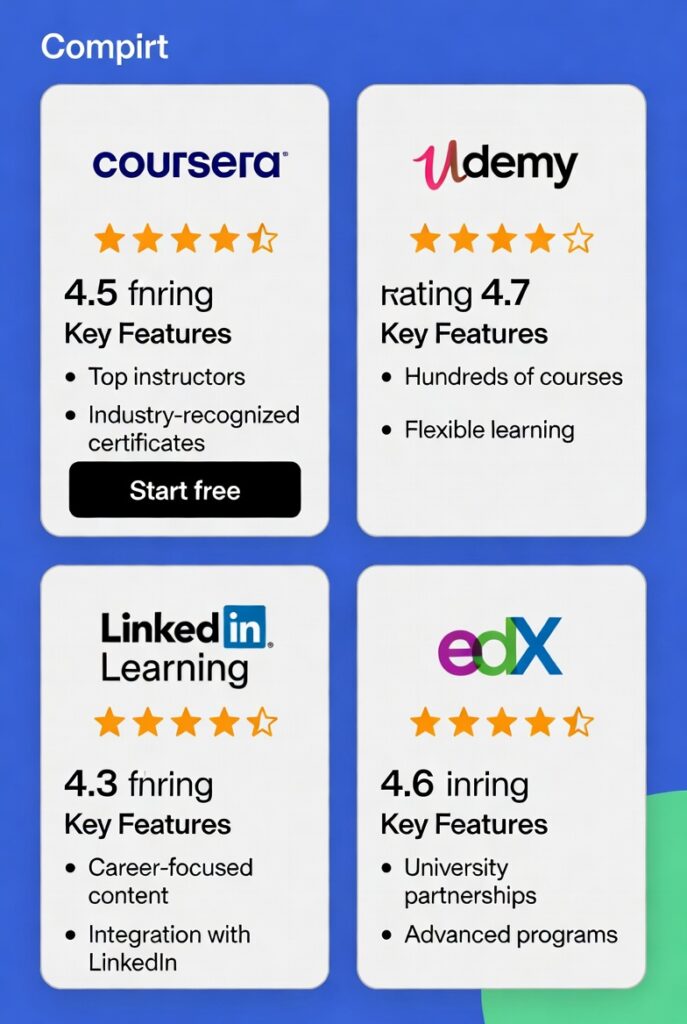
Choosing the right platform is just as important as choosing the right course. Fortunately, there are several excellent options available today, each with its own strengths and pricing models. Here’s a breakdown of the platforms I’ve personally explored and recommend.
Coursera — Partners with top universities like Yale, Michigan, and Stanford. Offers structured programs with recognized certificates. Pricing starts at around $49/month for Plus membership. Best for: in-depth, university-backed learning.
Udemy — The largest library of individual courses on the internet. Course prices typically range from $15 to $30 during regular sales. Best for: targeted, skill-specific learning on a tight budget.
LinkedIn Learning — Integrates directly with your LinkedIn profile, so completed courses appear on your resume automatically. Pricing is around $40/month. Best for: professionals who want their learning to be visible to employers and clients.
edX — Similar to Coursera, with a strong focus on professional certificates and MicroMasters programs. Many courses are free to audit. Best for: those who want structured programs with optional paid certificates.
Moreover, each platform offers its own community features, mobile apps, and downloadable content options. Therefore, I’d suggest exploring the free tier on two or three platforms before committing to one. Most platforms offer free trials or audit options so you can sample course quality first.
Also, if you’re exploring entrepreneurship more broadly, check out this guide on entrepreneurship courses for founders — it pairs perfectly with any small business management program.
5. Key Topics Covered in Small Business Management Courses
One of the most common questions I hear is: what exactly will I learn? The answer depends on the course, but most quality programs cover a consistent core set of business topics. Let me walk you through the major areas you can expect to study.
Business Planning and Strategy
First and foremost, every small business needs a clear and actionable plan. Courses in this area teach you how to create a scalable business plan, conduct thorough market research, analyze your competition, and define a compelling value proposition. Furthermore, you’ll learn how to set short-term and long-term goals and build strategies to achieve them consistently.
This section is truly foundational. Without a solid strategy, even the best products and services can struggle to survive. According to the U.S. Small Business Administration, about 20% of small businesses fail in their first year — often because of poor planning rather than poor products.
Financial Management for Small Businesses
Understanding your finances is non-negotiable as a business owner. Therefore, most management courses dedicate a significant portion of their curriculum to financial topics, including:
- Budgeting and financial forecasting
- Reading and creating financial statements
- Cash flow management and working capital
- Pricing strategies for sustainable profitability
- Basic tax planning and compliance for small businesses
Additionally, even if you hire an accountant, you still need to understand what the numbers mean so you can make informed decisions. Good courses make financial management surprisingly approachable — even for people who think they’re bad with numbers.
Marketing and Customer Acquisition
No business survives without customers. Consequently, marketing is one of the most heavily covered topics in business management programs. You’ll learn digital marketing fundamentals, how to run effective social media campaigns, email marketing strategies, paid advertising basics, and — crucially — how to retain customers once you’ve acquired them.
For deeper learning in this area, I highly recommend exploring digital marketing courses for business owners and our dedicated guide on social media marketing courses — both are excellent companions to any business management program.
Operations and Business Processes
Efficient operations are the backbone of a profitable business. In this module, you’ll typically learn how to optimize workflows, manage inventory, set up simple supply chain systems, and use automation tools to streamline repetitive tasks. As a result, you can spend more time on high-value growth activities instead of getting stuck in day-to-day firefighting.
Leadership and Team Management
Finally, as your business grows, you’ll need to manage people effectively. Leadership modules within business management courses cover hiring strategies, onboarding processes, managing team performance, resolving conflicts professionally, and building a positive company culture that retains great people.
In my experience, this is the area that most solo founders overlook — and then struggle with the most when they start hiring. Therefore, I’d encourage you not to skip this module, even if you’re currently a one-person operation.
6. How to Choose the Best Small Business Management Course

With so many options out there, choosing the right course can feel overwhelming. However, a simple five-step framework makes this decision much easier. Here’s how I personally approach it when evaluating a new course.
Step 1 — Define your goals: Are you trying to improve a specific skill like financial management, or do you want a broad overview of running a business? Your answer will immediately narrow down your choices significantly.
Step 2 — Assess your current level: Are you a complete beginner, or do you already have some business experience? Look for courses labeled beginner, intermediate, or advanced and pick the one that matches your actual starting point.
Step 3 — Check the curriculum carefully: Don’t just read the course title. Scroll through the full syllabus. Make sure the topics covered actually align with what you need right now.
Step 4 — Read reviews and check instructor credentials: Look for courses with recent reviews — ideally from the last 12 months. Check whether the instructor has real business experience, not just academic qualifications.
Step 5 — Decide between certification and skill-building: If you need a credential to show clients, investors, or employers, go for a certified course. If you simply want practical knowledge fast, a non-certified course is perfectly fine and often more cost-effective.
Also, set a learning budget upfront. Decide how much time per week you can realistically commit and how much you’re willing to spend. This simple exercise immediately filters out options that don’t fit your lifestyle and financial situation.
7. Free vs Paid Business Courses: Which One Should You Choose?
This is one of the most common questions in the online learning space, and honestly, the answer depends entirely on your specific situation. So let me break it down in plain terms.
When Free Courses Are Enough
Free online business courses are ideal if you’re just starting out and want to explore a topic before committing. They’re also great for brushing up on a specific skill quickly without the pressure of completing a full program. Platforms like Google Digital Garage, HubSpot Academy, and Coursera’s free audit option are excellent starting points.
Furthermore, if your budget is tight — especially in the early stages of your business — free courses let you build genuine knowledge without financial strain. Therefore, I always recommend starting with free resources and upgrading only when you’ve clearly identified a specific skill gap that needs deeper attention.
When to Invest in a Paid Course
On the other hand, paid courses are worth the investment when you need structured guidance, accountability, community support, or a recognized certificate. For instance, if you’re planning to pitch to investors or apply for a business loan, a business management certificate from a reputable platform can meaningfully strengthen your credibility.
Additionally, paid courses often include mentorship opportunities, live Q&A sessions, and active peer communities that simply aren’t available in free versions. These elements accelerate your learning significantly. As a result, the return on investment from a well-chosen paid course is often enormous compared to its upfront cost.
The bottom line? Start free, then go paid when you have a clear goal and a specific outcome you’re working toward. That combination gives you the best of both worlds.
8. Step-by-Step Learning Path for Small Business Owners
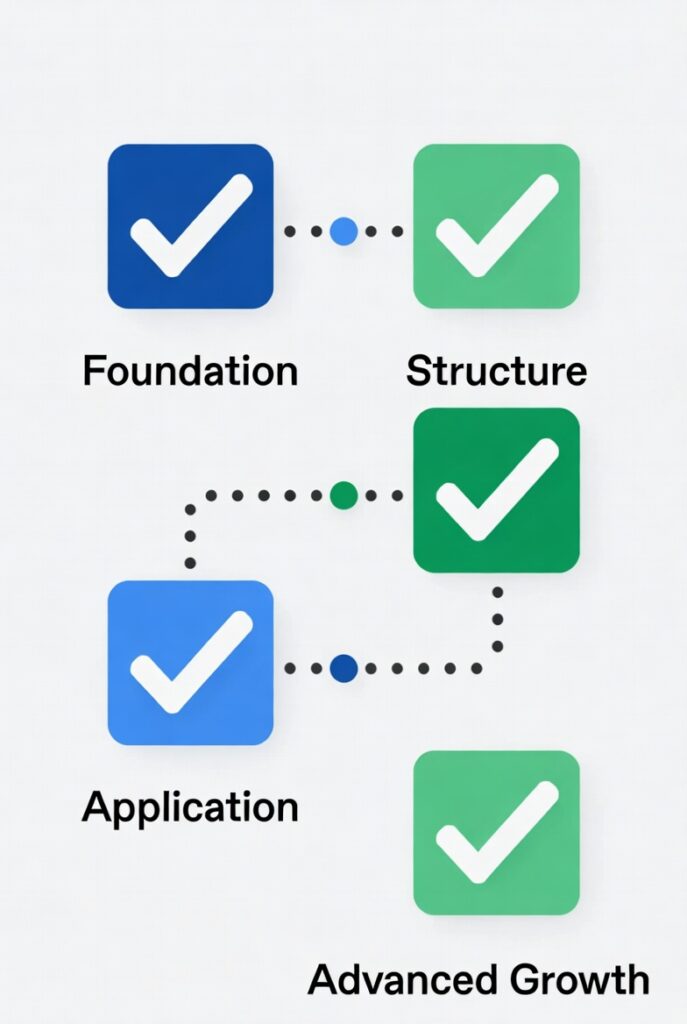
Rather than jumping randomly between courses, I strongly recommend following a structured learning path. This approach helps you build knowledge logically and apply it progressively to your real business. Here’s the step-by-step path I recommend for most small business owners:
- Start with free foundational courses: Begin with platforms like Google Digital Garage or HubSpot Academy. Focus on business basics — planning, marketing fundamentals, and financial literacy. This gives you a solid foundation without any financial commitment, and it helps you understand which areas need the most attention.
- Move to a structured management program: Once you’ve covered the basics, enroll in a structured small business management course on Coursera or edX. Programs like the Business Foundations Specialization from Wharton connect the dots across different business disciplines in a logical sequence.
- Apply learning to real scenarios immediately: This is the most critical step — and the one most people skip. As you learn, immediately apply the concepts to your own business. Update your business plan, test a new marketing strategy, or revamp your pricing model. Learning without application is just information.
- Scale with advanced certifications: Once you’ve built practical experience and identified deeper areas of interest, invest in advanced certifications. Leadership programs, advanced financial management, or specialized marketing credentials can take your skills — and your business — to the next level.
Also, don’t overlook tech skills as part of your learning journey. For example, understanding AI is increasingly relevant for small business owners. Check out this guide on AI courses for beginners — it’s a smart addition to any modern business education plan.
9. Common Mistakes to Avoid When Taking Business Courses
I’ve seen many people invest real time and money in courses and get very little out of them. Not because the courses were bad, but because of avoidable mistakes. Here are the most common pitfalls — and how to steer clear of each one.
- Consuming without implementing: This is by far the most widespread mistake. Many people finish course after course without ever applying what they’ve learned. Therefore, set at least one action item after every module — no matter how small — and follow through on it.
- Choosing outdated courses: Always check the last updated date before enrolling. Business landscapes and digital tools change quickly. A marketing course from 2019 will not reflect the realities of 2026.
- Ignoring niche-specific content: General business courses are excellent for foundations, but if you’re in a specific industry — such as food and beverage or tech services — look for courses tailored to your niche.
- Overloading with too many courses at once: Taking five courses simultaneously is a reliable recipe for burnout and poor retention. Focus on one course at a time, finish it, apply it, and then move on to the next.
- Skipping the fundamentals: Many people jump straight to advanced topics like fundraising or growth hacking before mastering the basics. Build your foundation first — it’s not glamorous, but it’s essential.
Furthermore, if your business involves digital tools and automation, it’s also worth exploring resources like ChatGPT prompt engineering — a skill that’s becoming increasingly valuable for business owners who want to use AI effectively in their daily operations.
10. Real-World Benefits of Taking Small Business Courses

At this point, you might be wondering: does all this learning actually translate into real, measurable results? In short — yes, absolutely. Let me share the most impactful benefits I’ve seen firsthand and heard from other business owners who’ve committed to structured training.
Improved revenue and profitability: Business owners who understand pricing strategy, financial management, and customer acquisition consistently make better decisions that directly impact their bottom line. For example, simply learning how to price your services correctly can increase profitability without adding a single new customer.
Better operational efficiency: Learning workflow optimization and process management helps you do more with less. As a result, you spend fewer hours on administrative tasks and more time on high-value work that actually grows your business.
Stronger marketing strategies: Courses in digital marketing teach you how to reach the right audience at the right time with the right message. Consequently, your marketing budget goes further and your conversion rates improve meaningfully.
Increased confidence in decision-making: Perhaps the most underrated benefit. When you understand core business principles, you make decisions from a position of knowledge rather than guesswork. That confidence is contagious — it affects how your team, customers, and partners perceive and trust you.
Greater adaptability to change: Finally, continuous learning keeps you informed about trends and shifts in your industry. Therefore, you’re less likely to be caught off guard by market changes and much better positioned to pivot successfully when circumstances demand it.
Also, if you want to future-proof your business with technology skills, explore our guides on top AI skills for 2026 — these complement your management education beautifully.
11. Conclusion: Start Your Small Business Learning Journey Today
There has truly never been a better time to invest in your business education. The combination of accessible online platforms, flexible scheduling, and genuinely practical course content means that learning how to manage a business better is within reach for everyone — regardless of budget or background.
Throughout this guide, I’ve walked you through the types of small business management courses available, the best platforms to find them, the key topics they cover, and how to build a learning path that fits your specific goals and lifestyle. Moreover, I’ve shared the common pitfalls to avoid and the real-world results that structured learning can produce for motivated business owners.
My honest advice? Start today. Pick one free course in the area where you feel weakest. Commit to finishing it. Then apply what you learn — even imperfectly. That first step is the one that matters most, and everything builds from there.
Additionally, remember that business education is not a one-time event. It’s an ongoing practice. The most successful entrepreneurs I know are, without exception, lifelong learners. They read constantly, take courses regularly, seek mentors actively, and challenge their own assumptions. That mindset is, ultimately, the real competitive advantage.
So go ahead — find that first course, block some learning time in your calendar, and take control of your business growth. You’ve got this.
Frequently Asked Questions (FAQ)
What is the best small business management course online?
The best course depends on your goals and experience level. However, Coursera’s Business Foundations Specialization from Wharton is consistently rated among the top programs for comprehensive management learning. For more targeted, affordable learning, Udemy offers excellent options. Start by defining what specific skill you need most, then search accordingly.
Are free online business courses worth it?
Absolutely — especially as a starting point. Platforms like Google Digital Garage, HubSpot Academy, and Coursera’s free audit mode offer genuinely high-quality content. Free courses are perfect for building foundational knowledge, exploring a new topic, or refreshing a specific skill without any financial commitment.
How long does it take to learn small business management?
It varies based on the depth of learning you’re pursuing. A focused foundational course might take 10 to 20 hours to complete. A comprehensive management specialization could take three to six months at a few hours per week. The key is consistency — even 30 minutes of focused learning per day adds up remarkably quickly.
Can I run a business without formal training?
Yes — many successful entrepreneurs are entirely self-taught. However, structured learning significantly reduces the learning curve and helps you avoid costly mistakes that could set your business back. Even a few targeted courses can make a meaningful difference in how effectively you manage, grow, and scale your business.
Which platform offers the best online small business management courses?
Coursera is often the top recommendation for comprehensive, university-backed programs. Udemy is excellent for targeted, budget-friendly courses. LinkedIn Learning is ideal for professionals who want completed courses visible on their profile. edX is a strong option for professional certificates backed by university credibility. All four are solid choices — the best one depends on your priorities, budget, and learning style.