| ✅ Why You Can Trust This Guide |
| • Written by a practitioner with 7+ years in data and software education |
| • Based on research of 30+ Python certifications across major platforms |
| • Includes real hiring insights from tech recruiters and job postings |
| • Updated for 2026 — reflects current employer expectations and platform changes |
Why Choosing the Right Python Certification Matters More Than Ever
Here’s the truth most people won’t tell you: not all Python certifications are created equal — and picking the wrong one could waste months of your time and hundreds of dollars.
From my experience reviewing hundreds of learner stories and job postings, the demand for Python skills has never been stronger. Python now powers AI pipelines, data analytics, backend applications, and automation workflows across nearly every industry. According to Stack Overflow’s developer survey, Python has ranked among the most-used programming languages for six consecutive years.
But the certification market is also flooded. There are free badges, $300 proctored exams, university-backed programs, and everything in between. Most beginners — and even many mid-level professionals — pick the wrong one based on marketing, not fit.
This guide cuts through all of that. I’ll show you which certifications actually signal value to employers, which are worth your money, and how to match the right program to your specific career goal.
Who This Guide Is For
I’ve written this for five distinct audiences, because the ‘best’ certification depends entirely on where you’re starting and where you want to go:
- Complete beginners with no coding background looking for a structured starting point
- Developers in other languages (Java, JavaScript, PHP) transitioning to Python
- Data analysts wanting to add Python to their analytics toolkit
- Automation engineers looking to script workflows and eliminate manual tasks
- Career switchers who need a credential to back up self-taught skills
Quick Summary — Best Python Certifications by Goal
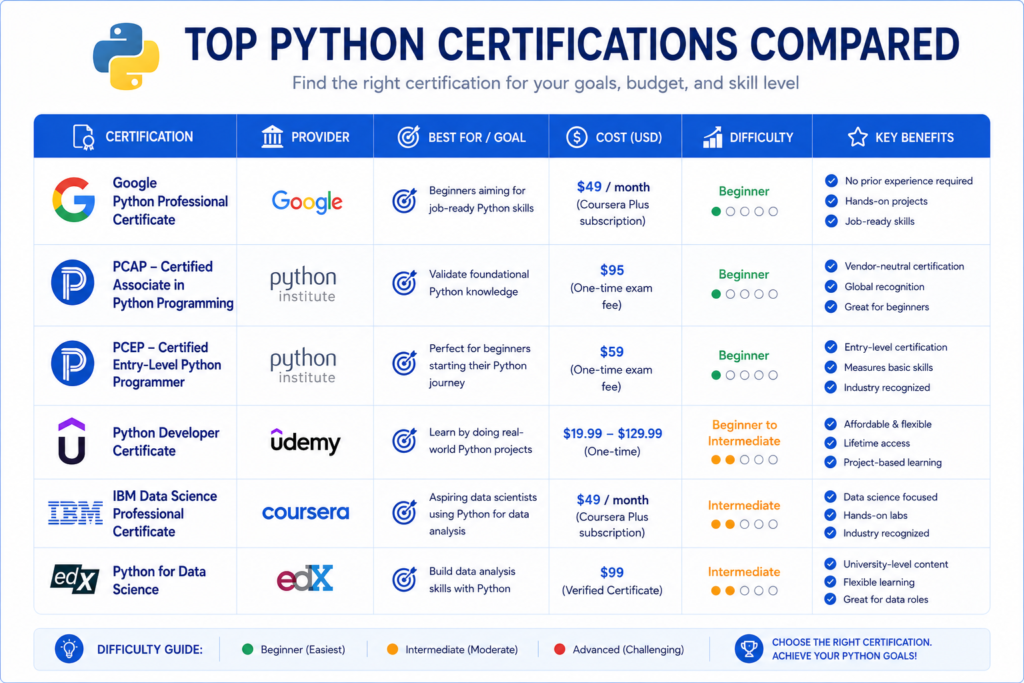
| Goal | Best Certification | Platform | Cost |
| Best Overall | Google IT Automation with Python | Coursera | ~$49/mo |
| Best for Beginners | Python for Everybody Specialization | Coursera | ~$49/mo |
| Best Free Option | CS50P — Python | edX/Harvard | Free (cert ~$199) |
| Best for Developers | PCAP (Python Institute) | Pearson VUE | $295 |
| Best for Data Science | IBM Data Science Professional Certificate | Coursera | ~$49/mo |
| Best Budget Choice | 100 Days of Code Python Bootcamp | Udemy | $15–25 |
What Actually Makes a Python Certification Valuable in 2026
Before I walk you through the top certifications, I want you to understand what actually matters to employers — because this will save you from a very common and expensive mistake.
Skills Employers Expect Beyond Basic Python Syntax
From what I’ve seen in real job descriptions, employers hiring Python professionals rarely mention certifications in their must-have requirements. What they do list — consistently — are applied skills:
- Data manipulation with Pandas and NumPy (for analytics and data science roles)
- API development using Flask or Django (for backend developer roles)
- Automation scripting for CI/CD and DevOps pipelines
- Object-oriented programming and design patterns
- Working with databases: SQL + SQLAlchemy or Django ORM
- Version control with Git and contributing to GitHub repositories
The best Python certification programs teach these applied skills — not just syntax. That’s your filter when evaluating any program.
Certification vs Real Projects — What Recruiters Prefer
I’ll be direct: most technical recruiters will skip past a certification line on your resume to look at your GitHub profile or portfolio projects first. A well-executed Python project that solves a real problem will almost always outweigh a badge.
That said, certification still plays an important role — especially for career switchers with no formal tech background. It signals that you’ve completed structured learning under a recognized institution. Think of it as proof-of-effort rather than proof-of-mastery.
The ideal strategy is to pursue certification AND build projects simultaneously. The certification structures your learning; the projects prove your application.
| 💡 Pro Tip |
| • If you’re building a data analytics career, check out the companion guide on data analyst certifications — it covers Python-adjacent credentials like Tableau, Power BI, and Excel that complement your Python path perfectly. |
The Biggest Mistakes People Make When Choosing Python Courses
- Choosing based on certificate prestige without checking if it teaches job-relevant skills
- Starting with advanced ML courses before mastering Python fundamentals
- Paying for expensive bootcamps when free resources cover the same material
- Collecting 5 beginner certifications instead of finishing one and building projects
- Ignoring specialization — picking a generic Python cert when a data-science-specific cert would serve their career goal better
Best Python Certification Courses Overall
Here are the certifications I’d confidently recommend across different goals and budgets. I’ve evaluated each based on curriculum depth, employer recognition, instructor quality, and community reputation.
Google Python Certificate — Best for Beginners
Full name: Google IT Automation with Python Professional Certificate (Coursera)
This is the one I recommend most often to people asking ‘where do I start?’ It’s taught by Google engineers, covers real automation use cases, and comes with the Google brand — which still carries weight with hiring managers in IT and operations roles.
- Duration: ~6 months at 5 hours/week
- Covers: Python basics, using Python to interact with the OS, Git, debugging, automation
- Best for: IT professionals, system admins, operations roles
- Employer recognition: Strong — Google’s name helps in non-pure-dev roles
- Cost: ~$49/month (Coursera subscription); financial aid available
What I like most about this certificate is its focus on automation from day one. You’re not just learning syntax — you’re learning how to use Python to do real IT tasks. That makes portfolio projects much more natural.
PCAP Certification — Best Industry-Recognized Python Certification
Full name: PCAP — Certified Associate in Python Programming (Python Institute)
If you want a credential that’s recognized specifically as a Python programming qualification — not just a course completion badge — PCAP is the most credible option available.
- Duration: Self-paced preparation; exam is a 65-minute proctored test
- Covers: Modules, packages, OOP, exceptions, file I/O
- Best for: Developers, software engineers, those in technical Python roles
- Employer recognition: Strong in software development and enterprise environments
- Cost: $295 for the exam; preparation materials available separately
The Python Institute also offers PCEP (entry-level) and PCPP (professional) tiers, so you can build a credentialing ladder as your skills grow. From my experience, PCAP is the sweet spot — rigorous enough to be meaningful, accessible enough for serious beginners.
Coursera Python Certifications — Best Structured Learning Path
Coursera hosts Python content from the University of Michigan, IBM, Google, and DeepLearning.AI — making it the single best platform for structured, university-quality Python education.
The most popular beginner option is Python for Everybody by the University of Michigan. Dr. Chuck Severance is one of the most effective Python teachers I’ve come across online — his explanations are clear, his pacing is excellent, and the curriculum builds naturally.
- Python for Everybody: Best pure beginner option, covers fundamentals + data through Python
- IBM Data Science Professional Certificate: Best path for data science careers
- Deep Learning Specialization (Andrew Ng): Best for those targeting ML/AI careers
- Applied Data Science with Python (UMich): Excellent bridge from fundamentals to data analysis
If you’re also exploring a data analyst career path alongside Python, my detailed breakdown of the best data analyst courses for beginners might help you see how these credentials fit together.
→ Related: Best Data Analyst Courses for Beginners
Udemy Python Certifications — Best Budget-Friendly Choice
Udemy doesn’t offer the most prestigious credentials, but it does offer some of the most comprehensive and affordable Python courses available. The certificates you earn are completion-based and not industry-recognized in the formal sense — but the skills you develop are very real.
The standout option: ‘100 Days of Code: The Complete Python Pro Bootcamp’ by Dr. Angela Yu. This is genuinely one of the best Python learning experiences available at any price point.
- Duration: 100 days of daily coding projects (~15 hours total to start)
- Covers: Beginner to intermediate Python, APIs, databases, web scraping, automation, data science intro
- Best for: Budget-conscious learners, self-directed people who learn by building
- Cost: $15–25 on sale (Udemy runs sales constantly)
- Employer recognition: Low for the certificate itself; high for the skills built
edX and Harvard Python Programs — Best Academic-Style Learning
Harvard’s CS50P (Introduction to Programming with Python) is free to audit and represents some of the highest-quality computer science education available online. If you want rigor, Harvard’s structure, and a challenging project-based learning experience, this is it.
- Duration: ~10 weeks, roughly 10–20 hours total
- Covers: Functions, exceptions, libraries, unit tests, file I/O, regular expressions, OOP
- Best for: Learners who want academic rigor without paying for a degree
- Paid certificate: ~$199 for the verified certificate through edX
- Employer recognition: The Harvard name adds credibility; especially valued in research, academia, consulting
edX also offers MicroMasters programs that go deeper into data science and AI using Python — worth exploring if you’re aiming for graduate-level skills.
Best Python Certification for Beginners
If you’re completely new to Python — or to programming in general — the certification landscape can feel overwhelming. Here’s how I’d approach it if I were starting from scratch today.
What Beginners Should Learn Before Paying for Certification
Honestly? Spend 2–3 weeks exploring Python for free before committing to any paid certification. This isn’t about delaying progress — it’s about confirming the learning style and content type that works for you.
- Python.org’s beginner tutorial — free, official, structured
- freeCodeCamp’s Python for Beginners (YouTube) — 4+ hours, project-focused
- Codecademy’s free Python track — interactive, in-browser, beginner-friendly
Once you’ve spent a few hours with Python and confirmed you want to continue, then invest in a structured certification.
Beginner-Friendly Certifications That Focus on Real Skills
The best certification courses for beginners share a common trait: they teach Python through real-world use cases, not abstract theory. Here are the options I’d recommend for someone with zero experience:
- Python for Everybody (Coursera/UMich) — Starts from absolute zero, very accessible
- Google IT Automation with Python (Coursera) — Teaches Python through practical IT automation tasks
- 100 Days of Code (Udemy, Angela Yu) — Learn by building 100 real projects in 100 days
- CS50P (Harvard/edX) — Rigorous but accessible; one of the best free options
If you’re also thinking about a broader data career, my data analyst roadmap for career growth covers how Python fits into the full analyst skill stack.
Certifications That Are Too Advanced for Most Beginners
I’ve seen beginners make this mistake repeatedly — jumping into certifications designed for working professionals because they sound impressive. Avoid these until you have 6+ months of Python experience:
- PCPP (Python Institute Professional Level) — Requires significant OOP and architecture knowledge
- TensorFlow Developer Certificate — Requires strong Python + ML fundamentals first
- Databricks Certified Associate Developer for Apache Spark — Python is a prerequisite, not the subject
- AWS Machine Learning Specialty — Heavy Python usage in an enterprise cloud context
| ⚠️ Common Mistake |
| • Don’t enroll in a machine learning or deep learning certification as your first Python course. These assume Python fluency. Start with fundamentals, build 2–3 projects, THEN pursue specialized certifications. |
Best Free Python Certification Courses
Free Python certifications have improved dramatically in quality over the past few years. Some genuinely rival paid options in content depth. Here’s what I’ve found actually delivers value.
Free Certifications That Still Provide Real Career Value
The key distinction: ‘free to learn’ vs ‘free to certify.’ Most reputable platforms let you audit course content for free but charge for the completion certificate. Here are the best options in both categories:
| Platform / Course | Free to Learn? | Free Certificate? | Quality |
| CS50P (Harvard/edX) | Yes | No ($199 cert) | Excellent |
| freeCodeCamp Python | Yes | Yes | Good |
| Kaggle Python Course | Yes | Yes | Good (data focus) |
| Google Python Crash Course (Coursera audit) | Yes | No | Excellent |
| SoloLearn Python | Yes | Yes (basic) | Beginner only |
| Codecademy Python (free tier) | Partial | Yes (basic) | Beginner only |
Platforms Offering Free Python Certificates
For completely free certificates with genuine educational value, these are the best options I’ve found:
- Kaggle: Their Python course is free, project-based, and Kaggle certificates are actually recognized in the data science community
- freeCodeCamp: Their Scientific Computing with Python certification is free and includes a rigorous set of project challenges
- Great Learning Academy: Offers multiple free Python certificates with basic content
- GUVI (for Indian learners): Free Python certification with Hindi/English options
Hidden Limitations of Free Certifications
I want to be honest with you here. Free certifications have real limitations you should know about:
- No proctored exam: Free certs are typically completion-based — you watch and complete quizzes. There’s no external validation of your actual skill level.
- Lower employer signaling: Kaggle’s certificate carries weight in data science; a SoloLearn badge does not. Brand matters.
- Limited depth: Free courses often cover fundamentals only. You’ll need additional learning for advanced topics.
- No career services: Paid platforms like Coursera and DataCamp offer career coaching, job boards, and LinkedIn integration that free platforms don’t.
My recommendation: Use free certifications to explore and build foundational skills, then invest in one or two paid certifications that align with your specific career goal.
Best Python Certification for Data Science
Python has become the de facto language of data science. If your goal is a data science, analytics, or AI career, your certification choice should reflect that specialization.
Certifications Focused on Pandas, NumPy, and Machine Learning
The best data science Python certifications don’t just teach Python — they teach Python as it’s used in data workflows. Here’s what I recommend:
- IBM Data Science Professional Certificate (Coursera): 10-course series covering Python, data visualization, ML, and SQL. One of the most recognized data science credentials online.
- Applied Data Science with Python (UMich, Coursera): 5-course specialization. Excellent for those who want pandas, matplotlib, scikit-learn, and NLP in Python.
- DataCamp Data Scientist with Python Career Track: Hands-on, project-based, focused entirely on practical data science skills.
- Kaggle ML + Python Courses: Free, practical, and Kaggle competitions give you portfolio projects automatically.
Python Certifications for AI and Analytics Careers
If you’re targeting AI/ML roles specifically, the certification path is more specialized. From my experience following the AI job market, these credentials consistently appear on the resumes of successful candidates:
- TensorFlow Developer Certificate (Google): The most recognized ML-focused Python credential. Requires solid Python + ML fundamentals first.
- DeepLearning.AI TensorFlow Developer Specialization (Coursera): Excellent preparation for the TensorFlow certificate.
- Microsoft Azure AI Fundamentals (AI-900): Python is used but it’s a broader AI/Azure credential. Good for cloud-AI roles.
- DataCamp Machine Learning Scientist with Python: Career track, not a formal exam, but highly respected in analytics communities.
Building a full AI career? My guide on how to become an AI engineer maps out the complete skill and certification roadmap — Python certifications are just one piece of it.
Which Data Science Certifications Employers Recognize Most
| Certification | Employer Recognition | Difficulty | Best For |
| IBM Data Science (Coursera) | High | Intermediate | Entry to mid-level data roles |
| TensorFlow Developer Cert | High (ML roles) | Advanced | ML/AI engineers |
| DataCamp Career Tracks | Moderate | Beginner-Intermediate | Analytics, data science |
| Google Data Analytics Cert | Moderate-High | Beginner | Data analyst entry roles |
| Kaggle Certificates | Moderate (DS community) | Beginner-Intermediate | Data science enthusiasts |
Best Certification for Python Developers
If you’re already a developer — in Python or transitioning from another language — your certification needs are different from a complete beginner’s. You need credentials that signal professional-grade Python ability.
Backend Development Certifications That Actually Help
For Python backend developers, formal Python certifications are less important than project portfolio and framework knowledge. That said, these credentials can supplement your profile:
- PCAP (Python Institute): The most credible standalone Python credential for developers. Tests real programming knowledge, not just familiarity.
- AWS Certified Developer — Associate: Python is heavily used in AWS Lambda and SDK. This credential signals cloud Python development capability.
- Google Associate Cloud Engineer: Similar to AWS; Python automation and scripting feature prominently.
- Meta Back-End Developer Certificate (Coursera): Covers Django, APIs, and Python backend development. Good for those new to backend work.
Python Certifications for Automation and Scripting
Automation is one of the most in-demand Python skill sets across industries — IT, DevOps, QA, finance, and more. Here’s what actually helps:
- Google IT Automation with Python (Coursera): Best for IT/operations automation. Covers real use cases like file system manipulation, cloud APIs, and Git.
- Selenium Python Testing Certification: Various platforms offer this. Valued in QA and test automation roles.
- Ansible + Python automation (LinkedIn Learning / A Cloud Guru): For DevOps-focused automation roles.
Certifications for Django and Flask Developers
There are no widely recognized certifications specifically for Django or Flask — these frameworks are typically validated through projects and GitHub. However, the best path I’ve seen work is:
- Complete PCAP or Google IT Automation certificate to establish Python fundamentals
- Build 2–3 Django or Flask projects with real functionality (CRUD app, REST API, etc.)
- Contribute to open-source Django projects or Djangopackages.org
- Add a Docker or AWS credential to show deployment capability
| 💡 Pro Tip |
| • For Django/Flask roles, your GitHub repository is your real certification. Hiring managers will look at your code quality, commit history, and README documentation more than your course badge. |
Free vs Paid Python Certifications — What Actually Works
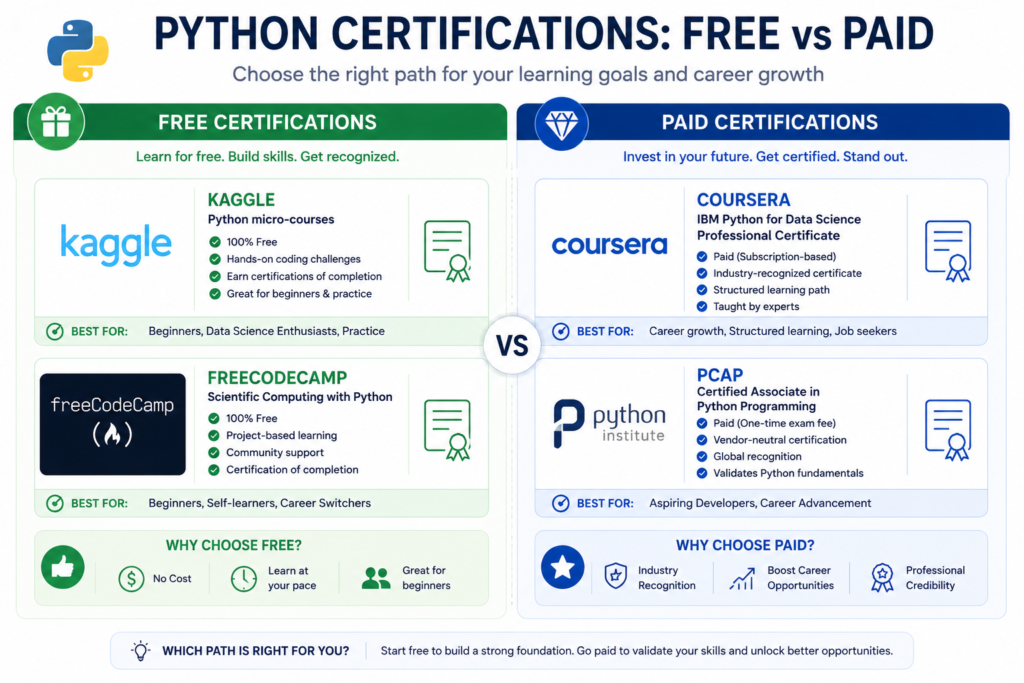
When Free Certifications Are Enough
Free certifications are genuinely sufficient in these scenarios:
- You’re exploring Python to see if you enjoy it before investing money
- You already have a strong portfolio and just want a structured refresher
- You’re in the data science community and a Kaggle certificate has real currency
- You’re applying to roles that value demonstrated skills over credentials (most startups)
- You’re supplementing a more advanced paid certification with foundational free content
When Paid Certifications Deliver Better ROI
Invest in a paid certification when:
- You’re making a career switch and need institutional credibility to get interviews
- You’re targeting roles at companies that filter resumes by recognized credentials
- The platform offers career services — resume reviews, job boards, recruiter connections
- You need a proctored exam result (PCAP, TensorFlow Developer) that signals genuine skill validation
- You’re applying for data science roles where IBM or Google brand recognition matters
Real Hiring Scenarios and Employer Perception
| Scenario | Free Cert Enough? | Recommended Path |
| Junior dev role at startup | Yes | Projects + GitHub + free cert |
| Data analyst at enterprise company | Partially | IBM/Google cert + portfolio |
| ML engineer role | No | TensorFlow cert + ML projects |
| IT automation role | Partially | Google IT cert (paid) is worth it |
| Freelance Python work | Yes | Portfolio + client testimonials |
Online Learning Platforms Compared
Choosing a platform is as important as choosing the certification itself. Here’s how the major platforms stack up:
Coursera vs Udemy vs edX vs DataCamp
| Platform | Best For | Price | Certificate Type | Career Support |
| Coursera | Structured, university-quality learning | $49/mo subscription | Professional / specialization certificates | Strong (career pathways, LinkedIn) |
| Udemy | Budget-friendly deep dives | $15–25 per course | Completion certificate | Minimal |
| edX | Academic rigor, university programs | Free audit / $199+ cert | Verified certificates, MicroMasters | Moderate |
| DataCamp | Data science and analytics Python | $25/mo subscription | Career track certificates | Strong (job board, portfolio) |
| Python Institute | Formal Python credential | $295 exam | Proctored certification | None |
Which Platform Has the Best Career Support
From what I’ve seen, Coursera and DataCamp lead significantly on career support. Coursera partners with 200+ companies and offers direct job placement programs for some certificates. DataCamp’s platform is built around data careers and integrates well with the hiring ecosystem.
If career transition is your primary goal — not just learning Python — I’d prioritize Coursera or DataCamp over Udemy or edX for your primary certification.
Which Platform Is Best for Complete Beginners
- Most beginner-friendly interface: Codecademy (interactive, in-browser coding)
- Best free beginner content: CS50P (Harvard/edX) or freeCodeCamp
- Best structured beginner certification: Python for Everybody (Coursera/UMich)
- Best project-based beginner experience: 100 Days of Code (Udemy)
Practical Framework to Choose the Best Python Certification
Choose Based on Career Goal
| Career Goal | Recommended Certification |
| Data Science / Analytics | IBM Data Science (Coursera) or DataCamp track |
| Software / Backend Development | PCAP + Meta Back-End Developer Certificate |
| IT Automation / DevOps | Google IT Automation with Python |
| AI / Machine Learning | TensorFlow Developer Certificate + DeepLearning.AI |
| General Python Skills (first job) | Python for Everybody (UMich) + projects |
Choose Based on Budget
- No budget: CS50P (Harvard) + Kaggle Python + freeCodeCamp
- Under $50: Python for Everybody on Coursera (1-month subscription)
- Under $100: 100 Days of Code (Udemy) + 1 month DataCamp
- Under $300: IBM Data Science Certificate (Coursera, ~3 months) or PCAP exam
- No limit: PCAP + IBM Data Science + AWS Developer Associate (full credentialing stack)
Choose Based on Time Commitment
| Available Time/Week | Best Approach |
| 2–3 hours/week | Self-paced Udemy or single Coursera course |
| 5 hours/week | Coursera Specialization (4–6 months) |
| 10+ hours/week | DataCamp career track or intensive bootcamp |
| Full-time study | Complete specialization + PCAP exam in 2–3 months |
Choose Based on Learning Style
- Visual/video learner: Coursera, Udemy, or DataCamp
- Interactive/hands-on learner: DataCamp, Codecademy, or Kaggle
- Reading + projects: edX (CS50P), Python.org docs, Real Python
- Community-driven learner: freeCodeCamp, The Odin Project, Reddit r/learnpython
Certification Roadmaps by Career Path
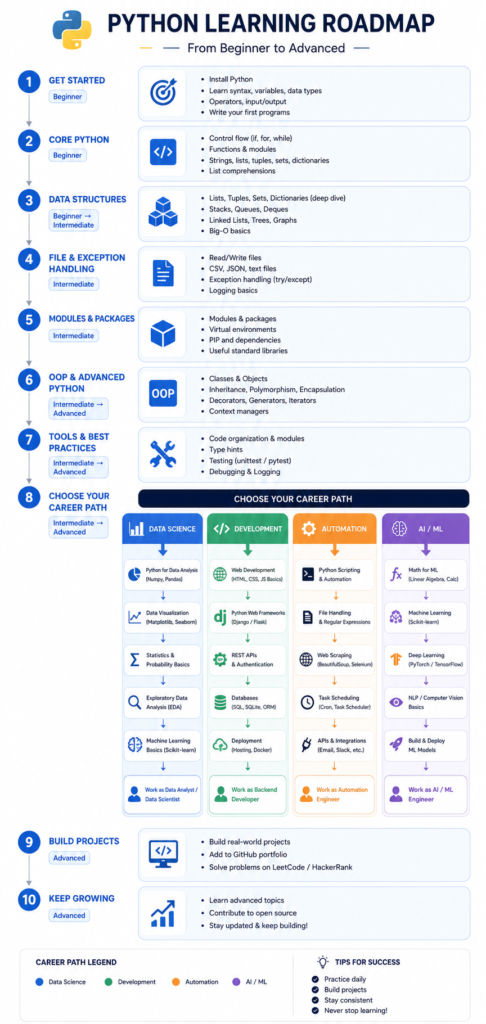
Python Developer Roadmap
- Python for Everybody (Coursera) — fundamentals
- Build 3 Python CLI projects (portfolio)
- 100 Days of Code (Udemy) — intermediate projects
- Meta Back-End Developer Certificate (Django/APIs)
- PCAP exam — formal credential
- AWS Developer Associate — cloud deployment
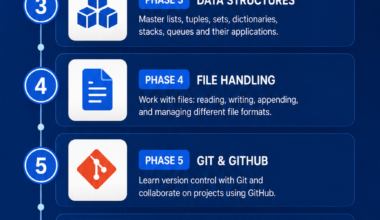
For the complete path, see my Python roadmap for beginners 2026 — it maps every skill you need from zero to job-ready.
Data Science Roadmap
- Python for Everybody or CS50P — Python fundamentals
- Applied Data Science with Python (UMich, Coursera) — pandas, NumPy, matplotlib
- IBM Data Science Professional Certificate — full data science stack
- Kaggle competitions — real datasets, community recognition
- TensorFlow Developer Certificate — if targeting ML roles
Also check my guide on data analyst certifications for Python-complementary credentials like SQL, Power BI, and Tableau.
Automation Engineer Roadmap
- Google IT Automation with Python (Coursera) — core automation skills
- Selenium + Python testing projects
- Ansible fundamentals (A Cloud Guru or Linux Foundation)
- Docker and CI/CD pipeline projects on GitHub
- AWS Solutions Architect — Associate (optional, for cloud automation roles)
AI and Machine Learning Roadmap
- Python for Everybody or CS50P — Python foundation
- Mathematics for Machine Learning (Coursera/Imperial) — optional but helpful
- DeepLearning.AI TensorFlow Developer Specialization
- TensorFlow Developer Certificate exam
- MLOps Specialization (DeepLearning.AI) — for production ML roles
- Kaggle competitions — continuous portfolio building
If AI engineering is your goal, my prompt engineering roadmap complements your Python ML path with the LLM skills employers are increasingly seeking.
Common Mistakes That Kill Learning Progress
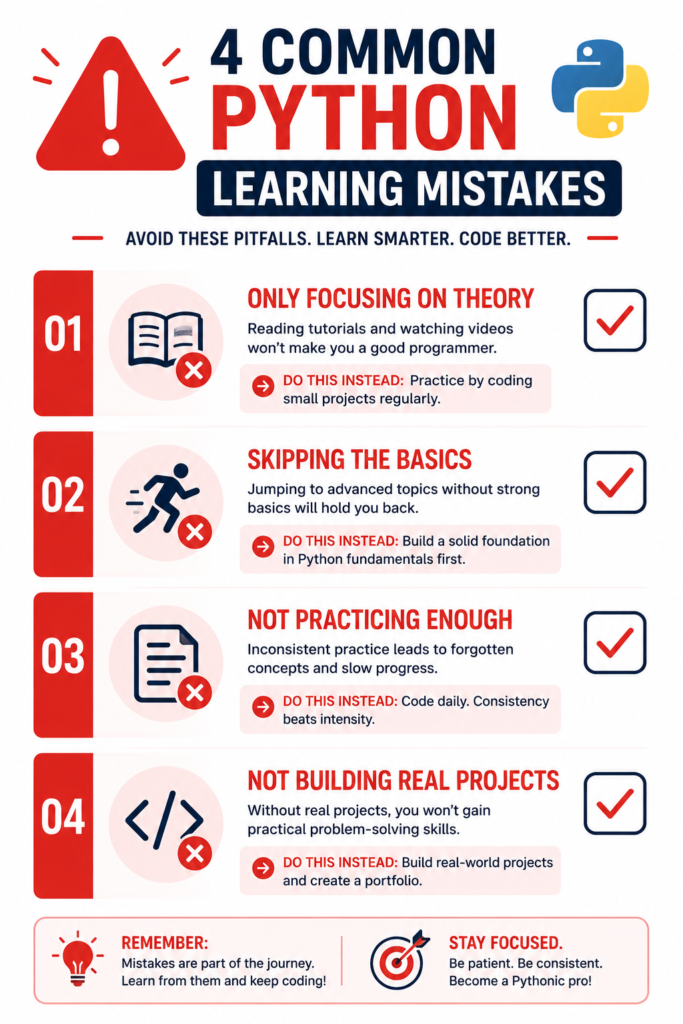
Collecting Certificates Without Building Projects
This is the single biggest mistake I see. Learners complete five courses, earn five badges, and then wonder why they’re not getting interviews. Employers are not impressed by course completion — they’re impressed by what you built with what you learned.
Here’s what actually works: for every certification you complete, build at least two real projects that use the skills from that course. Publish them on GitHub with a proper README. That’s your real credential.
Jumping Into Advanced Courses Too Early
I regularly see beginners sign up for machine learning or deep learning courses before they can write a basic Python function. This always leads to frustration, abandonment, and self-doubt that has nothing to do with their actual ability.
Follow the progression: fundamentals → data structures → OOP → applied domain (data science, backend, automation). Don’t skip steps because the advanced courses sound more exciting.
Ignoring Portfolio and GitHub Experience
Your GitHub profile is your professional storefront. What I’ve seen consistently is that candidates with active GitHub profiles — even with modest projects — get more interviews than candidates with impressive certifications and empty GitHub accounts.
Start contributing to GitHub from day one of your Python learning. Even incomplete projects tell a story of continuous effort.
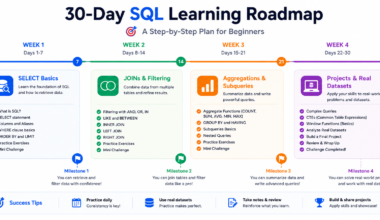
If SQL is part of your stack, my SQL roadmap guide and how to learn SQL guide will help you build the database skills that complement Python projects.
Focusing Only on Theory Instead of Practice
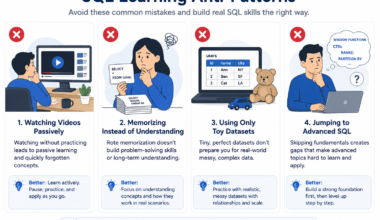
Passive video watching without coding along is the most inefficient way to learn Python. I’ve seen people spend 40 hours on a course and not be able to write a basic script because they watched instead of coded.
Rule of thumb: for every hour of video content, spend two hours coding. Use what you learn immediately in a small project or exercise.
| ✅ Key Takeaway |
| • The best Python certification is the one you complete AND apply. A finished Udemy course with 5 GitHub projects beats a prestigious but half-finished certification every time. |
Best Resources to Learn Python Faster Alongside Certification
Best Practice Platforms
- LeetCode — algorithm and data structure problems; essential for developer roles
- HackerRank Python Track — beginner to advanced challenges with direct certification
- Codewars — kata-based challenges; great for building problem-solving intuition
- Exercism.io — mentored practice; excellent for getting code reviews from humans
- Replit — browser-based coding; great for quick experimentation
Best YouTube Channels
- Corey Schafer — Best Python tutorials on YouTube; covers everything from basics to Flask/Django
- Tech With Tim — Project-based Python; great for beginners building real things
- Sentdex — Python for data science and ML; excellent for data career learners
- freeCodeCamp — Long-form full courses; excellent production quality
- Programming with Mosh — Clean explanations, strong beginner content
Best Python Project Ideas for Beginners
- Web scraper that collects and stores job listings (uses requests, BeautifulSoup, pandas)
- Personal finance tracker with CSV import and visualization (uses pandas, matplotlib)
- Automation script that organizes your downloads folder by file type
- Flask REST API that connects to a SQLite database
- Data analysis notebook on a public dataset (Kaggle, Our World in Data)
- Twitter/Reddit bot using their public APIs
Communities That Accelerate Learning
- r/learnpython (Reddit) — active, beginner-friendly, great for getting unstuck
- Python Discord — real-time help from experienced developers
- Kaggle community — essential for data science Python learners
- Dev.to Python tag — articles and discussions from practitioners
- Stack Overflow — indispensable; learn to search and ask well
FAQ — Best Python Certifications
Which Python certification is best for getting a job?
For most job seekers, the Google IT Automation with Python (Coursera) or IBM Data Science Professional Certificate offers the best combination of employer recognition and practical skills. Pair either with a strong GitHub portfolio and you’ll be competitive in most markets.
Is Python certification worth it in 2026?
Yes — with conditions. Certification is worth it when it structures your learning, fills genuine skill gaps, and comes from a recognized institution. It’s not worth it as a substitute for building real projects and developing a portfolio. Use certification to complement, not replace, practical experience.
Can I get a Python certification for free?
Yes. Harvard’s CS50P, Kaggle’s Python course, and freeCodeCamp’s Scientific Computing with Python are all free to complete and earn a certificate. The certificate itself may cost a fee (CS50P charges ~$199 for the verified certificate), but the learning content is free.
Which Python certification is best for beginners?
Python for Everybody by the University of Michigan (Coursera) is the most beginner-friendly structured certification available. It assumes no prior coding experience, builds skills progressively, and is taught by Dr. Chuck Severance — one of the most effective Python educators online.
Which certification is best for Python developers?
PCAP (Certified Associate in Python Programming) from the Python Institute is the most rigorous and respected credential for developers. It tests real programming knowledge through a proctored exam rather than just course completion.
Do employers care about Python certificates?
Most employers care more about demonstrated skills than certificates. However, certificates from recognized institutions — Google, IBM, Harvard, Python Institute — can help you get past initial resume screens, especially if you’re making a career switch. For technical interviews, your GitHub portfolio and problem-solving ability matter far more.
How long does it take to complete a Python certification?
Timeline varies significantly by program: Google IT Automation with Python is designed for 6 months at 5 hours/week. CS50P can be completed in 4–8 weeks at 10 hours/week. PCAP requires self-study (typically 3–6 months) plus a 65-minute proctored exam. IBM Data Science Professional Certificate is 3–6 months at moderate pace.
Final Action Plan — Your Next Steps
You’ve read through every major certification option, comparison, and framework. Now it’s time to commit to a path. Here’s exactly what to do based on your situation.
Best Certification Paths Based on Your Goal
| Your Situation | Start Here | Then Do This |
| Complete beginner, no coding background | Python for Everybody (Coursera) | Build 3 projects → Google IT Automation cert |
| Developer switching to Python | CS50P (Harvard/edX) | PCAP exam → domain-specific cert |
| Data analyst adding Python | Applied DS with Python (UMich) | IBM Data Science cert → Kaggle projects |
| Targeting ML/AI roles | DeepLearning.AI TF Specialization | TensorFlow Developer Certificate → Kaggle |
| Budget under $50 | CS50P (free audit) + Kaggle Python | freeCodeCamp projects → paid cert later |
What to Do After Completing a Python Certification
- Build 2–3 projects using the specific skills from your certification
- Publish all projects on GitHub with clean code and detailed README files
- Write a LinkedIn post about your certification journey and what you built — this gets seen by recruiters
- Add your certificate to your LinkedIn profile under ‘Licenses & certifications’
- Join a Python community (r/learnpython, Python Discord) and start helping others — teaching reinforces learning
- Apply for roles immediately — don’t wait until you feel ‘ready’. Learning continues on the job.
How to Turn Certification Into Real Career Opportunities
Here’s what actually works, from my experience watching learners successfully transition into tech careers:
- Treat your GitHub as your resume: employers in tech will look at it before your actual resume
- Target job postings that mention the exact skills your certification covers — don’t apply broadly
- Reach out to people working in your target role on LinkedIn. Ask for 15 minutes to learn about their path.
- Apply to internships or junior roles even if you feel under-qualified — rejection teaches as much as success
- Freelance on Fiverr or Upwork to build real client experience and income while job hunting
As you build your Python career, make sure you’re tracking the right analytics tools alongside your Python skills. My overview of data analytics tools covers what employers in data roles expect beyond Python fluency.
| 🚀 Final CTA — Your Action Plan |
| • Step 1: Choose your certification based on career goal and budget from the framework above |
| • Step 2: Block dedicated daily learning time (even 30–60 minutes/day consistently beats weekend marathons) |
| • Step 3: Build your first project before you finish the certification — don’t wait until the end |
| • Step 4: Publish to GitHub every week — make your progress visible |
| • Step 5: Apply for roles 60–90 days into your certification — real feedback accelerates growth faster than any course |