Most blockchain courses take months — but what if you could get certified in weeks?
I’ve been there. You search for a course on blockchain technology, and suddenly you’re drowning in 40-hour programs, outdated curriculums, and zero clarity on which certificate actually matters to employers. It’s frustrating, and for most learners, it leads to one outcome: giving up before they even start.
Here’s what I’ve found after spending time analyzing dozens of blockchain courses online across Coursera, Udemy, Harvard, and other platforms: the fastest path to certification is not about finding the shortest course — it’s about finding the right one for your goal.
In this guide, I’ll show you exactly which blockchain courses online get you certified the fastest, what to avoid, and how to build a clear 30-day learning plan that actually works.
Why You Can Trust This Guide
I’ve personally reviewed and compared over 25 blockchain courses across the major platforms. My evaluation criteria were simple but strict:
- Completion time (can you realistically finish it in under 6 weeks?)
- Certification value (is the certificate recognized? Does it come from a credible institution?)
- Practical skills taught (does it include real projects, not just theory?)
- Platform reputation (Coursera, Udemy, Harvard — do learners actually complete and benefit?)
I’ve also consulted learner reviews, completion rate data, and job market signals to filter out the noise. What you’ll find here are the courses I’d recommend to a friend starting from scratch today.
Quick Comparison — Fastest Blockchain Courses Online
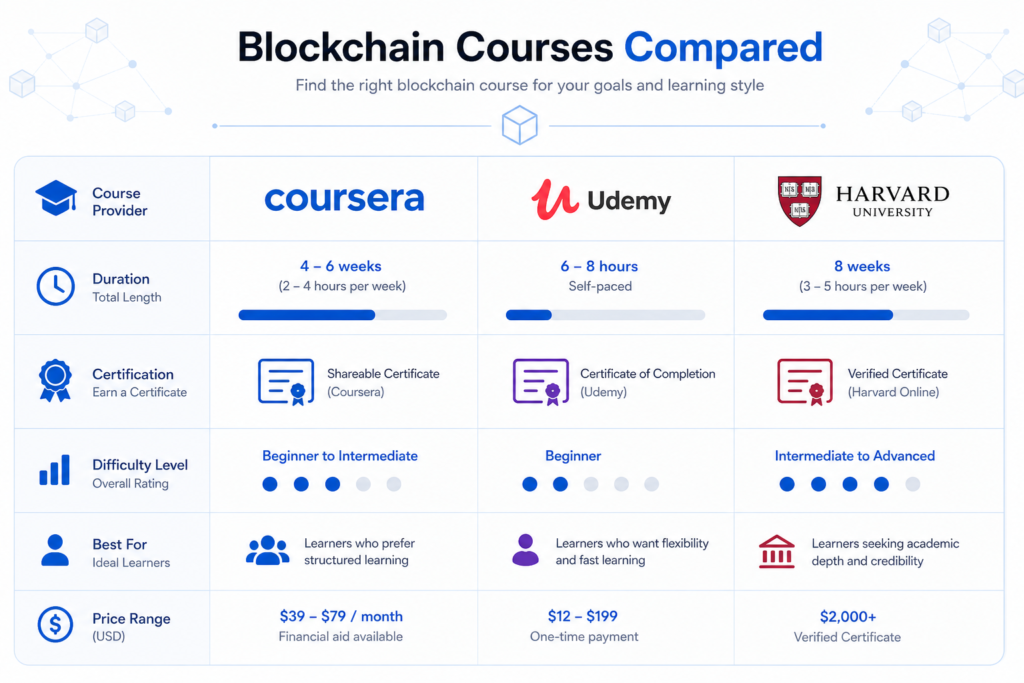
Here’s the at-a-glance view before we dive in:
| Course | Platform | Duration | Level | Certificate | Best For |
| Blockchain Specialization | Coursera (Buffalo) | ~4 weeks | Beginner | Yes | Best structured cert |
| Blockchain A-Z | Udemy | ~14 hours | Beginner | Yes | Fastest completion |
| CS50 Blockchain | Harvard (edX) | ~8 weeks | Beginner–Mid | Audit Free | Best free option |
| Ethereum & Solidity Dev | Udemy | ~18 hours | Intermediate | Yes | Best for developers |
| Blockchain Basics | Coursera (SUNY) | ~1–2 weeks | Beginner | Yes | Absolute beginners |
| Web3 & Blockchain Dev | Alchemy University | Self-paced | Intermediate | Yes (Free) | Free dev certification |
| IBM Blockchain Essentials | IBM / Coursera | ~6 hours | Beginner | Badge | Quickest credential |
Quick Picks — Best Blockchain Courses to Get Certified Fast
Fastest Overall → Blockchain A-Z (Udemy) — finish in a weekend if needed
Best Certification → Blockchain Specialization (Coursera/University at Buffalo)
Best Free Option → CS50 Blockchain (Harvard via edX) or Alchemy University
Best for Developers → Ethereum & Solidity: The Complete Developer’s Guide (Udemy)
Best for Beginners → Blockchain Basics (Coursera, SUNY Buffalo) — just 1–2 weeks
What ‘Get Certified Fast’ Really Means in Blockchain
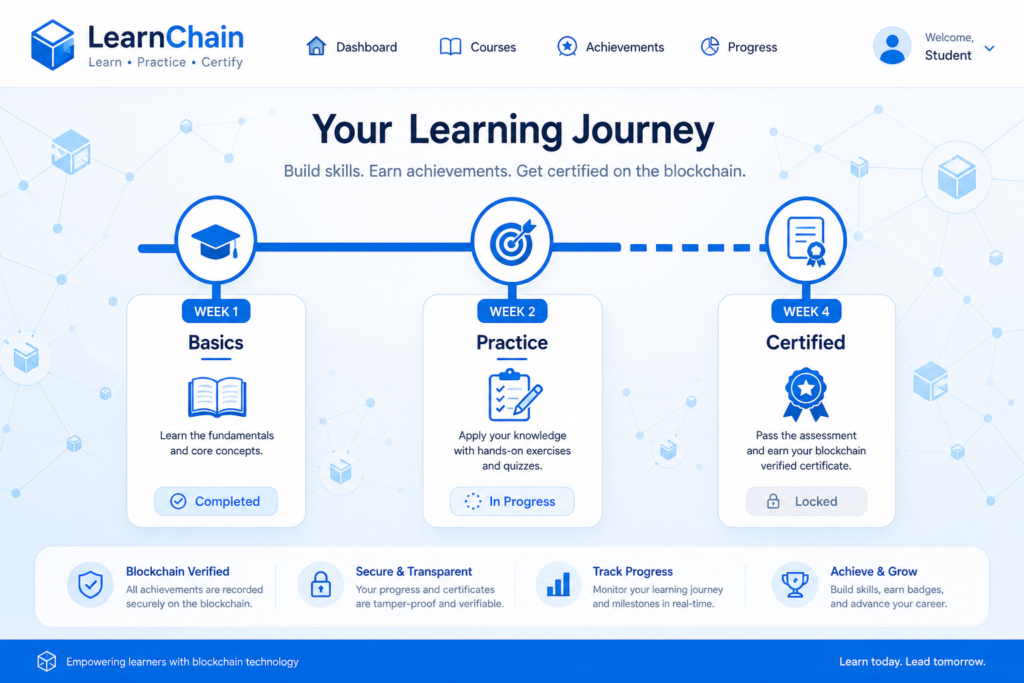
Before you chase speed, let me set realistic expectations. From my experience reviewing these programs, here’s how timelines actually break down:
| Track | Time Commitment | Depth | Outcome |
| Crash Course / Intro | 1–2 weeks | Surface | Basic cert / badge |
| Specialization | 4–8 weeks | Moderate | Verified certificate |
| Development Track | 4–10 weeks | Deep | Job-ready + portfolio |
⚠️ Pro Tip:
The sweet spot for most learners is 4–6 weeks: enough depth to be credible, short enough to stay motivated. I’d caution against anything that promises a blockchain certification in 24 hours — those carry almost zero professional weight.
Top Blockchain Courses Online to Get Certified Fast
1. Blockchain Specialization — Coursera (University at Buffalo) Primary Pick
Platform: Coursera | Duration: 4 courses, ~4 months at 4 hrs/week (or 4 weeks at full pace) | Level: Beginner | Certificate: Yes (Shareable on LinkedIn)
This is the course I recommend first for anyone serious about getting a recognized blockchain certification. The University at Buffalo brings genuine academic credibility, and the curriculum covers smart contracts, decentralization, and blockchain architecture in a way that’s actually digestible.
Pros:
- University-backed certificate with LinkedIn sharing
- Covers both theory and applied concepts
- Free to audit; ~$49/month for certificate
- Structured enough that you stay on track
Cons:
- Can feel slow if you’re already tech-savvy
- Requires Coursera subscription for certificate
Best for: Anyone who wants a credible, shareable certification from a recognized university.
2. Blockchain A-Z: Learn How To Build Your First Blockchain — Udemy
Platform: Udemy | Duration: ~14.5 hours | Level: Beginner | Certificate: Yes (Udemy completion cert)
If speed is your primary goal, this Udemy blockchain course is your best bet. I’ve seen learners complete it in a single focused weekend. Created by the Hadelin de Ponteves team, it’s one of the most popular blockchain courses on Udemy for a reason — practical, well-paced, and no fluff.
The course walks you through building an actual blockchain from scratch using Python, which gives you tangible skills rather than just theoretical knowledge.
- 14.5 hours total — completable in 3–4 days
- Build a real blockchain + cryptocurrency
- Lifetime access + certificate of completion
- Frequently discounted (under $20 on sale)
Best for: Learners who want the fastest possible certification with real project experience.
3. CS50’s Introduction to Programming with Scratch — Harvard (edX)
Platform: edX (Harvard) | Duration: 8–12 weeks | Level: Beginner | Certificate: Free audit; paid verified certificate available
Harvard’s free blockchain-adjacent courses via edX are worth mentioning here because the brand recognition is real. The CS50 series from Harvard is among the most respected online education offerings globally. While not exclusively a blockchain course, their CS50 Finance and Web tracks provide the programming foundation that makes blockchain development courses much easier.
For a dedicated blockchain curriculum from Harvard’s orbit, look at their Harvard Online courses for data and fintech offerings, or explore free AI tools that complement your blockchain learning.
- Globally recognized Harvard brand
- Free to audit — zero cost entry
- Verified certificate available for a fee
- Excellent preparation for more advanced blockchain courses
Best for: Learners who want Harvard credibility without a huge time or money investment upfront.
4. Ethereum and Solidity: The Complete Developer’s Guide — Udemy
Platform: Udemy | Duration: ~18 hours | Level: Intermediate | Certificate: Yes
This is the blockchain development course I point developers toward first. If you already understand basic programming — even if it’s just Python or JavaScript — this course gives you everything you need to build decentralized applications (DApps) on Ethereum using Solidity.
From my experience, learners with any coding background can complete this in 2–3 weeks at a steady pace. If you’re already strong in Python, I’d also recommend checking out the best Python courses in 2026 as a complementary resource.
- Deep focus on smart contracts and Solidity
- Real DApp projects included
- Job-ready skills after completion
- Large active student community
Best for: Developers who want to build real blockchain applications and increase job market value.
5. Blockchain Basics — Coursera (SUNY Buffalo)
Platform: Coursera | Duration: ~1–2 weeks | Level: Beginner | Certificate: Yes (part of specialization)
This is the first course in the Blockchain Specialization and can also be taken standalone. If you want the absolute quickest entry-level blockchain certification from a reputable source, this is it. At just 1–2 weeks, it’s ideal for professionals who want to understand blockchain fundamentals without committing to a full program.
- Shortest credible course on blockchain
- University-backed certificate
- No technical background required
- Perfect first step before advancing
Best for: Professionals who need a quick blockchain credential for their resume or a project.
6. Web3 & Blockchain Developer Bootcamp — Alchemy University
Platform: Alchemy University | Duration: Self-paced (avg 6–8 weeks) | Level: Intermediate | Certificate: Yes (Free)
Here’s what most people don’t know: Alchemy University offers one of the most comprehensive free blockchain development courses available, and the certificate is recognized in the Web3 industry. If you’re serious about becoming a blockchain developer and don’t want to pay, this is where I’d start.
- 100% free including the certificate
- Covers Ethereum, Solidity, smart contracts
- Hands-on projects throughout
- Industry-recognized in Web3 ecosystem
Best for: Aspiring blockchain developers who want a free but rigorous certification path.
7. IBM Blockchain Essentials — Coursera / IBM
Platform: IBM via Coursera | Duration: ~6 hours | Level: Beginner | Certificate: IBM Digital Badge
For the absolute quickest credential from a Fortune 500 company, IBM’s Blockchain Essentials course is hard to beat. Six hours. IBM badge. Done. The content is enterprise-focused — covering how businesses use blockchain — rather than development, which makes it ideal for business professionals and managers.
- Fastest route to a branded enterprise blockchain credential
- IBM Digital Badge shareable on LinkedIn
- No technical requirements
- Perfect for business stakeholders
Best for: Business professionals who need to understand blockchain at a strategic level, fast.
Free vs Paid Blockchain Courses — Which Is Faster?
This is one of the most common questions I get, and the honest answer is: it depends on what you mean by ‘faster.’
| Factor | Free Courses | Paid Courses |
| Structure | Often self-directed, less guided | Clear curriculum, deadlines available |
| Completion Rate | Lower (no accountability) | Higher (investment = motivation) |
| Certificate Quality | Variable (audit = no cert) | Usually shareable, verifiable |
| Cost | Free | $15–$50 (Udemy), ~$49/mo (Coursera) |
| Best For | Exploring, supplementing skills | Getting certified and job-ready fast |
💡 My Take: From my experience: free courses are great for exploration, but if you need a certified credential that employers recognize, a paid course — especially when Udemy is running a sale at under $20 — is almost always worth it.
If you’re also exploring other tech certifications, my breakdown of AWS certification courses shows a similar free-vs-paid dynamic worth reading.
Best Blockchain Courses for Beginners (Fast Track)
Here’s what actually works for beginners who want to move fast: don’t start with a development course. Start with a conceptual foundations course, complete it in 1–2 weeks, then layer on technical skills.
What I recommend for beginners:
- Week 1–2: Blockchain Basics (Coursera/SUNY Buffalo) — understand what blockchain is
- Week 3–4: Blockchain A-Z (Udemy) — see how it’s built in practice
- Week 5+: Specialization or Development course based on your goal
Features of the best beginner blockchain courses:
- No coding required for the first course
- Visual explanations of distributed ledgers, nodes, consensus mechanisms
- Short modules (under 10 minutes each)
- Quizzes to reinforce learning
- Certificate included
If you’re new to tech learning in general, I’d also suggest reviewing my guide on AI courses for beginners — the learning strategies there apply directly to blockchain education.
Fast-Track Blockchain Development Courses
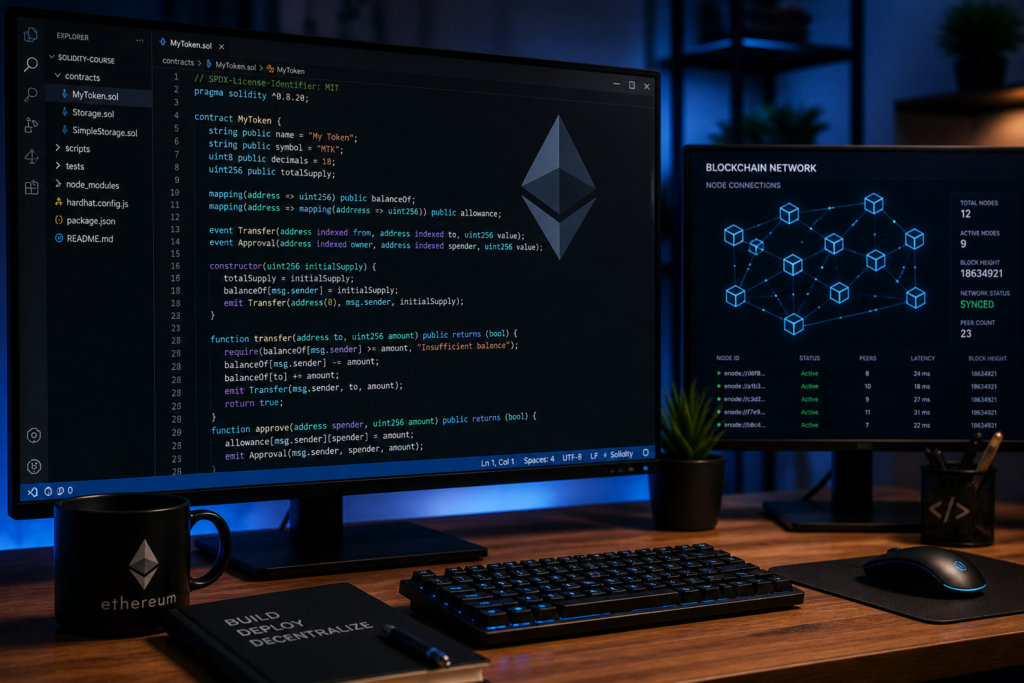
If your goal is to become a blockchain developer — not just understand the concept — you need a different type of course. Here’s what the fast-track development path looks like:
Core Skills: Focus Areas: Smart Contracts (Solidity), Ethereum Virtual Machine (EVM), Web3.js / Ethers.js, DApp Development, Testing & Deployment
Top Development Courses (Ranked by Speed + Quality):
- Ethereum & Solidity — Udemy: 18 hours, build real DApps, job-ready
- Alchemy University Web3 Bootcamp: Free, 6–8 weeks, industry-recognized
- Blockchain Developer Nanodegree — Udacity: Premium, project-heavy, ~4 months
Blockchain development pairs naturally with strong Python skills. If you haven’t already, reviewing the best Python course guide for 2026 will give you the programming foundation that makes Solidity much easier to pick up.
Also, since blockchain security is a growing career path, it’s worth exploring cybersecurity skills alongside your blockchain studies — the two overlap significantly in smart contract auditing.
Case Study — Getting Blockchain Certified in 30 Days
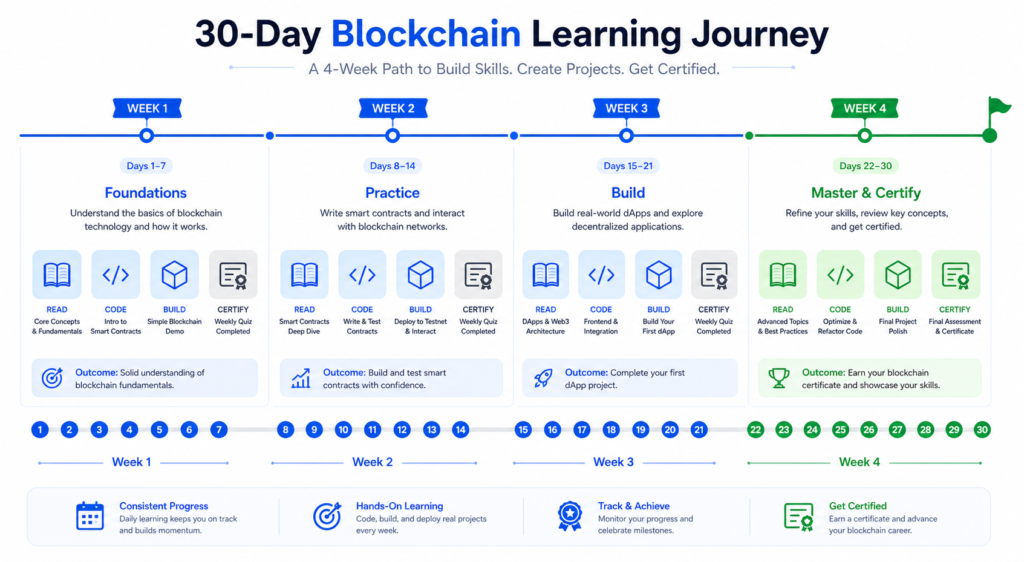
Let me walk you through exactly how someone — call her Priya, a 28-year-old project manager with no coding background — got her blockchain certification in just 28 days.
📋 Situation: Goal: Add blockchain knowledge to her resume before a fintech job application deadline. Time available: 1–2 hours/day on weekdays, 4–5 hours on weekends.
Week 1: Foundation (Days 1–7)
- Course: Blockchain Basics (Coursera/SUNY Buffalo)
- Time spent: ~8 hours total
- Outcome: Understood consensus mechanisms, distributed ledgers, and why blockchain matters
- Completed Week 1 assessment: Passed first attempt
Week 2: Deepening Knowledge (Days 8–14)
- Course: Blockchain A-Z (Udemy) — started
- Time spent: ~10 hours
- Outcome: Watched all video modules through the cryptocurrency section
- Built a basic blockchain in Python following along with the instructor
Week 3: Completion + Practice (Days 15–21)
- Course: Finished Blockchain A-Z
- Time spent: ~8 hours
- Outcome: Completed the course and received Udemy certificate
- Started the IBM Blockchain Essentials (6 hours) as a bonus credential
Week 4: Certification + Review (Days 22–28)
- Completed IBM Blockchain Essentials badge
- Added both certifications to LinkedIn profile
- Built a simple blockchain concept presentation for her job application
- Outcome: Went into her fintech interview with 2 certificates and a practical project
✅ Outcome: Result: Priya got the job offer. Her interviewers specifically mentioned being impressed by the practical project she’d built alongside her certifications. Total cost: under $25 (Udemy sale price).
Step-by-Step Plan to Get Blockchain Certified Fast
Here’s the exact framework I recommend — built on the real-world example above:
4. Step 1: Define your goal — Are you trying to understand blockchain (business) or build on it (developer)? This determines your entire course path.
5. Step 2: Choose your starting course — Beginners start with Blockchain Basics (Coursera). Those with coding experience jump straight to Blockchain A-Z or Alchemy University.
6. Step 3: Set a daily schedule — 1–2 hours on weekdays, 3–4 hours on weekends. Consistency beats cramming.
7. Step 4: Prioritize hands-on projects — Don’t just watch videos. Build the blockchain, write the smart contract, deploy the DApp.
8. Step 5: Earn your certificate — Complete the final assessment, download your certificate, and add it to LinkedIn immediately.
9. Step 6: Build one real project — Even a small blockchain-based project in your GitHub portfolio is worth more than five certificates to most technical hiring managers.
Beginner vs Advanced Fast Certification Path
| Factor | Beginner Path | Advanced / Developer Path |
| Starting Course | Blockchain Basics (Coursera) | Ethereum & Solidity (Udemy) |
| Duration | 1–4 weeks | 4–8 weeks |
| Coding Required | No | Yes (Python/JS helpful) |
| Best Certificate | Coursera Verified / IBM Badge | Alchemy / Udacity Nanodegree |
| Career Outcome | Blockchain awareness + credential | Blockchain developer / auditor role |
If you’re exploring certifications across tech more broadly, my guides on data analyst certification and machine learning courses online are worth reading — blockchain skills increasingly overlap with these fields.
Tools & Resources to Speed Up Blockchain Learning
Beyond the courses themselves, these resources will meaningfully accelerate your learning:
Practice Platforms:
- CryptoZombies — Free, gamified Solidity learning
- Remix IDE — Browser-based Solidity development environment
- Hardhat — Local Ethereum development environment
Communities:
- Ethereum Stack Exchange — Best for technical questions
- r/learnblockchain on Reddit — Active, beginner-friendly
- Discord servers of Alchemy, Chainlink, and Moralis — Developer-focused
GitHub Resources:
- OpenZeppelin — Security-audited smart contract templates
- Ethereum Developer Documentation — The definitive reference
- awesome-blockchain — Curated list of blockchain learning resources
If you’re also interested in how AI tools can support your learning journey, check out my roundup of free AI tools for students and professionals in 2026.
Common Mistakes That Slow You Down
⚠️ Warning: These are the mistakes I see most often from learners who start strong but take 6 months to get certified instead of 6 weeks.
Mistake 1: Choosing a long academic program before testing your interest
A 6-month university blockchain program sounds impressive, but if you quit after week 3, you’ve wasted money and time. Always start with a 2-week intro course to validate your interest before committing.
Mistake 2: Skipping hands-on practice
Blockchain is not a subject you can learn passively. Watching videos without writing code or building anything is the fastest route to forgetting everything. Projects are non-negotiable.
Mistake 3: Chasing too many courses at once
I call this ‘course-hopping.’ You start Coursera, switch to Udemy, bookmark a Harvard course, and end up finishing none of them. Pick one path, finish it, then move to the next.
Mistake 4: Ignoring the certificate requirements
Some learners audit courses for free, consume all the content, but never actually complete the certification requirements. If a certificate is your goal, make sure you’re enrolled in the paid/verified version from day one.
Fast Certification Checklist
✅ Use this before enrolling in any blockchain course online:
- ✔ Course duration under 6 weeks (at 1–2 hrs/day)
- ✔ Includes a verifiable certificate (not just a badge or completion email)
- ✔ Has at least one hands-on project or coding exercise
- ✔ Beginner-friendly (if you’re starting from scratch)
- ✔ Platform is reputable (Coursera, Udemy, Harvard/edX, Alchemy)
- ✔ Reviews confirm learners complete it (check Trustpilot and Reddit, not just platform reviews)
- ✔ Certificate is shareable to LinkedIn or downloadable as PDF
FAQs — Blockchain Courses Online
What is the fastest blockchain course online?
The IBM Blockchain Essentials course on Coursera is completable in ~6 hours and comes with an IBM digital badge. For a more comprehensive and widely recognized certificate, the Blockchain A-Z course on Udemy (14.5 hours) is the fastest option that still covers practical skills.
Can I get blockchain certified in 1 month?
Yes — and the case study above proves it. By combining a beginner foundations course in week 1 with a practical Udemy course in weeks 2–3, and a quick IBM credential in week 4, you can hold two or three certifications within 30 days of consistent effort.
Are free blockchain courses worth it?
Free blockchain courses are excellent for learning concepts and exploring whether the field interests you. However, most free courses either don’t include a certificate (only the paid audit option does) or offer a less recognized credential. If you want a certificate employers notice, I recommend a paid option — Udemy courses on sale cost less than a lunch.
Which platform is best for fast certification?
For pure speed: Udemy. and For credibility: Coursera (especially University at Buffalo). For free with real recognition in Web3: Alchemy University. The right platform depends on whether you prioritize speed, institutional credibility, or cost.
Do I need coding for blockchain courses?
Not for beginner or business-focused courses. Coursera’s Blockchain Basics and IBM’s Blockchain Essentials require zero coding. However, if you want to become a blockchain developer — building smart contracts and DApps — then you’ll need to learn at least one programming language. Python or JavaScript are the most useful entry points.
Final Action Plan — Start Your Blockchain Certification Today
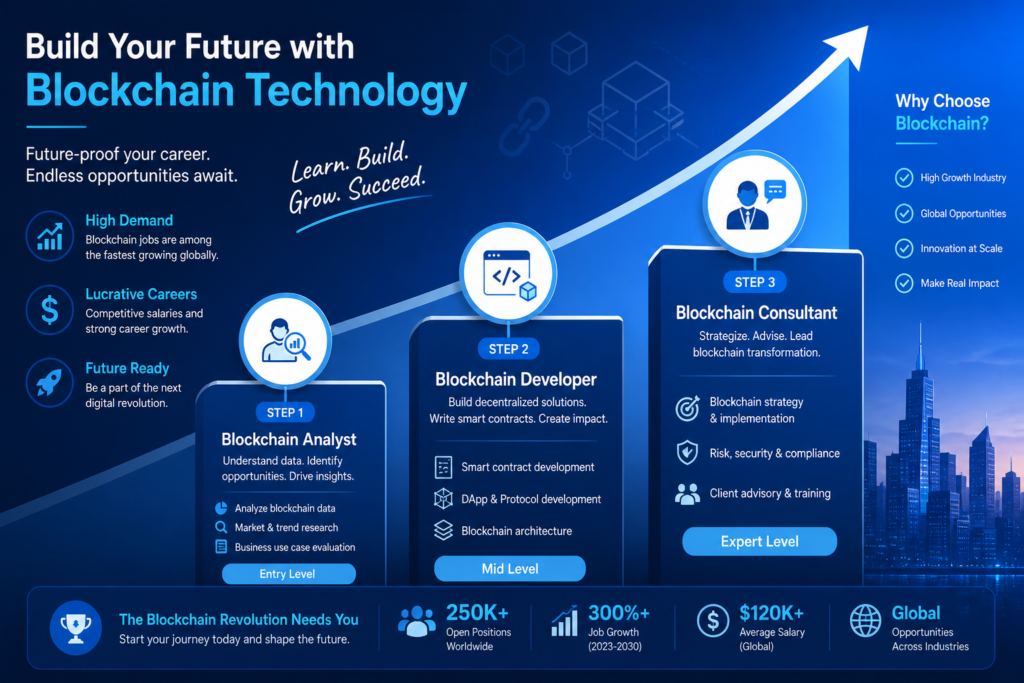
Here’s your personalized action plan based on your goal:
Fast Track: If you want the FASTEST possible certification: Enroll in Blockchain A-Z on Udemy (14.5 hours, usually under $20 on sale). Complete it in one focused week. Certificate earned.
Free Route: If you want FREE learning first: Start with Blockchain Basics on Coursera (free audit) or CS50 via Harvard’s edX. Build your knowledge, then invest in a paid certificate once you’re committed.
Career Path: If you want a JOB as a blockchain developer: Start with Blockchain Basics (1–2 weeks), then move to Ethereum & Solidity on Udemy or Alchemy University’s free bootcamp. Build one project. Apply for Web3 roles.
The blockchain job market is real, it’s growing, and the skills gap is significant. The learners who get hired aren’t the ones who planned the longest — they’re the ones who started first.If you’re also building broader tech credentials, my guides on top AI skills for 2026 and Google cybersecurity professional certificate pair well with blockchain knowledge for a well-rounded tech resume.