I’ve been obsessed with photography since the day I picked up my first camera — a battered entry-level DSLR that cost me three months of savings. Back then, finding good photography classes meant driving to a local community college and sitting through lectures that felt completely disconnected from real-world shooting. Today, everything has changed. And honestly? It’s never been a better time to learn.
In 2026, photography is one of the most practical and income-generating skills you can develop. Think about it — every brand needs product photos, every content creator needs stunning visuals, and every event needs someone who actually knows what they’re doing behind the lens. Social media platforms like Instagram, TikTok, and Pinterest are more visual than ever. E-commerce is booming. And freelance photography is a legitimate career path that thousands of people are building from scratch every single year.
The good news? You don’t need to go back to school or spend a fortune to get started. The best photography classes online in 2026 are flexible, affordable, and — when you pick the right one — incredibly effective.
In this guide, I’m going to walk you through everything: which online photography courses are actually worth your time, which platforms deliver real results, how free photography classes stack up against paid ones, and exactly how to build your skills step-by-step from beginner to confident photographer.
Whether you’re a complete beginner, a content creator, or someone considering photography as a career — this guide was written for you. Let’s dig in.
Quick Answer: Which Photography Classes Are Worth Taking?
Let me cut straight to the point. If you’re in a hurry and just need a quick recommendation, here’s what I’d suggest based on your skill level and goal.
Best Photography Classes for Beginners
If you’re just starting out, you want something that doesn’t assume you already know the difference between aperture and ISO. The best beginner photography courses online right now are:
- Udemy – Phil Ebiner’s ‘Photography Masterclass’ is hands-down one of the most beginner-friendly photography courses online. It’s affordable, well-structured, and covers everything from camera basics to editing.
- Skillshare – Great for creative photography lessons. Their beginner courses on composition and smartphone photography are especially popular and short enough to fit into a busy schedule.
- Coursera – If you prefer a more academic approach, Coursera has photography classes from actual universities that are free to audit. No excuses there.
Best Photography Classes for Professional Skills
If you’re looking to go beyond the basics and develop professional-level skills — whether that’s portrait, commercial, or wedding photography — here’s where I’d look:
- MasterClass – Annie Leibovitz teaches photography here, and her class is genuinely one of the best I’ve ever watched. If you want to understand the art and craft at a deep level, this is it.
- LinkedIn Learning – Excellent for professional photography workflows, including editing software training in Lightroom and Photoshop.
- Udemy Advanced Courses – Highly rated advanced courses for product photography, photojournalism, and commercial work are available here at very reasonable prices.
Best Free Photography Classes Online
Yes, you absolutely can learn photography without spending a single dollar. Furthermore, the quality of free resources has improved dramatically in recent years. Here’s where to start:
- YouTube – Channels like Tony & Chelsea Northrup, Peter McKinnon, and Mango Street are legitimately world-class free resources for photography education.
- Alison.com – Offers free online photography courses with certificates. Genuinely useful for beginners who also want a credential.
- Coursera Free Audit – Many Coursera photography courses can be audited for free — you get the content without paying for the certificate.
- Skillshare Free Trial – Their 30-day trial gives you access to hundreds of photography lessons at zero cost. Use it wisely.
Best Photography Classes with Certificates
If a certificate matters to you — maybe you’re building a portfolio or resume — these platforms offer recognized credentials:
- Coursera – University-backed photography certificates that carry real professional weight.
- Alison – Free certificates available after completing their photography courses online. Excellent value.
- LinkedIn Learning – Certificates that integrate directly with your LinkedIn profile, which is genuinely useful for professional visibility.
- New York Institute of Photography (NYIP) – One of the most respected online photography schools offering professional-grade certificates.
Who Should Take Online Photography Classes?
I get asked this all the time: ‘Is this really for someone like me?’ Here’s my honest answer — online photography classes are genuinely for almost everyone. However, let me break it down so you can see exactly where you fit.
Photography Classes for Beginners
If you’ve never touched a camera setting beyond ‘auto mode,’ you’re in the right place. Photography classes for beginners focus on the fundamentals: how your camera works, how to control light, and how to frame a shot that actually looks intentional. You don’t need expensive gear to start. A smartphone or a basic entry-level DSLR is more than enough.
The key thing beginners need is structure — a course that builds skills progressively rather than throwing everything at you at once. I’ve seen too many beginners buy an expensive course that jumps straight into advanced lighting setups and then give up within two weeks. Don’t make that mistake.
Photography Classes for Content Creators
If you’re building a presence on Instagram, YouTube, or TikTok, your visual content quality directly affects your growth. I’ve watched creators double their engagement just by learning basic composition and lighting — no expensive gear required. Photography courses that focus on lifestyle, product, and social media photography are especially useful here. Additionally, you’ll want to pick up editing skills alongside your shooting skills to create a complete workflow.
Speaking of which — if you’re a content creator building your digital presence, check out our guide on the best social media marketing courses — photography skills pair incredibly well with a solid marketing foundation.
Photography Courses for Freelancers and Side Hustlers
Photography is one of the most accessible freelance skills out there. You can start with product photography for local businesses, event photography, or selling prints online. I’ve personally seen people go from zero to earning their first $500 freelance photography paycheck within three to four months of starting structured online photography courses.
Key areas to focus on: product photography (great for e-commerce clients), portrait photography (always in demand), and real estate photography (surprisingly lucrative for beginners). Moreover, these niches require minimal gear investment to get started.
Photography Classes for Students Considering a Career
If you’re seriously considering photography as a career, you’ll want photography courses that offer portfolio support and professional mentorship. Platforms like NYIP and some Coursera university-level courses give you structured, career-focused training. Building your portfolio early — while you’re still learning — is the single most important thing you can do to launch your career faster. Furthermore, pairing photography with business skills will set you apart significantly.
For additional career-building strategies, our guide on entrepreneurship courses for founders covers frameworks that apply directly to building a freelance creative business.
What Actually Makes a Great Photography Course in 2026?
I’ve taken a lot of photography courses over the years. Some were transformative. Others were a complete waste of time and money. Here’s what I’ve found separates the great ones from the mediocre ones.
Practical Lessons vs Theory-Heavy Lessons
The best photography courses make you shoot. Seriously — the courses I learned the most from were the ones that gave me assignments after every single lesson. ‘Go photograph this subject using only natural light.’ ‘Shoot the same scene at three different exposures.’ That kind of practical application locks in what you learn far more effectively than passive watching.
Theory-heavy courses that spend 40 minutes explaining the history of photography before teaching you how to adjust your shutter speed? Skip those. In 2026, learners want hands-on, results-oriented teaching above all else.
Camera Basics, Editing, and Real Projects
A well-rounded photography class should cover all three pillars: shooting, editing, and projects. On the shooting side, you need the exposure triangle (ISO, aperture, shutter speed), composition principles, and lighting fundamentals. On the editing side — especially in 2026 — Adobe Lightroom is essentially non-negotiable. Photoshop basics are a bonus. And real projects? They’re what build your portfolio and give you something tangible to show potential clients or employers.
Certificate, Portfolio, and Community Support
Not every course needs a certificate — but if you’re building a professional profile, it genuinely matters. Beyond certificates, look for courses that offer peer review systems, downloadable resources, and portfolio guidance. A strong community of fellow learners is also seriously underrated. Some of my best photography insights came from other students in forums and critique sessions, not from the instructors themselves.
Mobile Photography vs DSLR Photography Courses
This question comes up constantly, so I’ll be direct: if you’re a beginner with no camera budget, start with mobile photography courses. Modern smartphone cameras are genuinely powerful, and learning composition, lighting, and editing on your phone is 100% valid. Consequently, you’ll develop core skills that transfer directly to any camera. If you already have a DSLR or mirrorless camera, go straight for DSLR-focused courses — they’ll teach you manual controls that unlock everything.
Best Online Photography Courses by Skill Level
This is the section where I break it all down by where you are right now. Be honest with yourself about your current skill level — choosing the wrong level course is one of the most common and costly mistakes I see beginners make.
Best Photography Classes for Complete Beginners
Complete beginners need to focus on three things first: camera basics, light, and composition. Everything else comes later, once those foundations are solid.
My top picks for photography classes for beginners:
- ‘Photography Masterclass: Complete Guide to Photography’ on Udemy (Phil Ebiner) – Covers basic camera settings, natural light, smartphone photography, and more. Over 1.5 million students have taken this course. That number is not an accident.
- ‘Introduction to Photography’ on Coursera (Michigan State University) – A more academic approach, but free to audit. Great for learners who like structured, progressive lessons that build logically on each other.
- Skillshare Beginner Photography Courses – Short, creative lessons that are perfect if you have limited time and want quick, visible wins early in your learning journey.
Key topics you’ll cover: exposure triangle, framing and composition, natural vs artificial light, and basic Lightroom editing.
Best Intermediate Photography Courses
If you already understand the basics and want to move into specific photography genres, here’s where things get genuinely exciting.
- Portrait Photography – Look for courses on Udemy or LinkedIn Learning that cover posing, studio lighting setups, and skin retouching workflows in Lightroom and Photoshop.
- Street Photography – YouTube is genuinely great for this. Eric Kim’s street photography content is exceptional and completely free. Additionally, his written guides are among the best on the internet.
- Landscape Photography – Courses from photographers like Nigel Danson (YouTube) and structured Skillshare classes give you solid foundations for outdoor shooting.
- Studio Lighting – LinkedIn Learning and Udemy both have dedicated studio lighting courses worth taking at the intermediate level.
Best Advanced Photography Courses
Advanced learners need specificity. General photography courses simply won’t deliver enough value at this level.
- Commercial Photography – Udemy has several strong commercial photography courses that cover client workflows, image licensing, and post-production at a professional standard.
- Wedding Photography – This is a specialized niche with real income potential. Courses on SLR Lounge are particularly respected in the wedding photography community.
- Photojournalism – Look for courses from journalism schools on Coursera or Poynter’s online training resources.
- Advanced Editing Workflows – LinkedIn Learning’s Lightroom and Photoshop advanced courses are among the best structured resources currently available.
Best Photography Courses for Editing
I want to be absolutely clear about something: editing is not optional in 2026. Every professional photographer edits their work. Therefore, if a course doesn’t teach you editing, it’s incomplete.
- Adobe Lightroom – Start here. It’s the industry standard for photo organization and color grading. Udemy’s ‘Lightroom CC Masterclass’ is excellent and very affordable.
- Adobe Photoshop – More complex, but essential for retouching and compositing. LinkedIn Learning has a fantastic beginner-to-advanced Photoshop learning path.
- Color Grading – Skillshare has creative color grading courses that will dramatically upgrade the look of your images.
- Snapseed & Mobile Editing – For mobile photographers, Snapseed tutorials on YouTube get you 80% of the way there for free.
If you’re curious about AI-powered editing tools — which are genuinely transformative in 2026 — check out our roundup of the best free AI tools for students and professionals — several of them include AI-powered photo editing features worth knowing about.
Best Platforms for Photography Classes Online
Here’s where most people get confused — they don’t know which platform to trust or whether the quality difference justifies the cost difference. I’ve personally used all of the platforms below, so here’s my completely honest assessment.
Skillshare for Creative Photography Lessons
Skillshare is my personal favorite for creative, project-based photography learning. The courses are taught by working photographers and creative professionals, and they tend to be shorter and more focused than what you’d find on Udemy. The subscription model means you get access to thousands of photography lessons for one flat monthly fee — which makes it incredible value if you’re actively learning.
Best for: Beginners, hobbyists, content creators, and anyone who learns best through short creative projects with clear outcomes.
Udemy for Affordable Photography Courses
Udemy is where you go when you want comprehensive, affordable online photography courses. With frequent sales dropping course prices to under $20, Udemy makes quality photography education remarkably accessible. The course quality varies, so always check ratings and reviews — but the top-rated courses are genuinely excellent and include lifetime access.
Best for: Budget-conscious learners who want in-depth, structured lessons with lifetime access and no recurring subscription.
Coursera for University-Level Photography Courses
If you want the credibility of university-level learning, Coursera is where to go. Courses from schools like Michigan State University cover photography from an academic perspective — history, theory, and technical technique. Moreover, many courses can be audited for free, and completing them earns certificates that genuinely look impressive on a resume.
Best for: Career-focused learners and students who want recognized credentials from accredited institutions.
MasterClass for Celebrity-Led Photography Training
MasterClass is in a category of its own. The production quality is cinematic, and the instructors are legends in their fields. Annie Leibovitz teaching portrait photography. Jimmy Chin on adventure and outdoor photography. These aren’t just courses — they’re masterpieces of storytelling about the craft. That said, MasterClass leans more toward inspiration than step-by-step practical instruction. Consequently, it’s best used alongside a more hands-on course.
Best for: Intermediate to advanced learners who want deep creative inspiration and big-picture artistic thinking.
LinkedIn Learning for Professional Photography Skills
LinkedIn Learning is genuinely underrated in the photography world. Their library of courses on Lightroom, Photoshop, professional lighting, and photography business skills is impressive — and the certificates link directly to your LinkedIn profile, which is a tangible professional advantage.
Best for: Working professionals and freelancers who want to build a credible and verifiable portfolio of skills.
YouTube for Free Photography Lessons
I have to be honest — some of the best photography education I’ve ever consumed was completely free on YouTube. Channels like Peter McKinnon, Tony & Chelsea Northrup, and Mango Street post professional-level content consistently. The downside is that YouTube is unstructured by nature, so you need to be self-directed. Nevertheless, for free online photography courses, nothing beats it.
Best for: Self-motivated learners on a zero budget who can create their own learning curriculum.
Photography Schools That Provide Cameras
One question I see come up regularly: ‘Are there online photography schools that provide cameras?’ The honest answer is that most online platforms don’t mail you equipment. However, some options do provide equipment access or partnerships:
- New York Institute of Photography (NYIP) – Some enrollment packages include equipment guides and partnerships with gear rental programs.
- Local community colleges with online components – Some hybrid programs include camera loans for enrolled students.
- Camera Rental Shops – Many local camera stores rent DSLRs by the day or week. This is an underused option that significantly lowers the barrier to entry.
My practical advice: rent a camera from a local store for your first few months. It’s far cheaper than buying outright, and it lets you test different cameras before making a significant investment.
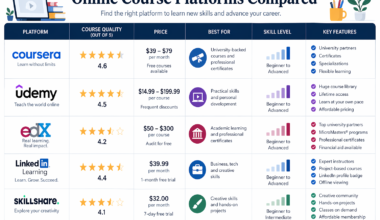
Here’s a complete side-by-side comparison of the top platforms:
| Platform | Best For | Pricing | Certificate | Skill Level |
| Skillshare | Creative / Hobby | Subscription (~$14/mo) | No | Beginner–Intermediate |
| Udemy | Affordable Deep Learning | Paid ($10–20 on sale) | Completion Only | All Levels |
| Coursera | University / Career | Free Audit / Paid Cert | Yes | Beginner–Advanced |
| MasterClass | Creative Inspiration | Subscription (~$15/mo) | No | Intermediate–Advanced |
| LinkedIn Learning | Professional Skills | Subscription (~$40/mo) | Yes (LinkedIn) | All Levels |
| YouTube | Free Self-Learning | Free | No | All Levels |
| Alison | Free with Certificate | Free / Paid Premium | Yes | Beginner |
| NYIP | Career / Professional | Paid (premium) | Yes (Professional) | Intermediate–Advanced |
Free vs Paid Photography Courses: Which Gives Better Results?
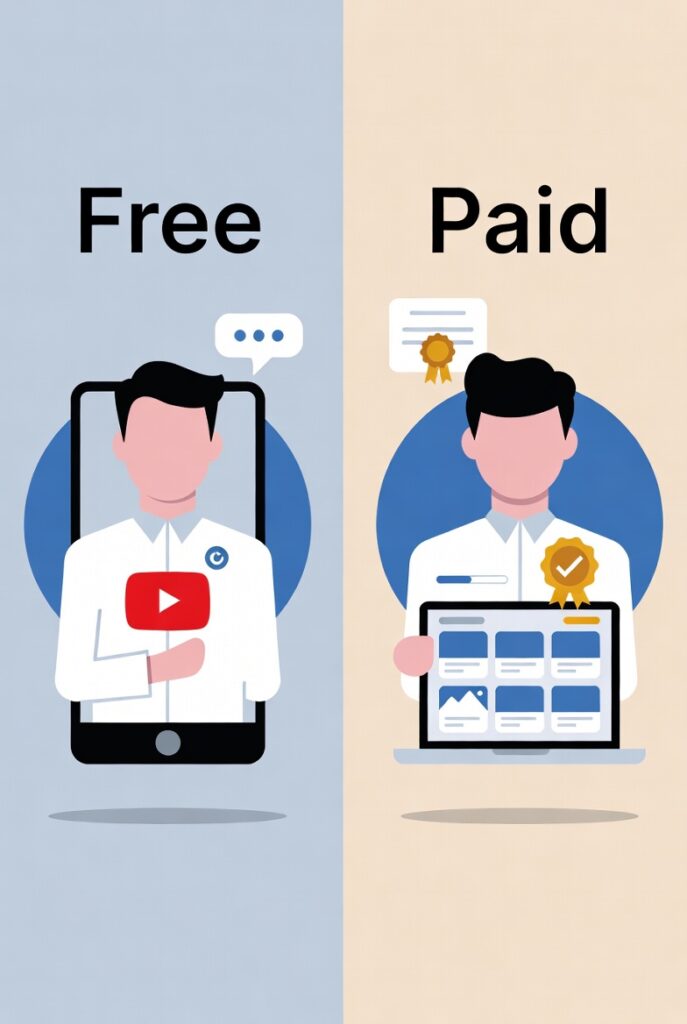
This is probably the question I get asked most often, and I want to give you a real, nuanced answer — not the usual ‘it depends’ non-answer that you’ll find everywhere else.
When Free Photography Classes Are Enough
Free photography classes are absolutely enough if your goal is to learn the basics, explore the hobby, or figure out whether photography is something you want to pursue seriously. YouTube, Coursera free audits, and Alison courses will teach you camera fundamentals, composition, and basic editing for zero cost. Furthermore, the quality of free content has genuinely improved significantly over the past few years.
If you’re still figuring out whether you even enjoy photography, please don’t spend $200 on a course yet. Spend six weeks with free resources first. That’s what I wish someone had told me when I was starting out.
When Paid Photography Courses Are Worth It
Paid photography courses earn their value when you have a specific, concrete goal — whether that’s freelancing, professional portraiture, or building a portfolio for career purposes. The advantages of paid courses are real: structured curriculum, feedback on your work, peer community, and in many cases, a certificate that proves your skills to potential clients or employers.
I’d also argue that the act of paying for a course increases your commitment to completing it. That’s not just my personal observation — completion rate data across e-learning platforms consistently shows that paid learners finish courses at significantly higher rates than free learners.
Common Mistake: Buying Expensive Courses Too Early
Here’s the mistake I see constantly: beginners buy a $300 MasterClass subscription or a $150 professional photography program within their first two weeks of interest. Then life gets busy, the course sits untouched, and the money is wasted.
My rule: validate your interest with free resources for at least four to six weeks before investing in a paid course. If you’re still showing up and practicing consistently, then invest. If not — you just saved yourself a lot of money and guilt.
Here’s a quick comparison to help you decide which path is right for you:
| Factor | Free Photography Classes | Paid Photography Courses |
| Cost | Zero | $10–$300+ |
| Structure | Self-directed | Guided, progressive |
| Feedback | Rare | Often included |
| Certificate | Rare (Alison exception) | Usually included |
| Community | Limited | Active peer groups |
| Best For | Beginners / hobbyists | Career / professional goals |
| Completion Rate | Lower | Higher |
| Editing Coverage | Basic (YouTube) | Comprehensive |
Photography Classes for Beginners: A Simple 4-Month Learning Roadmap
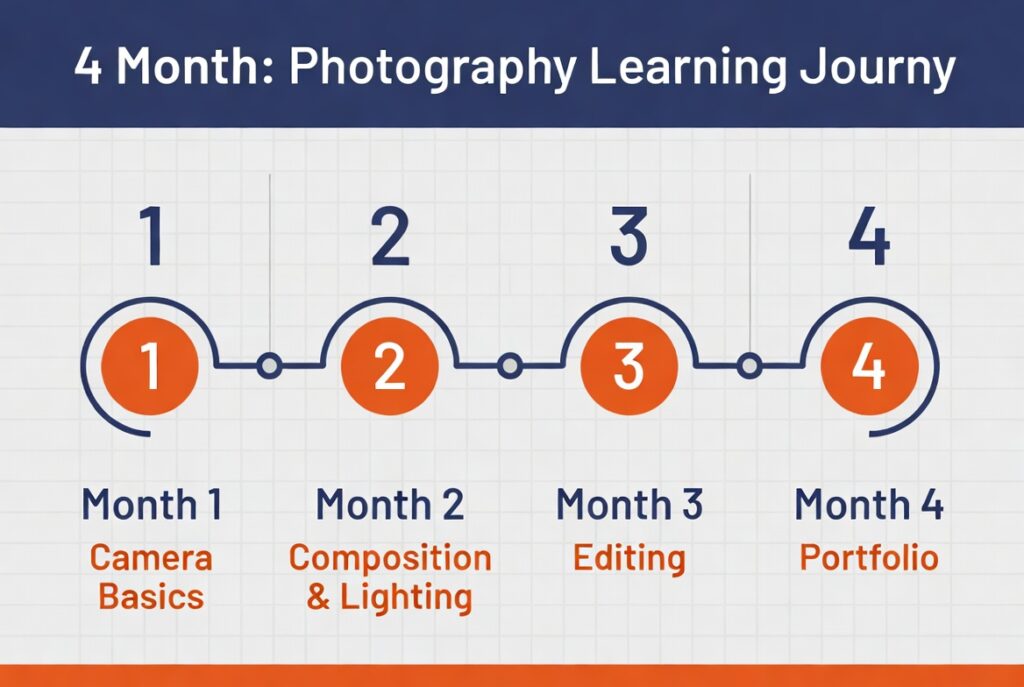
If I were starting from scratch today, this is exactly the path I’d follow. Four months, one focused skill at a time, and zero overwhelm. The key is building progressively rather than trying to learn everything simultaneously.
Month 1: Learn Camera Basics
Your first month is entirely about understanding how your camera works. Everything in photography revolves around the exposure triangle: ISO (sensitivity to light), aperture (how much light enters the lens), and shutter speed (how long the sensor is exposed to light). These three settings control every photo you will ever take.
- Set your camera to Manual mode and shoot the same subject with different settings to see the effect
- Learn what happens when you increase ISO in low-light situations and how to manage noise
- Understand the relationship between aperture and depth of field — this one concept unlocks creative photography
- Practice changing shutter speed to freeze action or intentionally blur motion
Recommended resource: Udemy’s beginner photography masterclass or Coursera’s free audit of Michigan State’s intro course.
Month 2: Improve Composition and Lighting
Once you understand exposure, composition is what transforms a technically correct photo into a genuinely compelling one. Additionally, lighting is the single biggest differentiator between amateur and professional photos.
- Rule of thirds – Place your subject off-center for more dynamic, visually interesting images
- Leading lines – Use natural lines (roads, fences, rivers) to draw the viewer’s eye into the frame
- Natural light – Learn the ‘golden hour’ (shortly after sunrise and before sunset) for the most flattering, professional-looking light
- Framing – Use elements in your environment to create a natural frame around your subject
Month 3: Learn Editing Basics
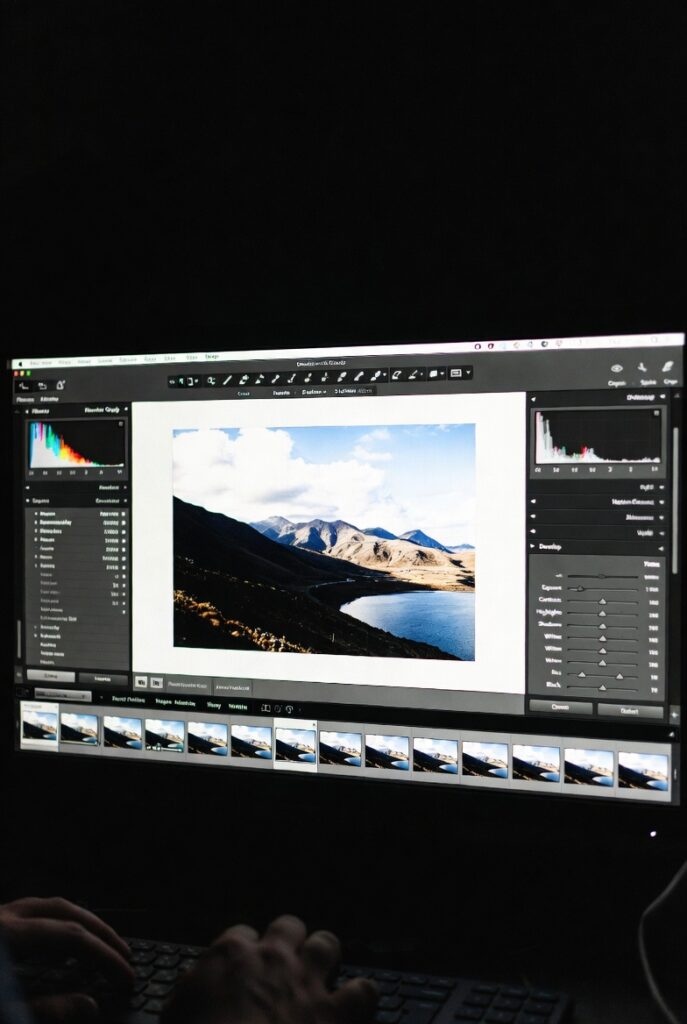
This is where a lot of beginners get nervous — but editing is actually incredibly enjoyable once you get the fundamentals down. Start with Lightroom before you touch Photoshop.
- Learn basic Lightroom adjustments: exposure, contrast, highlights, shadows, whites, and blacks
- Experiment with white balance adjustments to change the mood and feel of your photos
- Try a few free presets to understand what color grading looks and feels like
- Learn how to export your photos correctly for web use and print
This is also a great time to explore AI-powered editing tools. For context on how AI tools are reshaping creative workflows, see our overview of AI in education and machine learning — it covers how these tools are being integrated into creative and professional workflows.
Month 4: Build a Portfolio
Your fourth month is about output, visibility, and momentum. You should now have enough foundational skills to start building a small but genuinely compelling portfolio.
- Choose a consistent theme or subject for your early portfolio (e.g., portraits, landscapes, street photography)
- Post your best 10–15 images on a simple portfolio website, Behance, or even an Instagram account dedicated to your photography work
- Share your work on photography communities for constructive feedback — r/photography on Reddit is excellent for this
- Start thinking about your personal photography style — what subjects do you keep returning to? What makes your perspective distinctive?
| Visual Idea: Create a horizontal 4-step timeline graphic here with icons for each month — Camera icon (Month 1), Lightbulb icon (Month 2), Sliders icon (Month 3), Globe/Portfolio icon (Month 4). Label each milestone with 2–3 key actions. This visual would significantly increase shareability and time-on-page. |
Common Mistakes People Make When Choosing Photography Courses
I’ve watched a lot of people burn time and money on the wrong courses. Here are the five mistakes I see most consistently — and more importantly, how to avoid them.
Choosing a Course That Is Too Advanced
Advanced courses assume you already know the fundamentals. Therefore, jumping into a commercial photography course before you understand the exposure triangle is like trying to run a marathon without ever going for a jog. Start where you actually are, not where you wish you were. Ego is genuinely the enemy of fast progress here.
Ignoring Editing Skills
Photography without editing is like cooking without seasoning. Raw files from even the best cameras benefit enormously from post-processing. Consequently, if you’re taking a photography class that doesn’t include editing, supplement it immediately with a separate Lightroom or Photoshop course. It’s not optional if you want professional-looking results.
Paying Only for the Brand Name
Just because a course is from a famous photographer or well-known platform doesn’t mean it’s the best fit for your specific goals. I’ve personally seen $20 Udemy courses outperform $200 branded programs in terms of practical, applicable learning. Always check actual student reviews and course previews before buying anything.
Not Practicing Between Lessons
This is the biggest mistake I see, by far. Watching photography lessons without going out and actually shooting is like watching cooking videos and never entering the kitchen. After every single lesson, shoot. Even 20 minutes in your backyard with your phone counts. The application is where real, lasting learning happens.
Taking Too Many Courses at Once
I call this ‘course hopping’ and it’s incredibly common. Learners sign up for three courses simultaneously, spread their attention too thin, and ultimately finish none of them. Pick one course. Commit to completing it fully. Then, and only then, move to the next one.
Best Tools and Software to Learn Alongside Photography Classes
Your course is only part of the equation. The right tools will significantly accelerate your learning and help you apply what you’re learning immediately.
Best Cameras for Beginners
- Canon EOS Rebel SL3 – Lightweight, beginner-friendly, excellent image quality for entry-level price
- Nikon D3500 – Legendary battery life, great image quality, and a very learner-friendly interface
- Sony ZV-E10 – Mirrorless option with an APS-C sensor, great for both photography and video content
- Fujifilm X-T30 II – Excellent for those who love film simulations and hands-on creative control
- Your smartphone – Seriously. A modern iPhone or Samsung flagship is a completely legitimate and powerful learning tool
Smartphone Photography Apps
- Snapseed – Best free all-around mobile editing app, easy to learn
- Lightroom Mobile – Professional-grade editing directly on your phone
- VSCO – Great for presets and developing a consistent visual aesthetic
- ProCamera / Halide – Manual shooting controls for more advanced smartphone photography
Best Editing Tools
| Tool | Best For | Price | Platform |
| Adobe Lightroom | Photo organization + color grading | $9.99/mo (Creative Cloud) | Desktop + Mobile |
| Adobe Photoshop | Retouching + compositing | Bundled with Lightroom CC | Desktop |
| Canva | Social media graphics + quick edits | Free / $12.99/mo Pro | Web + Mobile |
| Snapseed | Mobile editing | Free | Mobile (iOS + Android) |
| Luminar Neo | AI-powered editing | $79–$119/year | Desktop |
| Capture One | Professional color editing | $24/mo or $299 lifetime | Desktop |
Best Accessories for Photography Students
- Tripod – Essential for landscape, long-exposure, and product photography. The Joby GorillaPod is excellent for portability and versatility.
- Ring light – A simple 10-inch ring light transforms portrait and content creator photography instantly for under $30.
- SD cards – Always carry two. SanDisk Extreme or Lexar Professional are reliable, fast, and proven options.
- Reflector – A 5-in-1 collapsible reflector dramatically improves natural light portraits for under $20. Vastly underused by beginners.
Real Example: Two Different Learning Paths for Photography Students
Theory is useful, but real-world examples make everything click. Here are two different learner profiles and exactly how I’d recommend they approach photography education in 2026.
Example 1: Hobby Photographer on a Budget
Meet Sarah. She’s a 28-year-old teacher who loves travel and wants to take better photos on her trips. She has a smartphone and a $0 course budget to start.
Here’s her ideal learning path:
- Start with YouTube – Peter McKinnon’s beginner series for camera basics and composition fundamentals
- Move to Coursera – Audit Michigan State’s photography intro course for free structured learning
- Download Snapseed – Start editing her travel photos immediately to build editing intuition
- Join r/photography on Reddit – Post work for feedback and learn from a huge, active community
- After 6 weeks: spend $15 on a Skillshare monthly subscription for more structured creative lessons
Total cost for months 1–2: $0. Total cost for month 3: $15. Total result: dramatic, visible improvement in photo quality and composition.
Example 2: Future Professional Photographer
Meet Marcus. He’s a 22-year-old who wants to build a freelance photography business doing product photography for local e-commerce brands.
Here’s his recommended path:
6. Invest in a used Canon Rebel DSLR body (˜$250 secondhand from local camera store)
7. Purchase Udemy’s Photography Masterclass (˜$15 on sale) for structured beginner learning
8. Add LinkedIn Learning for a dedicated Lightroom and Photoshop editing learning track
9. Watch product photography YouTube tutorials from Kyle Goldie Photography
10. Build a portfolio website using Squarespace or Adobe Portfolio
11. After 4 months: pitch to 5 local small businesses for product photography work at introductory rates
Total investment: ˜$300–400 over 4 months. Potential return: $300–500 from a single first client. Photography is genuinely one of the few skills where you can recoup your learning investment very quickly.
Photography Course Buying Checklist
Before you click ‘enroll’ on anything, run through this checklist. It takes two minutes and can genuinely save you from a lot of regret.
| Checklist Item | Why It Matters | Status |
| Matches your skill level | Too advanced = frustration and dropout | [ ] |
| Within your budget | Don’t overspend before validating interest | [ ] |
| Realistic course length | Can you actually complete it this month? | [ ] |
| Certificate included (if needed) | Required for professional / career goals | [ ] |
| Editing lessons included | Essential for professional-quality photos | [ ] |
| Assignments and practice projects | Hands-on learning accelerates real progress | [ ] |
| 4+ star rating with 1,000+ reviews | Social proof matters enormously here | [ ] |
| Portfolio building support | Especially important for career-track learners | [ ] |
| Community or peer feedback | Feedback is the fastest accelerator of improvement | [ ] |
| Refund policy available | 30-day refund option = significantly lower risk | [ ] |
Best Photography Course by Learning Goal — Quick Reference
| Your Goal | Best Platform | Recommended Course Type |
| Total beginner wanting camera basics | Udemy or Coursera Free Audit | Beginner fundamentals course |
| Hobby / creative exploration | Skillshare | Short creative photography classes |
| Professional certificate | Coursera or LinkedIn Learning | University or accredited course |
| Free learning (zero budget) | YouTube or Alison | Free photography classes online |
| Advanced editing skills | LinkedIn Learning or Udemy | Lightroom / Photoshop dedicated course |
| Career / freelance photography | NYIP or LinkedIn Learning | Professional certification program |
| Social media content creation | Skillshare | Mobile and lifestyle photography course |
| Wedding / event photography | Udemy or SLR Lounge | Genre-specific advanced course |
Frequently Asked Questions About Photography Classes
Are online photography classes worth it?
Yes — when you choose the right one for your skill level and goal. Online photography classes have become genuinely excellent over the past several years. The best ones include video lessons, practical shooting assignments, editing instruction, and community feedback. For most learners, online courses actually deliver better results than in-person classes because you can learn at your own pace and revisit specific lessons as many times as needed.
Can I learn photography online for free?
Absolutely. YouTube, Alison, and Coursera free audits all offer high-quality free photography education. The main limitation is structure and personalized feedback — free resources require more self-direction and discipline. However, for learning camera basics, composition principles, and even basic editing, free photography classes are completely sufficient for beginners. Furthermore, the quality gap between free and paid resources has narrowed significantly in recent years.
Which photography course is best for beginners?
For absolute beginners, I consistently recommend Phil Ebiner’s ‘Photography Masterclass: Complete Guide to Photography’ on Udemy. It’s comprehensive, genuinely beginner-friendly, frequently on sale for under $20, and has over a million satisfied students. For free alternatives, Coursera’s free audit of ‘Introduction to Photography’ from Michigan State University is excellent and well-structured.
Do photography classes provide certificates?
Some do and some don’t. Coursera, LinkedIn Learning, Alison, and NYIP all provide recognized certificates upon completion. Udemy provides a completion certificate, but it’s not employer-recognized in the same way as university-backed credentials. Skillshare and YouTube do not provide certificates. If a certificate is important for your professional goals, Coursera or LinkedIn Learning are your best options.
Do I need a DSLR camera to learn photography?
No — not at all. A modern smartphone is a completely legitimate and effective learning tool for photography fundamentals. Many professional photographers started on smartphones. A DSLR or mirrorless camera gives you more manual control and creative flexibility, but for your first three to six months of learning, your phone will serve you just fine. Focus on developing your eye before worrying about gear.
Are photography classes online better than college photography classes?
It genuinely depends on your goals. College photography classes offer in-person instruction, equipment access, and structured mentorship — which is genuinely valuable. Online photography courses offer flexibility, affordability, and the ability to learn from world-class instructors at your own pace. For most hobbyists and freelancers, online courses deliver better value and flexibility. For those pursuing formal credentials, BFA programs, or academic careers, college photography classes have advantages that online courses currently can’t fully replicate.
What is the best free photography course online?
My top picks for free online photography courses: Coursera’s free audit of Michigan State University’s photography course, Alison’s ‘Introduction to Digital Photography’ (which also offers a free certificate), and YouTube channels like Tony & Chelsea Northrup, which provide comprehensive, high-quality photography education at zero cost.
How long does it take to learn photography?
You can learn the fundamentals in four to eight weeks with consistent daily or weekly practice. Building professional-level skills typically takes six to twelve months of dedicated learning and regular shooting. Mastery — developing a recognizable personal style and consistent professional output — takes years of practice. The encouraging news is that you can start getting genuinely great results relatively quickly. Most learners notice dramatic improvement within their first month.
What editing software should beginners learn first?
Start with Adobe Lightroom, without question. It’s the industry standard for photo editing and organization, it’s intuitive enough for complete beginners, and it’s powerful enough for working professionals. Once you’re comfortable in Lightroom — which usually takes four to eight weeks of regular use — you can expand into Photoshop for more advanced retouching, compositing, and creative manipulation.
Can photography become a full-time career?
Yes — and more people are building full-time photography careers than ever before. Full-time photographers work across portraiture, commercial photography, photojournalism, event photography, real estate, product photography, and content creation. The key is developing a specific niche, building a strong and consistent portfolio, and treating your photography career like a real business. Freelancing platforms, social media marketing, and direct client outreach are all viable pathways to full-time photography income.
Final Action Plan: How to Start Learning Photography This Week

Alright — let’s make this completely concrete. Here’s exactly what I’d do if I were starting my photography journey this week, knowing everything I know now.
Step 1: Choose Your Learning Goal
Before anything else, get completely clear on why you want to learn photography. Your goal will determine every other decision you make:
- Hobby / personal joy – You need a beginner course and a lot of practice. Keep it fun and pressure-free.
- Freelance income – You need structured training, editing skills, and a deliberate portfolio strategy.
- Career / professional – You need certified courses, portfolio support, and access to mentorship.
- Social media content – You need mobile photography training and efficient editing skills.
Step 2: Pick One Beginner Course
Based on your goal and budget, pick ONE course from the recommendations in this guide and commit fully to completing it. If budget is a concern, start with a Coursera free audit or YouTube. If you’re ready to invest in yourself, Udemy’s Photography Masterclass is my consistent top pick for beginners.
Step 3: Practice Every Week
Set a minimum of two photography sessions per week — even 30 minutes of intentional shooting will build your skills faster than any course on its own. Apply what you learned in each lesson before moving to the next one. Consistency beats intensity every single time in creative skill development.
Step 4: Learn Editing Alongside Photography
Don’t wait until you ‘master’ shooting to start editing. Start your Lightroom basics in Month 1 alongside your camera fundamentals. The two skills reinforce each other in ways that will accelerate your overall progress significantly.
Step 5: Build a Portfolio Early
Start your portfolio in Month 2 or 3 — not Month 12. Your early photos won’t be perfect, and that’s completely fine. Having your work documented and organized will help you see your progress clearly, motivate continued learning, and give you something to show when opportunities arise.
| Pro Tip from Experience: The single most impactful thing you can do this week is pick up your camera — or your phone — and shoot 50 photos of anything. Your desk. Your neighborhood. Your pet. Don’t overthink it. Just shoot intentionally. Then look at what you created and notice what you like and what you’d do differently next time. That simple, 30-minute exercise will tell you more about your starting point than any checklist or quiz ever could. |
Final Thoughts
Here’s what I genuinely want you to take away from this guide: learning photography in 2026 has never been more accessible, more affordable, or more rewarding. The barriers that used to exist — expensive courses, limited equipment access, rigid schedules — have largely disappeared. The best photography classes online today are world-class, and many of them cost less than a single evening out.
But here’s the thing I want to emphasize above everything else: no course will make you a photographer. Practice will. The course gives you the framework and the knowledge. You have to show up with your camera — or your phone — and actually use it consistently.
The best photography classes are ultimately the ones that get you excited to go outside and shoot. And the best photographer? That’s the one who actually does.
So here’s my challenge to you: by this time tomorrow, take one deliberate photograph. Just one. Something you’d normally walk straight past without noticing. Frame it intentionally. Adjust your light. Make a conscious choice. That’s the very first step on a journey that — if my experience is any guide — you’re absolutely going to love.
Now go make something beautiful.